

Canadian journalist institutions have failed to address their ongoing colonialism and that has meant that urgent Indigenous issues have been ignored or sensationalized.
Articles on Don't Call Me Resilient
Displaying 61 - 80 of 122 articles

Long COVID impacts one in every five people who’ve had the virus. In the U.S., early research shows people of colour are most likely to develop long COVID. It has been called a mass-disabling event.
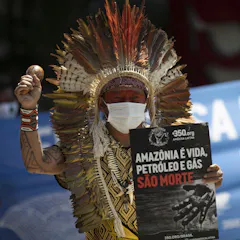
A different future will not be possible without reverence, respect, reciprocity and responsibility towards the Earth. On this issue, Indigenous Peoples have a lot to share.
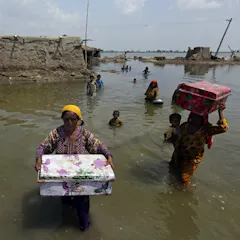
Does the Global North have a moral responsibility to protect and compensate those in the Global South that disproportionately bear the brunt of climate change devastation?

Join us for Season 4 of Don’t Call Me Resilient from The Conversation Canada.
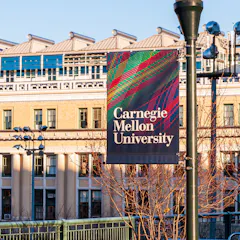
Reaction to criticism of the monarchy shows that universities need to do much more to support racialized faculty and staff.

In the middle of the tremendous outpouring of love and grief for the Queen and the monarchy she represented, not everyone wants to take a moment of silence. And there are a lot of reasons why.
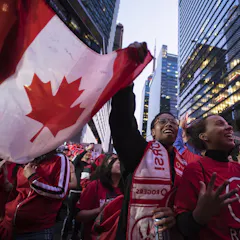
What does it mean to be a settler of colour in Canada? Has the symbolism of the Canadian flag changed since the Ottawa convoy?
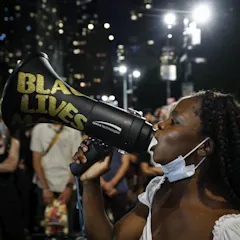
In today’s episode, we look at how sound and noise are used as tactics of protest and how practitioners are using environmental soundscapes to protest against racism and police brutality.

Recently, specious claims against critical race theory have been showing up in Canada. School boards are being questioned about their anti-racism policies and the teaching of CRT to students.
In today’s episode of Don’t Call Me Resilient, we speak with two Canadian educators who explain how using critical race theory in their classrooms helps both students and teachers.

In today’s episode, we hear from two women who talk about how diamond mines in the Northwest Territories have negatively impacted women and girls and perpetuated gender violence.

In today’s episode we take a look at how TikTok can be used as a tool to educate and has been a space for sharing information during major events in the last two years.
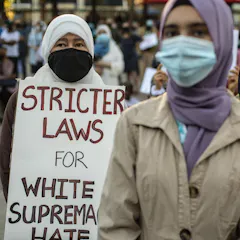
In today’s episode, we take a look at some ways lawmakers have legalized Islamophobia through niqab bans and other restrictive policies.

In today’s episode of Don’t Call Me Resilient, we take a look at what has happened since the unmarked graves of 215 Indigenous children were found in Kamloops B.C.
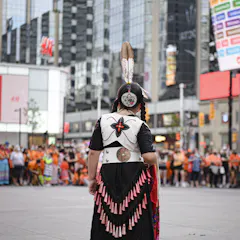
We’re launching the third season of Don’t Call Me Resilient, our podcast that takes on systemic racism and the ways it permeates our everyday lives.

Until Black women can wear their hair how they want without risk of ridicule, reprimand or termination, a joke targeting Black hair is no laughing matter.

In this special edition of ‘Don’t Call Me Resilient,’ we chat about how “the slap heard around the world” is part of a layered story of racism, sexism, power and performance.
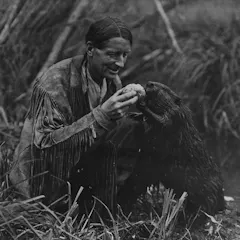
Those quick to call-out are often not clamouring for Indigenous nations’ jurisdiction over citizenship, nor are they demanding “pretendians” be held accountable to Indigenous nations.
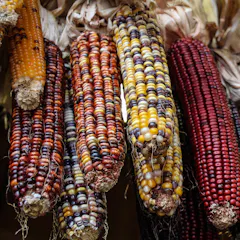
Our food systems are failing to feed all of us.
In this episode of Don’t Call Me Resilient, we pick apart what is broken and ways to fix it with two women who battle food injustice.
Top contributors
-

Canada Research Chair, Professor in Performance, Toronto Metropolitan University
-
Associate professor, McGill University
-
Professor, Public and International Affairs, L’Université d’Ottawa/University of Ottawa
-
Assistant Professor, Faculty of Land and Food Systems, University of British Columbia
-
Professor, Technoscience studies + History, University of Toronto
-
Professor of Geography and Environmental Science, Memorial University
-
Associate Dean (Arts and Humanities), Bucknell University
-
Adjunct Assistant Professor, Werklund School of Education, University of Calgary
-
Policy Lead on Technology, Cybersecurity and Democracy, Leadership Lab, Toronto Metropolitan University
-
Founder of Msit No’kmaq
-
President, Food Secure Canada
-
Professor, Jean Augustine Chair in Education, Community & Diaspora, York University, Canada
-
Associate Professor, Faculty of Education, Wilfrid Laurier University
-
Professor of Colonial History, University of Victoria
-
Assistant Professor of History, Thompson Rivers University