

A new study based on 40 years of data on over 450 wild Indo-Pacific bottlenose dolphins shows the importance of consistency in social choices.
Articles on Dolphins
Displaying 1 - 20 of 83 articles

How do we create better futures for animals who are kept locked up for our convenience? Consider Marineland, and how decisions about land use are made.

Sea sanctuaries could work well for some animals, but up to this point, only a handful of animals have lived in them.

Tool use among non-human animals is more widespread than you might think.
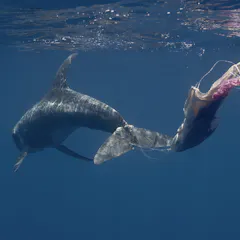
Entanglement is a major animal welfare issue for marine mammals. A successful rescue is not just whether an animal is cut free but whether it recovers from injuries.
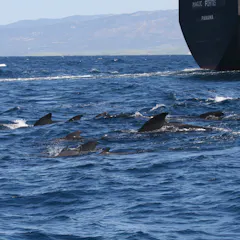
A new study highlights how noise pollution in the ocean is changing animals’ behaviour.
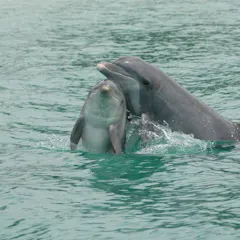
A database of sounds from a community of wild dolphins is proving to be a great resource for researchers studying dolphin communication.

Whether capturing them on film, containing them in amusement parks, or subjecting them to scientific experiments, our curiosity about whales and dolphins has compelled us to capture them out of the ocean.
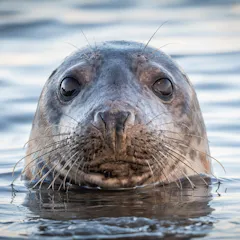
Nets used in the Irish fishing industry could be replaced by other types of fishing to preserve marine life.
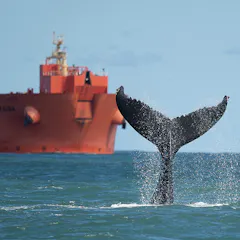
Despite Brazil’s recent expansions of protected areas, research shows that the favorite habitats of whales and dolphins are still threatened by human activities.

The highly social lives of many marine mammals brings many benefits. But it also comes with a hidden cost.

Assessing the health of dolphins and whales is notoriously difficult. But new technology can help.

Like friendship itself, the slower ageing is more than just skin deep.

The sex and age of an animal turn out to be stronger predictors than habitat for higher PFAS levels, suggesting they accumulate over a lifetime.
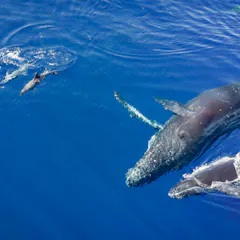
The findings reshape our understanding of how social marine mammals interact across species.

Many scientists see evidence of language in the sounds animals put together, but they may be kidding themselves.

Ever seen images of dolphins jumping out of the waves and performing impressive acrobatics? Let’s explore why they do it.

Studying the information contained in dolphin whistles is crucial for our understanding of threats to their survival.
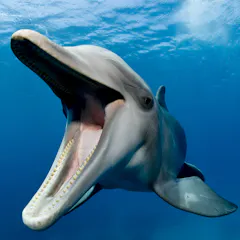
Many animals show signs of high intelligence, including strong memory, self-awareness and communication skills.
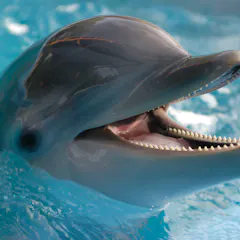
Dolphins smile at each other and at other species when playing, and mimic others’ smiles.
Top contributors
-

Associate Professor of Biology, Stephen F. Austin State University
-
Lecturer in Biological Sciences, University of Wollongong
-
Lecturer, UWA Oceans Institute, The University of Western Australia
-
Whale Scientist and Lecturer, Faculty of Science and Engineering, Macquarie University
-
Professor of Marine Ecology, Te Kunenga ki Pūrehuroa – Massey University
-
Associate Professor, Research Leader of the Cetacean Ecology, Behaviour and Evolution Lab, Flinders University
-
Senior Lecturer and Branco Weiss Fellow, University of Bristol
-
Honorary Professor at Bangor University; Director of Sea Watch Foundation, Bangor University
-
Senior Lecturer in Zoology, Bangor University
-
Research Fellow in Marine Science and Manager Whales & Climate Program, Griffith University
-
Senior Researcher in Marine Biology, Aarhus University
-
Lecturer, College of Science and Engineering, James Cook University
-
Associate Professor, College of Business, Law & Governance, James Cook University
-
Professor, Cetacean Research Unit, Murdoch University, Murdoch University
-
Professor Evolution & Ecology, UNSW