

People at Thanksgiving tables usually share that meal with at least one person from outside their household who sees the world differently. And that difference comes down to politics.
Articles on Disagreements
Displaying 1 - 20 of 28 articles

It’s increasingly rare for us to respectfully disagree these days. Book clubs invite us to do just that – while making time for a good read.

Differences in beliefs may not be what drives people apart. A belief that someone else is wrong may be the stronger force.

An ethicist who studies disagreement and civility assumed she could handle a neighborly dispute – until the neighbor refused to even interact with her.

Other communication techniques can help move disagreement past attacks and sound bites.
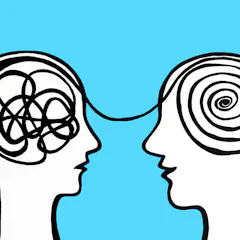
Seeing someone charitably requires a balancing act between taking them seriously and trying to see the good in them.

When every difference of opinion risks being framed as offensive, space for genuine communication and learning disappears.

New research examines how people become entrenched in polarizing positions and how we can prevent debates from devolving into heated arguments.
‘Looping’ and ‘reframing’ are two techniques that can help build understanding in stressful disagreements.

A psychologist explains how group identity, polarizing issues and social media are driving people apart – and suggests some remedies.

The more Americans isolate themselves from people in the other political party, the more stereotypes take over. In turn, that pushes people to isolate even more.

By addressing workplace conflicts directly and respectfully, you can build trust, strengthen relationships and contribute to a healthier, more collaborative work environment.

Arguments are a fact of life, but they don’t have to ruin your relationships.

Conversations don’t immediately change people’s minds, but they can eventually. And in the meantime, they help forge real connections across a diverse and complex society.

Intellectual humility doesn’t mean anyone can change your mind, a philosopher writes – but it might mean learning from the ‘other side’ in surprising ways.
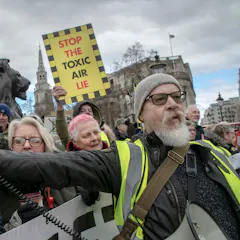
The psychology of disagreement offers insight into why there is such a strong polarisation in opinions surrounding London’s expanded Ulez.

Researchers have identified ways to have more productive conversations – even when you’re talking to someone who holds an opposite view.

Two concepts can help explain why society seems increasingly unable to agree on basic facts.

An expert’s tips for understanding social pitfalls and how to navigate them during a tense time of year.

Finding ways to make talking about diversity less of a confrontation and more of a dialogue is crucial.
Top contributors
-

Lecturer in Social Psychology, Loughborough University
-
Associate Professor of Strategy and Organizational Theory, Mount Royal University
-
Assistant Teaching Professor of English and Technical Communication, Missouri University of Science and Technology
-
Assistant Professor of Psychology, Columbia University
-
Associate Professor of Philosophy and Law, Wayne State University; Institute for Humane Studies
-
Senior Lecturer in Psychology, City St George's, University of London
-
Associate Professor, Political Science, University of Northern British Columbia
-
Professor of Public Policy, Harvard Kennedy School
-
Professor of Metaphysics and Epistemology, University of Leeds
-
Associate Professor of Law, University of Dayton
-
Senior Lecturer in Organizational Behavior and Human Resource Management, University of Stirling
-
Honorary Research Fellow, City St George's, University of London
-
Dean of the Irvin D. Reid Honors College and Professor of Philosophy, Wayne State University; Institute for Humane Studies
-
Professor of Cognitive Neuroscience, UCL
-
Professor of Psychology, City St George's, University of London