
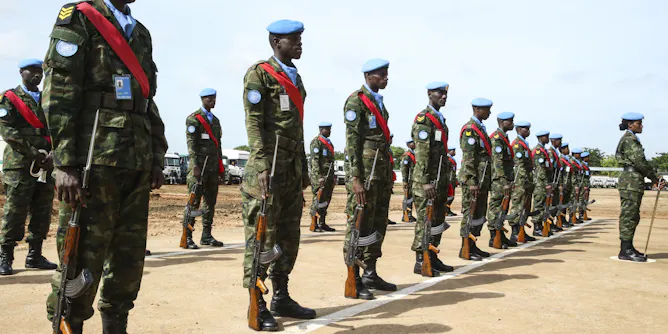
Unless member states try to solve the contradictions in expectations, UN peacekeeping will not be fit for purpose in the future.
Articles on Democratic Republic of the Congo (DRC)
Displaying 221 - 240 of 393 articles

Mathematical modelling tools may predict where tsetse flies are being driven to extinction.
The number of personnel deployed in UN peacekeeping has slowly been decreasing.
Surveys are likely to have missed multiple groups and individuals due to differences in survey techniques.
Photographs give unprecedented insight into the lives and humanity of those involved in the Ugandan rebel movement.
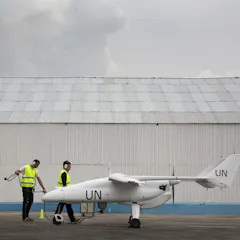
Drones could help United Nations peacekeepers save civilians’ lives – but there are obstacles.
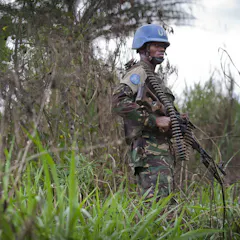
The independent strategic review, now before the Security Council, recognises many of the challenges ahead. But it appears overly sanguine about what can be achieved within a three-year period.
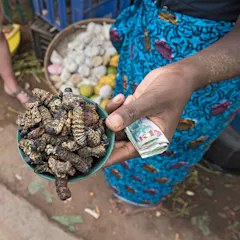
There needs to be more awareness of the benefits of insects as food, and support for farming and markets.
CC BY-NC-SA5.94 MB (download)
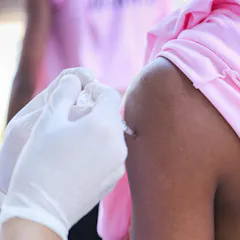
The solution to measles outbreaks is deceptively easy: vaccinate more children. This belies the challenges along the path to that solution.
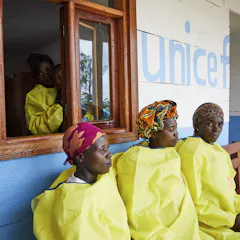
The emergency in the DRC shows that despite all these positive changes, the global response to containing Ebola outbreaks is undermined by the lack of health care and public health infrastructure.
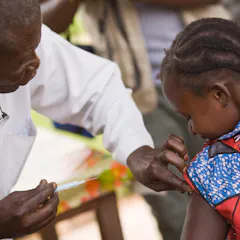
Even when cases of measles are detected in clinics, limited diagnostic and communication infrastructure can delay the response.
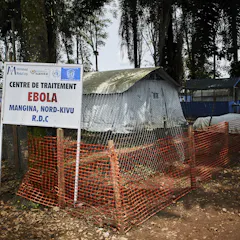
The current outbreak refuses to give in to efforts by an international team of health care workers, armed with vaccines and treatment that did not even exist during previous episodes.
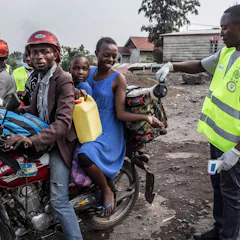
Nearly everything known about Ebola virus persistence in the reproductive system has resulted from testing semen of West African Ebola virus disease survivors.
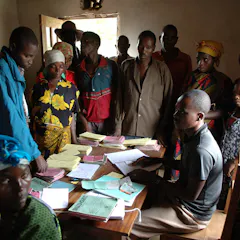
The DRC’s state and public administration didn’t disappear, but changed: they were being built from the ground up, tailor-made to local actors’ interests.
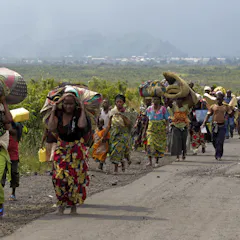
More than two out of three displaced people are not refugees, but remain within their own country.
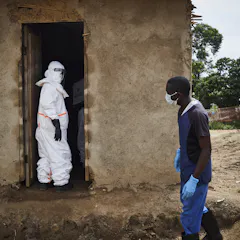
Two deadly viruses are ravaging the DRC. Why are we only hearing about one of them?

Local communities are wary of the sudden arrival of outsiders and of their interest in regions where there’s been violence for years

CITES’ decision seeks to increase levels of monitoring so that we can be more and better informed about the illegal trade of Mukula and over-harvesting.
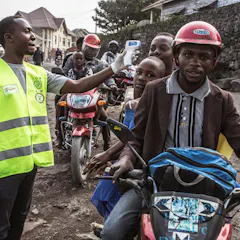
Epidemics can have massive social ramifications where prohibitions are imposed on travel, socio-cultural events and schooling.

Timing is everything when it comes to making a decision about declaring a disease outbreak a public health emergency of international concern.
Top contributors
-

Lecturer in African History, Queen Mary University of London
-
Professor in International Development, University of Antwerp
-
Postdoctoral Research Associate, King's College London
-
Reader in International Development, University of Bath
-
Professor in the faculty of Medicine, Mbarara University of Science and Technology
-
Visiting Researcher, University of Leeds
-
Research Director of the Insecure Livelihoods Project, Ghent University
-
Assistant professor, Utrecht University
-
Part-time lecturer at the Global Health & Social Medicine, Harvard University, and Lecturer at the School of Public Health, College of Health Sciences, University of Liberia
-
Researcher and lecturer, City University of New York
-
Associate Professor International Law, Roskilde University
-
Lecturer and Senior Research Fellow at the South African Research Chair in International Law (SARCIL), University of Johannesburg
-
Adjunct assistant professor, Roskilde University
-
Professor of Democracy, University of Birmingham
-
Senior researcher, Danish Institute for International Studies