

New research suggests how we could prevent genetically modified organisms from surviving - and potentially spreading - in the wild.
Articles on CRISPR/Cas9
Displaying 61 - 70 of 70 articles

The International Summit on Human Gene Editing drew a distinction between editing an individual’s body cells and editing germline cells that would pass changes to future generations. Does that make sense?

As we consider the ethics of human gene editing, we need to understand what can and can’t be meaningfully edited.
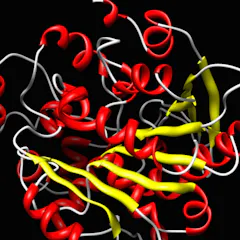
Should the gathering of experts from around the world that’s considering the scientific, ethical, and governance issues linked to research into gene editing ring alarm bells?

New genetic technology could change the DNA of entire species to prevent them from spreading diseases.
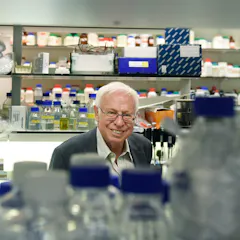
The recipients of this year’s Nobel Prize for Chemistry showed that DNA is far from static. Rather, it is bombarded by damaging forces, but our bodies know how to repair these precious strands.

Despite predictions, the CRISPR/Cas9 gene editing technique didn’t win the Nobel Prize. But with the technology nevertheless taking off, it is time we start having an informed public debate about it.
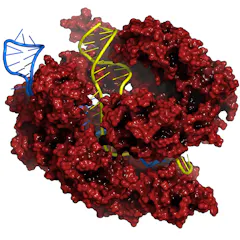
Until more is understood, it’s sensible to limit experimentation that would make changes to germ line cells that would be passed on to future generations.
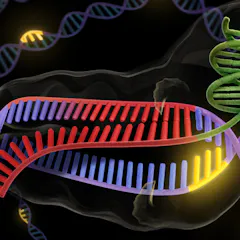
Leading researchers have called for a ban on using a precise gene-editing technology on humans. How can CRISPR advance science and why is it raising concerns?

A naturally-occurring system discovered in bacteria holds promise as a way to fight pathogens – very specifically and without the risk of antibiotic resistance.
Top contributors
-

Geneticist and Group Leader, The John Curtin School of Medical Research, Australian National University
-
Head of School (Computer Science) and Co-Director (Centre for Data Science), Queensland University of Technology
-
Assistant Professor in Biomedical Ethics, National University of Singapore
-
Distinguished Research Professor, Emerita, Dalhousie University
-
Chair, The Conversation Media Group
-
Shah Rising Star Assistant Professor of Chemical Engineering, Herbert Wertheim College of Engineering, UF Health Cancer Center, University of Florida
-
Chen Su Lan Centennial Professor in Medical Ethics, National University of Singapore; Distinguished Visiting Professor in Law, University of Melbourne; Uehiro Chair in Practical Ethics, The University of Melbourne
-
Postdoctoral Associate in Science and Society, Duke University
-
Professor of Chemistry, Connecticut College
-
Vanier Scholar and Ph.D. Candidate in Microbiology and Immunology, Dalhousie University
-
Doctoral Student in Biochemistry, University of Washington
-
Distinguished Research Professor, Dalhousie University
-
Emeritus Robert Reford Professor and Professor of Medicine, McGill University
-
Professor in Medicine, Ethics and Society, University of Warwick
-
Associate Professor of Public Policy and Women's Studies, University of Michigan