

Even before this pandemic, international students were exposed to several unique hardships. These are compounded by COVID-19.
Articles on COVID-19 and higher education
Displaying 21 - 31 of 31 articles

The Australian government relies on the temporary graduate visa to attract international students. But these visa recipients are left helpless as they face a loss of financial security.

For every $1 lost in university tuition fees, there is another $1.15 lost in the broader economy. This means loss of university revenue can cost the Australian economy more than $40 billion by 2023.
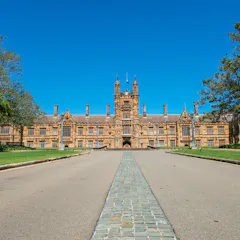
The government’s new funding package for universities is a good first step. But its plan for low-cost online courses is problematic.

We can use the sudden gift of free time to prepare for the labour market of the future.

Helping international students is in Australia’s best interest. Universities rely on them to stay afloat, and in 2018, Australian universities contributed $41 billion to the economy.

How much data are you using when streaming lectures? What camera do you need? And what’s a VPN? Here are some handy tips to be technologically prepared for your virtual university experience.
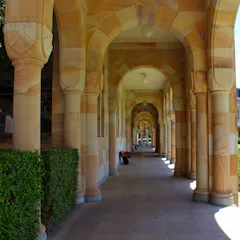
Online learning can actually be as effective as when classes are delivered face-to-face. But teachers need training to do this effectively.
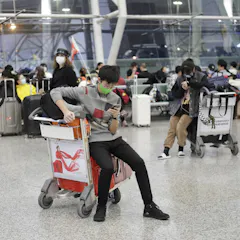
The University of Sydney took in about A$750 million from international students in 2017. Two-thirds of that – about $500 million – came from international students from China.
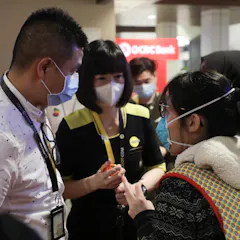
Universities have put in place many measures to help international students. But online classes are not a simple solution, and the government could help with the extra money students have to spend.
Australia has never had such a drop in student numbers. Even during the SARS outbreak Australia didn’t implement bans on those travelling from affected countries.
Top contributors
-

Executive Producer, Social and Political Sciences Program, University of Technology Sydney
-
Professor and Director, Mitchell Institute, Victoria University
-
Digital Communications Manager Impact Studios, University of Technology Sydney
-
Professor, School of Education, Deakin University
-
Associate Professor, Social & Political Sciences, University of Technology Sydney
-
Professor Emeritus and Former Deputy Vice Chancellor, The University of Melbourne
-
Adjunct Professor, Department of Leadership, Higher and Adult Education, OISE, University of Toronto
-
Senior Lecturer in Population Geography, Adelaide University
-
Senior Lecturer, Economics, University of Technology Sydney
-
Director, Centre for the Study of Higher Education, The University of Melbourne
-
Professiorial Fellow, The University of Melbourne
-
Associate Professor of Education, Queensland University of Technology
-
University Historian and Principal Research Fellow, History, University of Sydney
-
Senior Research Fellow, Melbourne Graduate School of Education, The University of Melbourne
-
Associate Professor in Information Systems, The University of Melbourne