

Precarious academic work, stable funding, purposeful course design and greater attention to equity are issues that students and faculty want to see addressed.
Articles on COVID-19 and higher education
Displaying 1 - 20 of 31 articles
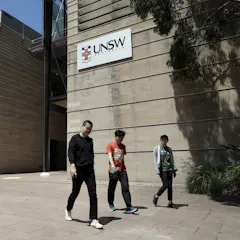
Universities and the international education sector have developed a number of concrete plans to bring international students to Australia. But they have all been shelved without a clear explanation.
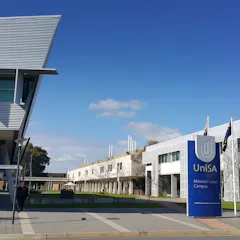
Australian universities face a huge revenue hit from falling international student numbers due to COVID-19 and tensions with China. Some institutions should consider merging rather than downsizing.

Many international students choose Australian universities due to a visa that allows them to work here for up to four years after they graduate.
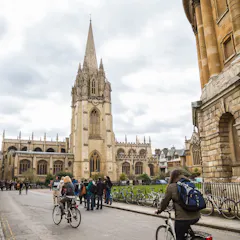
The Australian government has not been good to international students since the start of the COVID-19 pandemic. But compared to the US, UK and Canada, we haven’t lost our competitive edge.

The education minister has outlined reforms to higher education funding aimed at producing ‘job ready graduates’. But his announcements don’t seem completely in line with the data.

For many people, universities remain institutions embodying past imperial practices. Universities have an important role to play in society, and they must do so with society.
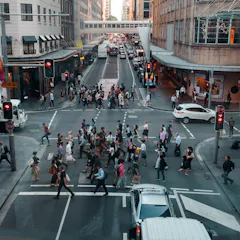
A Mitchell Institute report has estimated the proportion of international students in various Australian suburbs, and how much they contribute to the local economy.

A group of international students were interviewed about their experience in Australia during COVID-19. Here’s what they had to say.

Education should equip people not just with specific skills, but also with the knowledge they need to be citizens, and for occupations in which they can develop across the course of their lives.
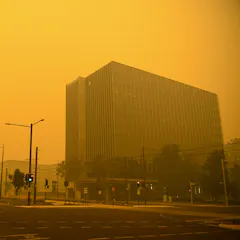
Universities can only credibly claim to be preparing young people for their futures if they take into account the kind of world they are helping to bring about.
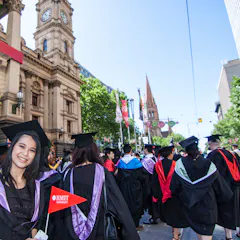
Researchers modelled the impact of the loss of international student fee income on 38 universities.
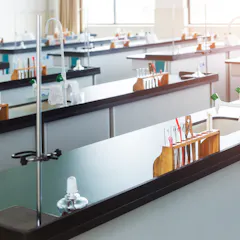
Many university teaching labs are empty as students have been moved off campus during the pandemic. There are other ways to put theory into practice, at home and online.

Not all teaching spaces in universities are big enough to allow students to return to normal study as the pandemic restriction ease.
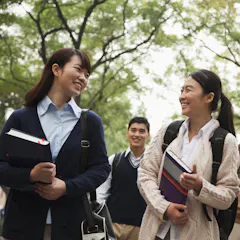
Australia has a long history of international student education, spurred on by government policy.
Are the Australian government’s successive changes to JobKeeper specifically designed to exclude universities? And if so, why?

The National Tertiary Education Union has agreed to a deal with universities that aims to save at least 12,000 jobs. But universities aren’t obliged to sign up.

Hundreds of casual academics have lost work in the COVID-19 crisis. They make up the majority of the teaching workforce at universities but they don’t quality for any government assistance.

Australia’s research workforce will be severely impacted by the pandemic, with the effects likely to be felt for years, if not decades.
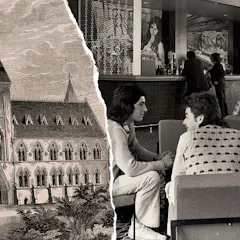
This essay explores the way the social contract between universities, society and the state has changed over the course of the 20th century. And how generations of students paid and benefited.
Top contributors
-

Executive Producer, Social and Political Sciences Program, University of Technology Sydney
-
Professor and Director, Mitchell Institute, Victoria University
-
Digital Communications Manager Impact Studios, University of Technology Sydney
-
Professor, School of Education, Deakin University
-
Associate Professor, Social & Political Sciences, University of Technology Sydney
-
Professor Emeritus and Former Deputy Vice Chancellor, The University of Melbourne
-
Adjunct Professor, Department of Leadership, Higher and Adult Education, OISE, University of Toronto
-
Senior Lecturer in Population Geography, Adelaide University
-
Senior Lecturer, Economics, University of Technology Sydney
-
Director, Centre for the Study of Higher Education, The University of Melbourne
-
Professiorial Fellow, The University of Melbourne
-
Associate Professor of Education, Queensland University of Technology
-
University Historian and Principal Research Fellow, History, University of Sydney
-
Senior Research Fellow, Melbourne Graduate School of Education, The University of Melbourne
-
Associate Professor in Information Systems, The University of Melbourne