
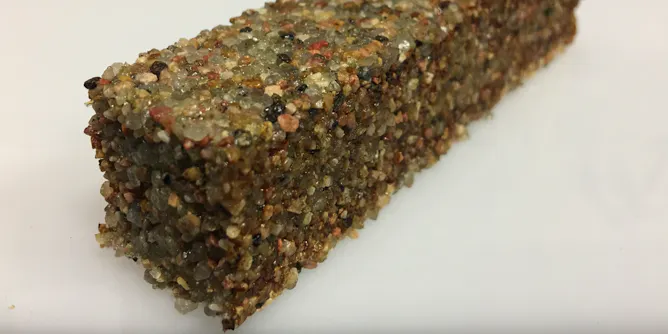
Researchers are turning microbes into microscopic construction crews by altering their DNA to make them produce building materials. The work could lead to more sustainable buildings.
Articles on Construction
Displaying 181 - 200 of 289 articles
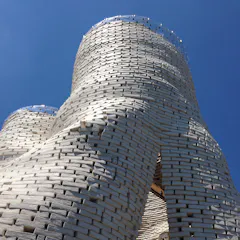
Our climate is changing – and so must architecture.

‘Use the reinforced concrete, Luke.’
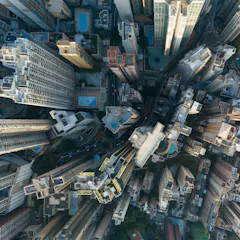
Old buildings aren’t just waste – the materials can be reused to create the cities of the future.
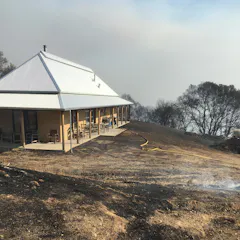
Houses built more than 20 years ago are likely to be more vulnerable to bushfires than newer builds. But there are some simple and inexpensive ways to reduce your risk.

An unregulated construction sector is stifling its potential to influence Ghana’s economy consistently.
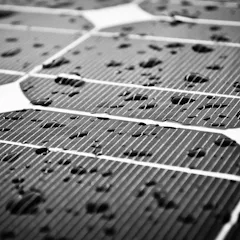
Australia is in the midst of a solar energy boom, yet it is lagging behind other countries when it comes to ‘building-integrated photovoltaics’ - solar cells built into the very fabric of buildings.
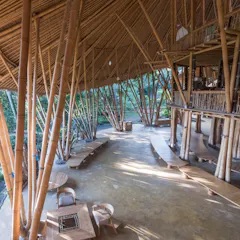
Bamboo has been used since ancient times for building, but only in recent decades has pioneering work in Bali inspired its wider use for substantial and enduring structures.
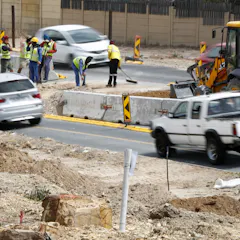
There’s no uniformity around health and safety management programmes and practices within the construction industry.
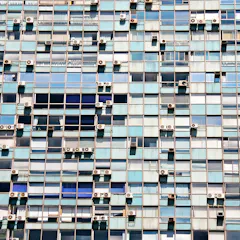
Air conditioning requires energy, and contributes to global warming – here are five ways of cooling which won’t cost the planet.
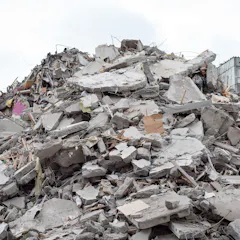
China has put the onus back on Australia to take responsibility for our waste, and Germany has shown us the way with extended producer responsibility for construction and demolition waste.

From cobbled laneways to grand buildings, bluestone has a long history in Melbourne – one that starts millions of years ago.

We now have a proven model for supporting self-determined building on Aboriginal homelands. The next question is how can its reach be extended?

Trump may find it harder to maintain support for his escalating tariffs on China if the US economy shows further signs of weakness.
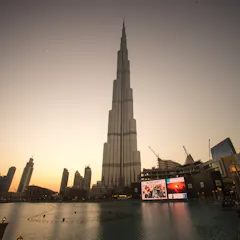
It would be difficult, but we could probably build a tower over 2,000 metres tall, which would be like ten normal skyscrapers on top of each other! This is probably not a very good idea though.
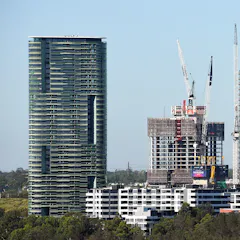
Under the new code, buildings are hardly likely to differ measurably from their fault-ridden older siblings and can still fall short of a six-star rating. It’s possible they may have no stars!
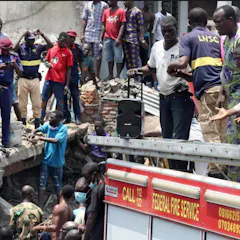
Lagos has all the appropriate laws but it needs to adopt the right procedures and see them through.
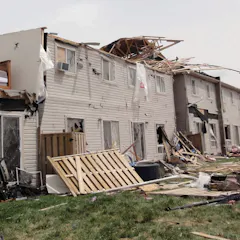
Weather-related catastrophic events have cost Canadians more than $17 billion in the past decade. That only stands to grow, unless building codes change to make homes more resilient.
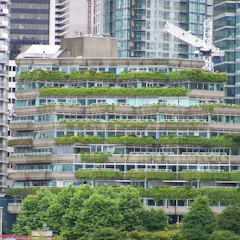
Buildings are responsible for 40 per cent of energy-related carbon dioxide emissions worldwide. Efforts to reduce emissions should no longer be voluntary.
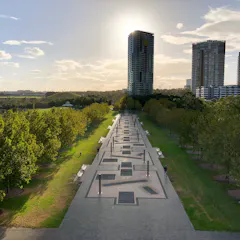
While Opal Tower residents are more badly affected than most, up to 80% of multi-unit buildings have serious defects. Here’s what government can do right now to fix the industry.
Top contributors
-

Senior Lecturer, UTS Faculty of Law, University of Technology Sydney
-
Professor of Construction Management, University of Technology Sydney
-
Senior Lecturer, University of Technology Sydney
-
Scientia Professor of Economics, UNSW
-
Associate Professor in Civil Engineering and Environmental Materials, Brunel University of London
-
Head of School and Professor of Architecture, UNSW Built Environment, UNSW
-
Associate Professor in Property, Construction and Project Management, RMIT University
-
Professor of Sustainable Architecture, Lancaster University
-
James R. Rice Distinguished University Professor of Engineering, University of Michigan
-
Associate Professor, School of Sciences, RMIT University
-
Associate Professor in Construction and Environmental Performance, The University of Melbourne
-
Professor of Future Construction, University of Edinburgh
-
Associate Professor & Global Challenge Lead, Urban Transformations Research Centre, Western Sydney University; University of British Columbia
-
Professor, Melbourne Law School, The University of Melbourne
-
Professor of Sustainability Science, Edinburgh Napier University