
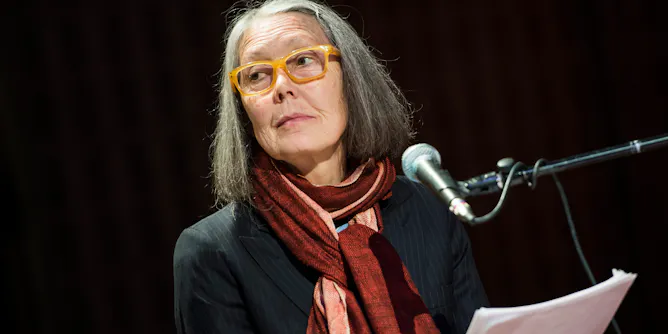
Carson’s Nobel Prize in Literature celebrates a writer whose work returns to antiquity as an unfinished reservoir of images, voices and fragments capable of unsettling contemporary experience.
Articles on Canadian literature
Displaying 1 - 20 of 23 articles
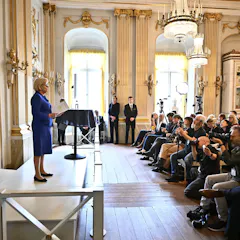
As readers turn their eyes to nominees for the Nobel Prize in literature and Canada’s Giller Prize, how does Canadian literary recognition translate into international standing?
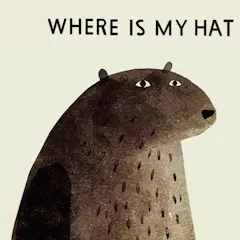
Canadian author and illustrator Jon Klassen has won the the Astrid Lindgren Memorial Award, one of the world’s most prestigious distinctions in children’s literature.

Diary-writers across history have expressed the sense of relief that writing from the heart can bring. Could English essays have the same benefits?
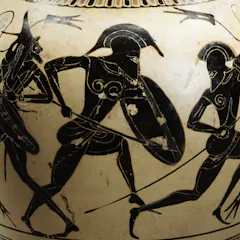
You could say it’s just a novel, so the implausibilities don’t matter, but the story is self-involved and contrived.

Indigenous people are more than stories. We deserve a future where our identities are not commodities, and accountability is measured by actions that build trust and repair harm.

Canadian literature cannot be defined solely by the language in which it is written. Instead, it must be understood as a multilingual body of work shaped the diverse people who live here.
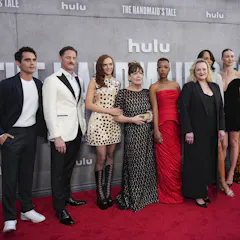
‘The Handmaid’s Tale’ book and TV series reflect currents of political turmoil, particularly rising authoritarianism in the United States and the erosion of women’s rights.

The controversy is about the Israeli-Palestinian conflict interfering with the world of Canadian letters, but also reveals antagonistic ideas about literature’s social role.
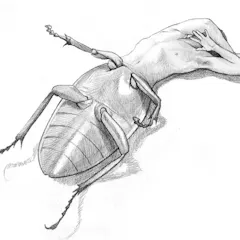
Whereas Kafka’s Samsa famously wakes up to discover he has been transformed into a bug, the insect evolution of Hage’s unnamed migrant protagonist happens slowly through his circumstances.
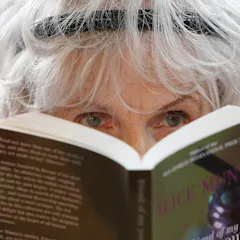
Scholars have an opportunity — if not an obligation — to use our re-readings to reckon with sexual abuse of children and the silence that so often surrounds it.
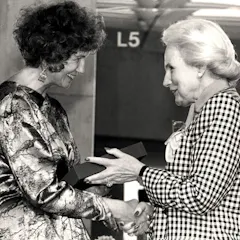
An essay by Alice Munro’s daughter about childhood sexual abuse has forced a reckoning with the legacy of the feminist icon and writer acclaimed for her ability to give voice to women’s lives.

Anne Carson’s playful new book, Wrong Norma, meaningfully makes apparently random connections – and the result is compelling.
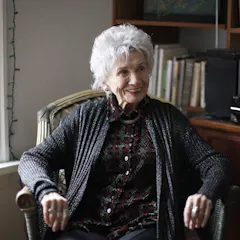
Munro observed the ways time and perspective may alter understanding. Revisiting ‘Alice Munro Country’ in southwestern Ontario in Canada is one way to honour her.
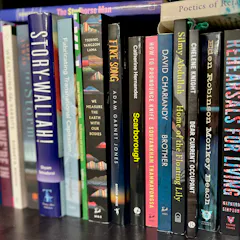
When teachers are self-aware of how their identities impact their values, beliefs and experiences, they are better prepared to help students build bridges between their lives and literature.

Encouraging men to take the risk of expressing tender feelings for others is part of relying on love as a tool of anti-racist and decolonial education.

A deep philosophical exploration of the subjective nature of historical knowledge and memory runs through Anne Michaels smart and poignant new novel.
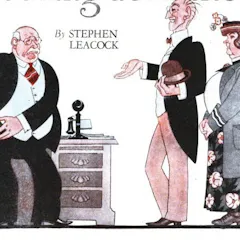
We need to value the recognition of great Canadian comic writing and ensure it’s judged equitably.
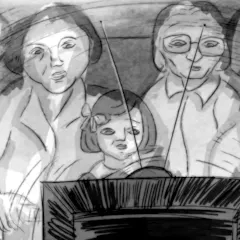
The past of the Holocaust still haunts the present and calls out to Canadian writers. Their works of poetry and prose are forms of remembrance that command our attention.

Publishing houses face strain, and in some cases, closure, as a result of the coronavirus pandemic. Authors are looking for alternative ways to get their work to readers.
Top contributors
-

Professor, Canadian and Cultural Studies, Stockholm University
-
Professor, Department of English, Toronto Metropolitan University
-
Educator and Researcher, Queen's University, Ontario
-
Assistant Professor, Department of English, Dalhousie University
-
Lecturer, Creative Writing, Adelaide University
-
PhD Candidate, Department of English Language and Literatures, Queen's University, Ontario
-
Dean of Arts and Science and Professor of English, Mount Saint Vincent University
-
PhD Candidate, Department of English, Carleton University
-
Instructor, Department of English, Theatre, Film & Media, University of Manitoba
-
Professor, Department of English, Western University
-
Associate Professor, Department of Anthropology, McGill University
-
Associate Professor, Department of English, Simon Fraser University
-
Associate Professor of English, Simon Fraser University
-
Professor, Gender and Sexuality Studies, University of Calgary
-
Full Professor of English, Bishop's University