
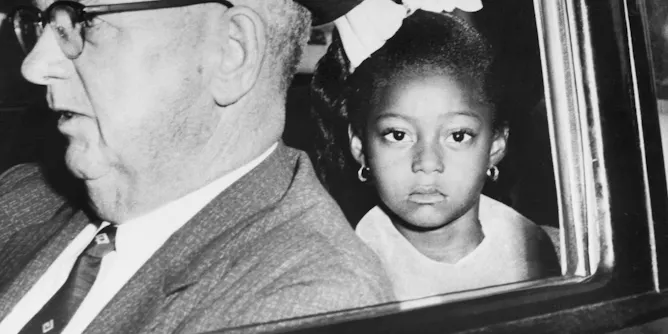
In the early 1960s, the McDonogh 19 school was the site of fierce opposition to racial integration. The building is now owned by one of the Black girls who first integrated the school.
Articles on Brown v. Board of Education
Displaying 21 - 40 of 47 articles
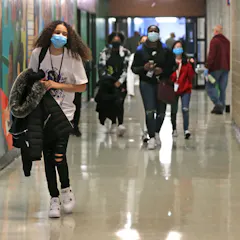
Local control over school funding leads to uneven resources between districts, two legal scholars maintain.
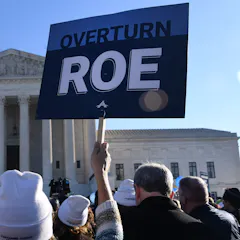
Brown v. Board didn’t overrule ‘separate-but-equal’ but it had that end. A law scholar explains how there is a lesson there for conservatives on today’s Court looking to end abortion in the US.
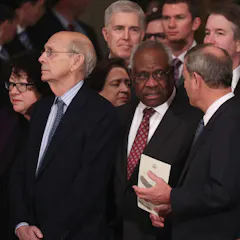
Despite a historically diverse high court, its voting rules often fail to include minority viewpoints. That could be avoided if justices decided their cases by unanimous vote.
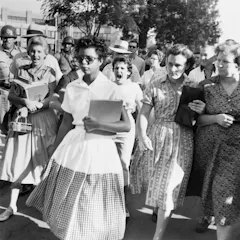
Americans’ collective memory of school desegregation involves crowds of screaming white protesters. But less well known are the whites who stood by quietly, and those who approved of the changes.
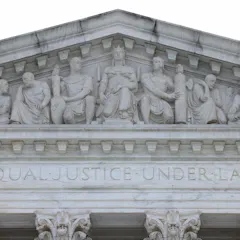
The Supreme Court is a leading player in enacting policy in the US. But it has no army to enforce its decisions; its authority rests solely on its legitimacy.
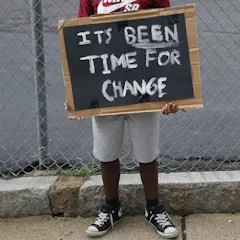
Two scholars of inclusive education explain how segregated Black schools advocated for Black children in a way that’s often missing from today’s desegregated classrooms.
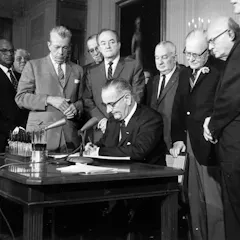
A scholar of race and racism explains what critical race theory is – and how many people get it wrong.
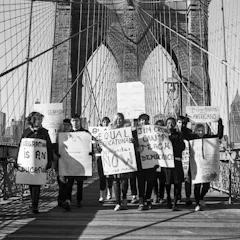
In the 1950s, Harlem mother Mae Mallory fought a school system that she saw as ‘just as Jim Crow’ as the one she had attended in the South.
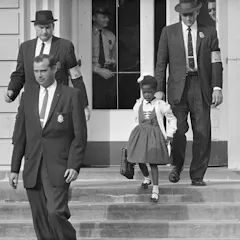
Is the public education that Ruby Bridges fought to integrate a relic of the past?

Instilling a positive sense of ethnic and racial identity and belonging can help children learn.

Concerns over how to make schools safe amid the coronavirus remain. But for many low-income students of color, old buildings in need of repair already presented a heath risk.

Justice Neil Gorsuch joined the Supreme Court as a conservative. But his ruling in a major civil rights case is part of a pattern of justices setting aside ideology to address historic injustices.
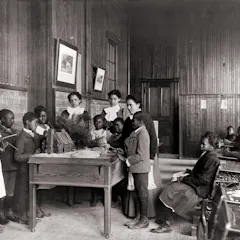
School integration is often thought of as something that took place in the 1960s. But the first Black student to desegregate a school by court order was an Iowa girl named Susan Clark in 1868.
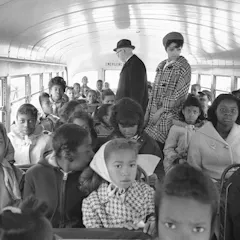
When the Supreme Court exempted suburbs in the North from the kind of desegregation orders imposed in the South, it enabled the ‘de facto’ segregation that continues in America’s schools to this day.
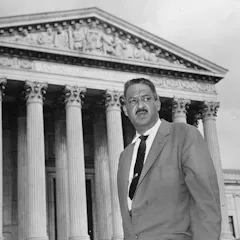
While the Brown vs. Board of Education case is often celebrated for ordering school desegregation, history shows many black people in the city where the case began opposed integrated schools.

When Jessie Simmons applied for a teaching job in 1958, her application went to a separate file for “Negro teachers” and got rejected. An education scholar recounts how Simmons fought back and won.
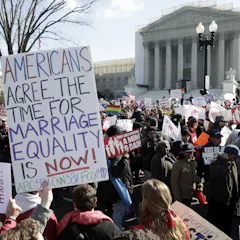
Americans have rediscovered the Supreme Court, as they do periodically when it’s at the center of controversy. With a president who attacks the legitimacy of courts, will their attention be benign?

Better funding, integrated neighborhoods and a diverse teacher workforce are among the things needed to dismantle a long-standing racially segregated school system, a scholar argues.
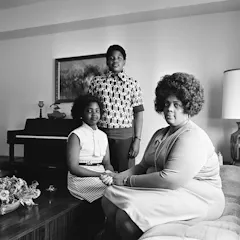
While Linda Brown is being celebrated for her role in the historic Brown v. Board of Education case that desegregated US schools, a researcher says the story behind the case is more complex.
Top contributors
-

Associate Professor of Ethnic Studies, University of Oregon
-
Professor Emeritus of Law and Adjunct Professor of Political Science, Case Western Reserve University
-
Professor of Leadership, Counselor Education, Human and Organizational Development; Executive director, Call Me MISTER, Clemson University
-
Associate Professor Emeritus of Education, Rowan University
-
Professor of Constitutional Studies, Political Science and Law, University of Notre Dame
-
Professor of Political Science and Chair of the Department of Political Science, Clemson University; Institute for Humane Studies
-
Dean, USC Rossier School of Education, University of Southern California
-
Professor of Education, Stockton University
-
Professor of Law, Boston University
-
Professor of Teacher Education, University of Nebraska Omaha
-
Affiliate Faculty, Metropolitan State University of Denver
-
Assistant Professor of History & African and African Diaspora Studies, The University of Texas at Austin
-
Associate Professor, Harvard University
-
Postdoctoral Fellow, Rice University
-
Associate Professor of Education, University of Illinois Urbana-Champaign