
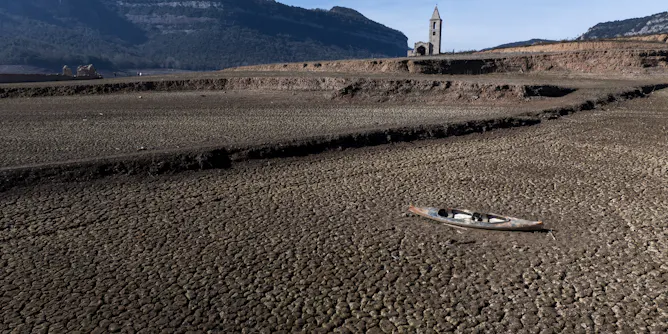
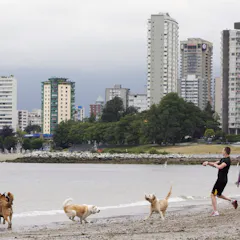
People from different parts of the world might face different climate hazards. But each could recognize something of their own loss in the other’s story.
Articles on British Columbia
Displaying 1 - 20 of 183 articles
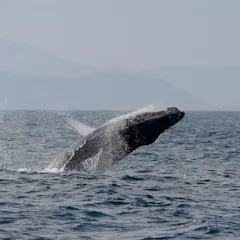
Public responses to the death of Notcho, a humpback whale struck by a BC ferry, reveal how people cope with ecological grief after environmental loss.

The study raises urgent questions about the federal government’s approach to regulating salmon farms.

David Eby has gambled his government in a bid to capitalize on the right’s infighting. Instead, he may have united his opponents behind the Conservatives.

Playing out year over year, the chaotic cycle of drought crises has become a familiar experience for British Columbians.

Wolves are a vital part of Canada’s rich biodiversity and are a culturally important species. Killing them to protect caribou repackages the colonial fear of the “big bad wolf.”

Portugal’s remarkable public health strides after changing its approach to drugs may not be replicable in other countries absent broader systemic reforms.

The proportion of a watershed that is logged isn’t the only factor that determines flood risk. The landscape and climate matter too.
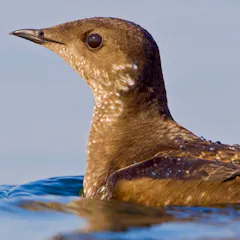
Facing pressures in both marine and terrestrial environments, the marbled murrelet is listed as threatened under Canada’s Species at Risk Act.

A newly proposed pipeline to B.C.’s coast promises tens of thousands of jobs and billions in GDP growth. But falling Asian oil demand and a track record of cost overruns complicate the picture.
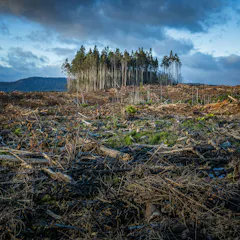
In mountainous environments, logging can hasten snowmelt, leading to larger floods.

Translocation intends to minimize the impacts of development. Research shows that we are moving millions of animals and have no idea what happens to them next.
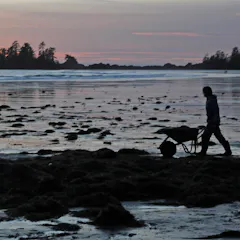
Seaweed aquaculture is attracting attention, but improved oversight is needed to prevent ecological impacts.
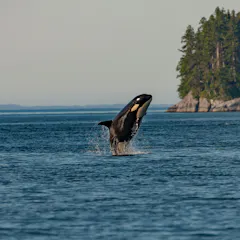
Impact assessments prevent harm before it occurs. Circumventing the process before we understand the risks is misguided and a gamble with our collective future.
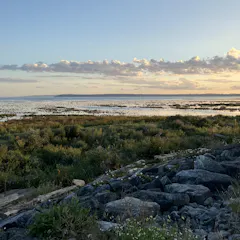
Data shows that almost all of B.C.’s endangered wildlife are not recovering quickly enough, if at all.
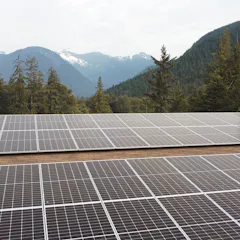
Indigenous-owned renewable energy projects are growing quickly in Canada. New research suggests they could enable widespread acceptance of energy transitions.

Climate change is altering not only how much snow falls, but where snowpack persists and how long it lasts.
Modern engineering practices explicitly design concrete to be more resilient to earthquakes, but older buildings predate such practices. That makes them especially vulnerable.
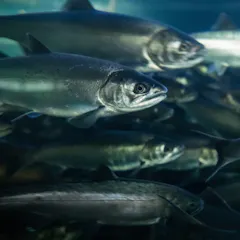
Expediency with industrial development carries real environmental risks for salmon unless matched by corresponding investment in mitigation and monitoring.
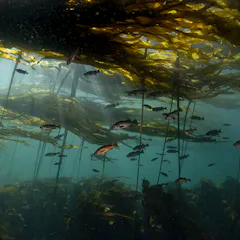
Researchers have known for centuries that some fish make sounds. Now, using special underwater acoustics, researchers have been able to identify sounds from eight different species.
Top contributors
-

Assistant Professor, School of Population and Public Health, University of British Columbia; Simon Fraser University
-
Professor, Urban Studies and Professor of Resource and Environmental Management, Simon Fraser University
-
Associate Lecturer, School of Humanitarian Studies, Royal Roads University
-
Assistant professor in Indigenous Governance, École nationale d'administration publique (ENAP)
-
Professor, Department of Forest Resources Management, University of British Columbia
-
UN Expert Mechanism on the Rights of Indigenous Peoples (EMRIP) and Professor in Political Science, Global Affairs and Public Policy, University of Toronto
-
Assistant Professor of Indigenous Health, Simon Fraser University
-
Postdoctoral Fellow, Faculty of Health Sciences, Simon Fraser University
-
PhD Candidate, Department of Geography, Planning, and Environment, Concordia University
-
Chair in Insurance and Professor, Finance, Wilfrid Laurier University
-
Associate Professor of Psychology, Health and Wellness, Adler University
-
Associate Professor, Peter A. Allard School of Law, University of British Columbia
-
Assistant Professor, Department of Political Science, McGill University
-
Fellow, Queen's Institute for Energy and Environmental Policy, School of Policy Studies, Queen's University, Ontario
-
Contributor to the special issue on Ethnobiology Through Song/CEO Ninogaad Knowledge Keepers Foundation/Board of Directors APTN, Indigenous Knowledge