
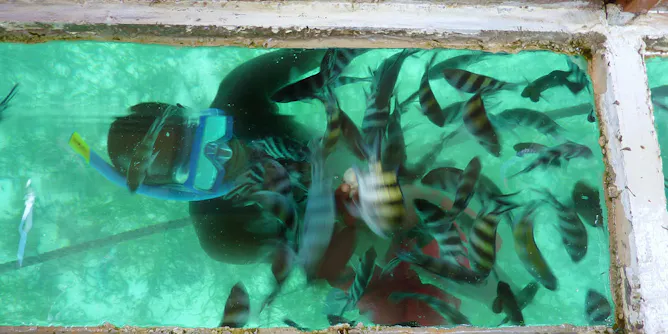
Kenya can explore at least four key actions, based on past commitments and institutional structures, to transform the economic future of its oceans.
Articles on Blue economy
Displaying 41 - 57 of 57 articles
The UN Ocean Conference provides a golden opportunity for countries to present their aspirations for sustainably growing their ‘blue’ economies.
Many African countries are sitting on vast and under-utilised oceanic territories that have the potential to unlock enormous economic value, if properly governed.
By 2030, the Blue Economy will be worth $3 trillion. And the UK is well placed to capture a slice of this lucrative market, if it meets the challenges involved with innovation and ambition.
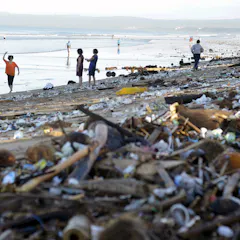
Marine plastic pollution is a global problem. Bali’s beaches present prime examples and an opportunity to study the socio-economic effects this has on coastal communities.
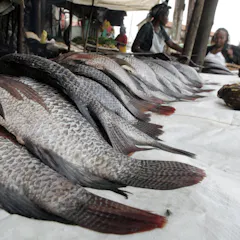
Tilapia could play an important role in Tanzania’s economic development.
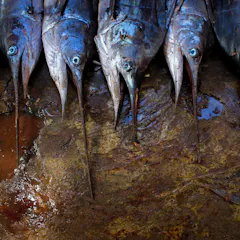
The ocean can no longer be viewed as a limitless space for free access for all. It needs to be managed over its entirety
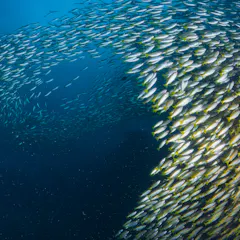
The two countries share huge marine resources and opportunities. At the same time both face increasing challenges to their oceans and coastal regions from climate change and over-exploitation.
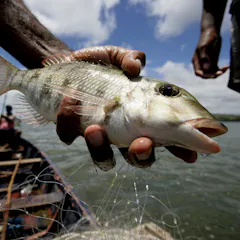
Melanesia’s oceans are worth at least US$5.4 billion, but are under increasing threat.
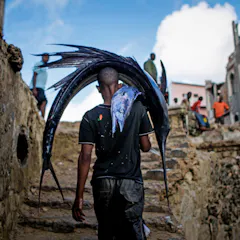
The blue economy is unknown, overlooked and underdeveloped in Africa. It could represent a major growth driver for the continent.
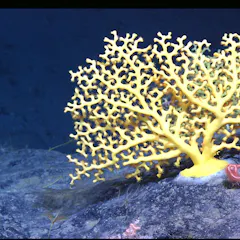
The open oceans are the world’s “wild west”, falling outside any nation’s jurisdiction. UN negotiations are aiming to draft new laws for the high seas.
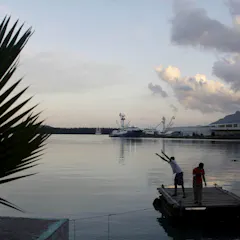
Small island universities can add to the sum total of African knowledge in a number of ways.
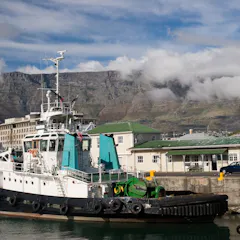
South Africa’s oceans economy can contribute R177 billion to the GDP and create up to one million new jobs by 2033. But this requires more skilled people to drive the growth.
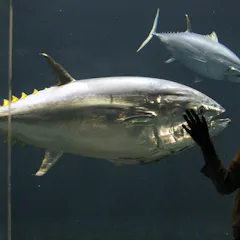
Over-fishing is a massive environmental and economic challenge. Fortunately, there are new solutions being trialled – including in a tuna hotspot in the Pacific.

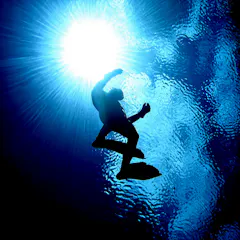
Diving in many parts of Indonesia, Thailand and Malaysia now costs a little more than it used to – but you might be happy to discover why.
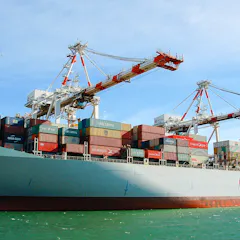
As the world’s land-based economies struggle with around 2% GDP growth, the global marine economy – often talked about as “the blue economy” – is a bright light on the horizon.
In many ways, Australia is defined by the oceans surrounding us. We have the world’s third largest ocean territory, most of our trade travels by sea, and we have vast offshore resources.
Top contributors
-

Lecturer in Sustainable Futures, University of St Andrews
-
Professor, School of the Environment, The University of Queensland
-
Research Coordinator, Security Institute for Governance and Leadership in Africa, Stellenbosch University
-
Robert Bartlett Professor of Oceanography, Memorial University of Newfoundland
-
Professor in Economics and Director of the Centre for Blue Governance, UNESCO Chair in Ocean Governance, University of Portsmouth
-
Director of CORDIO in East Africa and Adjunct Fellow, Pwani University
-
Adjunct associate, Universitas Indonesia
-
Anthropologist, The University of Queensland
-
PhD Candidate in Oceans Law and Policy, University of Wollongong
-
Chief Executive Officer, Australian Institute of Marine Science
-
Professor, University of Wollongong
-
Principal and Vice Chancellor, Heriot-Watt University
-
Postdoctoral Researcher in Sustainability Science, Stockholm University
-
Chief Scientist and Research Chair for Inland Fisheries and Freshwater Ecology, South African Institute for Aquatic Biodiversity
-
Chair professor, University of Wollongong