

Induction is often recommended when a pregnancy goes over 41 weeks to reduce the risk of stillbirth. But it’s not consequence-free.
Articles on Birth
Displaying 1 - 20 of 102 articles
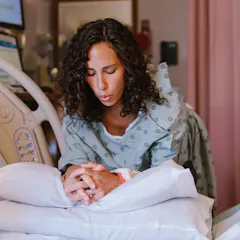
You spend your pregnancy researching and planning for when your baby finally arrives. But how much autonomy do women have?

Armenian culture marks major events such as birth and death with a special period of 40 days, called ‘karasunk,’ as people transition from one state to another.

Massage is in; examinations are out. Here’s what to think about if you’re considering hiring a doula.
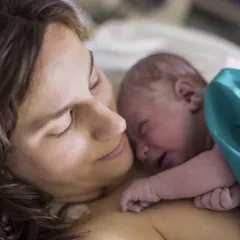
Researchers are getting to the bottom of how poo helps newborn babies. It might sound gross, but here’s the science.

Tamarins and squirrel monkeys have babies with unspeakably large heads compared to their mother’s birth canal.
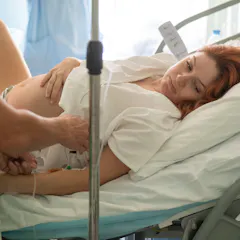
Women report experiencing pressure to birth naturally. This is often overlooked, but can be just as harmful as pressure to have birth interventions.
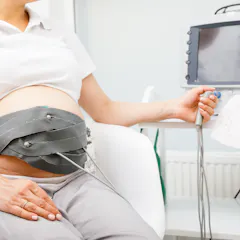
Research gaps in biomechanics and foetal movement may be holding back improvements in maternity safety.
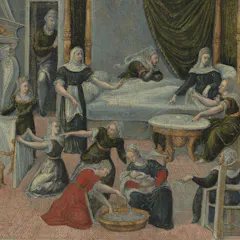
On entering the exhibition, visitors are immersed in the world of the late medieval birthing chamber.

Assisted births are common, but many first-time mothers say they lack information before labour and struggle to make decisions in the moment.
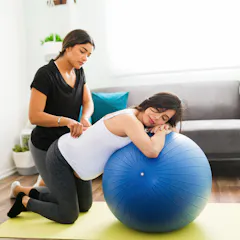
Doulas bring a holistic, person-centered approach that can improve birth outcomes and lower overall costs.

Stories of big babies might make women all over the world cross their legs. But how common are big babies, and does their birth always lead to complications?
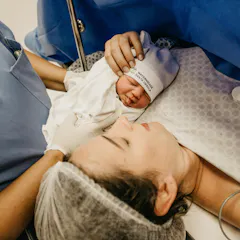
We know more about the mechanics of space than of childbirth. With no studies or evidence, care is based on assumptions, and women are paying the price.
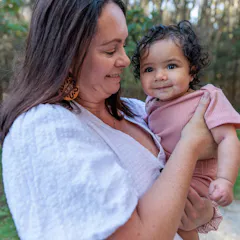
Many Indigenous families around the world say hospital staff often don’t understand their cultures or even give them basic rights during maternity care.
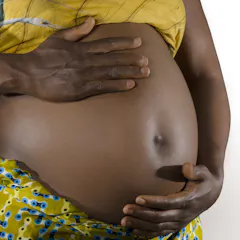
A number of things could affect the success of Nigeria’s scheme to provide free caesarian sections.
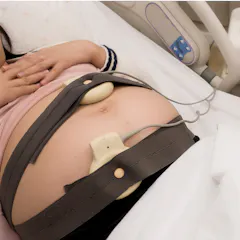
If there are complexities or greater risks, or labour has been artificially induced, continuous monitoring is recommended. New research explores how this affects the experience of birth.

This link might be explained by a woman’s immune response when carrying a baby that’s not genetically hers.

Caesarean section births are often thought to be safer. In fact they disrupt the natural bond between mother and baby and can interrupt brain development.

Women favour seeing the same health provider throughout pregnancy, in labour and after they have their baby – whether that’s via midwifery group practice, a private midwife or a private obstetrician.

Planned early delivery is a key component of reducing child and maternal mortality.
Top contributors
-

Professor of Midwifery, Associate Dean Research and HDR, Midwifery Discipline Leader, Western Sydney University
-
Associate Professor of Midwifery, Western Sydney University
-
Senior Lecturer, Evolutionary Biology, University of Sydney
-
Professor in Midwifery, University of Sydney
-
Adjunct Research Fellow, Western Sydney University
-
Associate Professor in Perinatal Biomechanics and Health Technologies, University of Lancashire
-
Professor of Midwifery and Dean in the Faculty of Health Sciences, Southern Cross University
-
Senior Research Fellow in Maternal and Reproductive Health, University of Hull
-
Postdoctoral Research Associate, UNSW
-
PhD Candidate, Faculty of Law, University of Oxford
-
Caroline Homer is a Friend of The Conversation.
Deputy Director (Gender Equity, Diversity and Inclusion), Burnet Institute
-
Honorary Clinical Associate Professor, University of Glasgow
-
Associate professor, UNSW
-
Clinical Research Fellow, Centre for Chronic Disease Prevention, James Cook University
-
Head of Urbanism and Associate Professor of Urban Studies, School of Architecture, Design and Planning, University of Sydney