
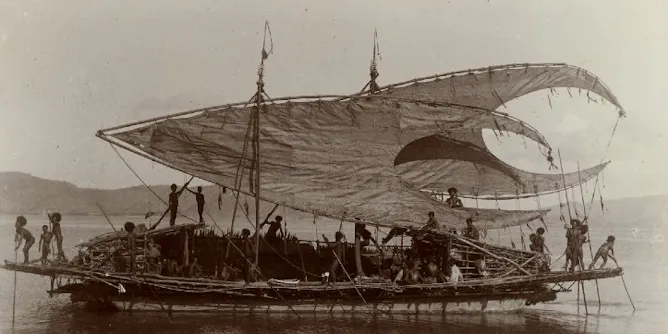
It has often been assumed that Australia was essentially isolated until 1788. But research into the seagoing trade on the south coast of Papua New Guinea suggests otherwise.
Articles on Australian history
Displaying 301 - 320 of 459 articles
Captain Cook’s 1770 voyage is well known. But at this time, Indigenous Australians also travelled great distances - let’s recognise this in the 2020 commemorations.

The Aussie accent has been lambasted as “lazy”, but this view doesn’t come from the facts.
With world-first compulsory and preferential voting, Australia was born not on the battlefield but at the ballot box.
Isabel Letham was one of the first Australians to ride the waves. After moving to the US in 1918, she became an epitome of the modern woman: economically independent, physically daring and unapologetically ambitious.
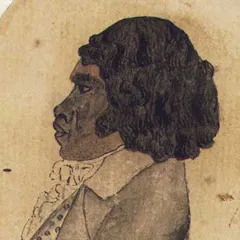
History has typically depicted Bennelong as a tragic figure lost between two worlds - but sailors’ journals suggest he still held authority after his return from the UK.

As the debate around celebrating Australia Day on January 26 continues, new research shows Australians have mixed views of it as a national day.
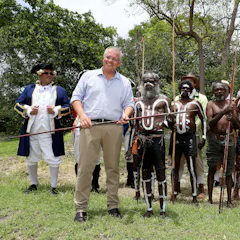
The government’s investment in a celebration of 250 years since James Cook’s voyage to and along Australia, if not done properly, will further inflame the history wars in Australia.
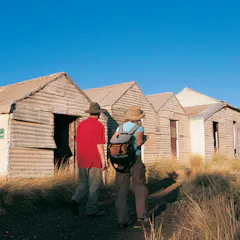
The industrial patterns of mining shaped many Australian towns, which found varied uses for disused mine sites. The mining boom ensures the challenges these sites present will be with us a long time.

When the remains of Aboriginal people who died more than a century ago were found, the local Aboriginal community wanted to know more about these past lives.
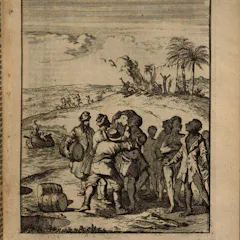
The image, depicting a group of Indigenous people resisting their enslavement, predates the next oldest image by 75 years.
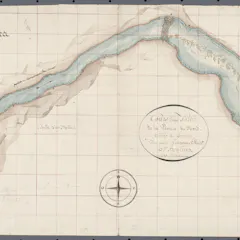
Today, many Australian urbanites see rivers as little more than picturesque places for a paddle. But in the colonial era, rivers served as highways, drinking sources, sewers, and routes to discovery.
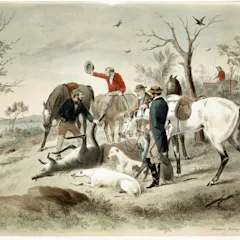
In the mid 19th century, kangaroo hunting was a sport. Colonial hunting clubs were established across Australia and everyone from Charles Darwin to Anthony Trollope tried their hand at shooting roos.
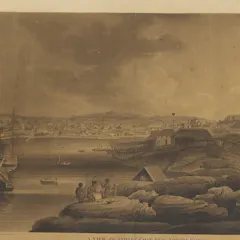
Australia still hasn’t answered how Aboriginal people became protected by British law and lost all their land at the same time. If it can’t be resolved here, it might be time for international courts to weigh in.
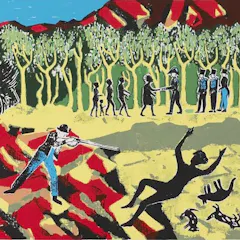
It is 50 years since anthropologist W.E.H. Stanner gave the Boyer Lectures in which he coined the phrase ‘the great Australian silence’. How far have we come since?
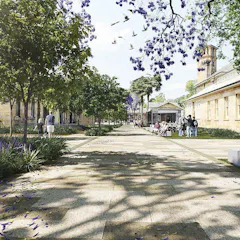
Sydney’s Parramatta is developing fast, building over a rich archaeological history. Finding ways to retain it can help visitors and residents feel a sense of physical connection with those who came before.
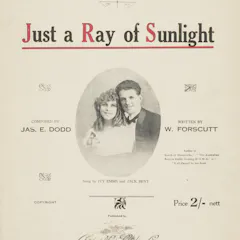
More than 100,000 records of live performance are on a database of our theatre history. They tell of corroborees, the first play staged by white settlers, and long-gone gracious theatres.
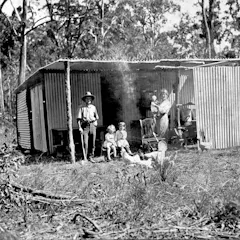
Australia’s convict past and male-dominated sex ratios have long-lasting effects on attitudes, impacting women’s working lives.
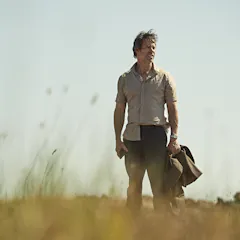
Australia’s rich tradition of crime fiction is little known – early tales told of bushrangers and convicts, one hero was a mining engineer turned amateur detective – but it reveals a range of national myths and fantasies.
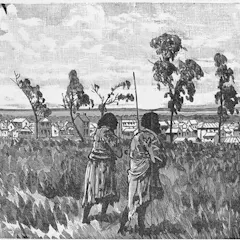
Ngár-go (Fitzroy), Quo-yung (Richmond), Yálla-birr-ang (Collingwood), and Bulleke-bek (Brunswick), are just some of the Woiwurrung names uncovered in the notebooks of a 19th century anthropologist.
Top contributors
-

Professor in Public History, University of Technology Sydney
-
Director, Vice-Chancellor's Centre of Public Ideas (CoPI) and Donald Horne Professor of History and Public Ideas, University of Canberra
-
Emeritus Professor, Institute for Culture and Society, Western Sydney University
-
Professor of History and Professor of Public Engagement, La Trobe University
-
Wesfarmers Chair of Australian History, The University of Western Australia
-
Senior Lecturer in History, La Trobe University
-
Senior Lecturer in Linguistics, Monash University
-
Sir John Monash Distinguished Professor, Monash University. Deputy Director ARC Centre of Excellence for Indigenous and Environmental Histories and Futures, Monash University
-
Professor of History, President, Australian Historical Association, Macquarie University
-
Professor, Australian and Aboriginal History, Faculty of Arts, Design and Architecture, Convenor: Indigenous Land & Justice Research Group, UNSW
-
Professor Emeritus of Media and Culture, Griffith University, Griffith University
-
Professor in History, University of Tasmania
-
Professor of Linguistics, Monash University
-
Professorial Fellow in History, School of Historical and Philosophical Studies, The University of Melbourne
-
Professor, Critical Indigenous Studies and Director of The Centre for Global Indigenous Futures, Macquarie University