
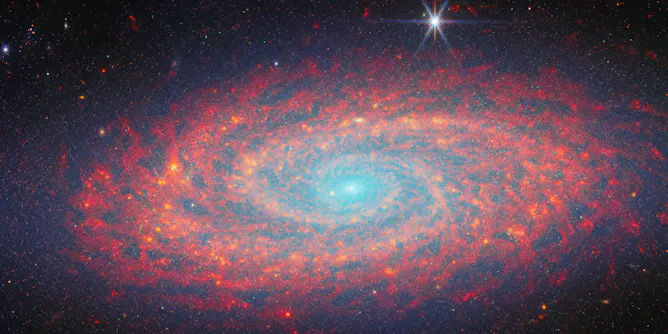
From the microscopic structure of particles and atoms, to the fate of black holes and the large-scale structure of the universe, the quantum ‘vacuum’ plays a role.
Articles on Aurora borealis
Displaying 1 - 20 of 31 articles
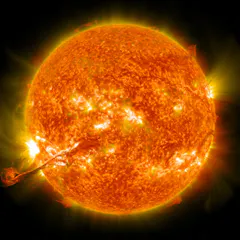
Space weather isn’t referring to rain clouds that float through the galaxy. Instead, it’s caused by massive explosions of particles that shoot out from the Sun.
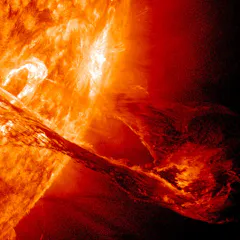
While geomagnetic storms can lead to gorgeous aurora displays, they can also damage satellites and GPS.
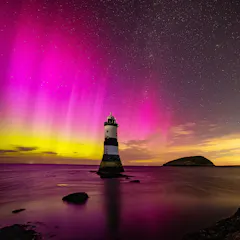
The northern lights have been interpreted in many ways down the centuries - from portents of political upheaval to signs of religious revival.
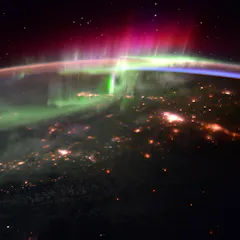
Aurora forecasting is notoriously tricky. But there are ways to know where and when you should be looking – from email alerts to 30 minute forecasts.

The Sun gives us light, warmth and, occasionally, tans. But our star also experiences crises and storms that can have very real repercussions on everyday life.

The aurora was noticeable with the naked eye – but was spectacular through a camera lens.
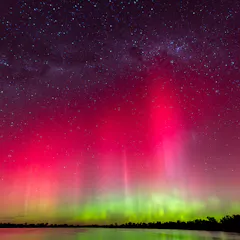
Australians were in for a Mother’s Day treat as auroras swept the skies. But there was little warning, and the spectacle didn’t repeat.
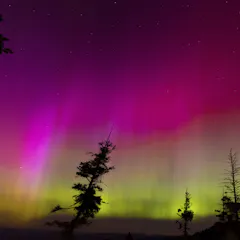
The electric rainbow of the aurora happens when excited atoms relax via ‘forbidden transitions’.
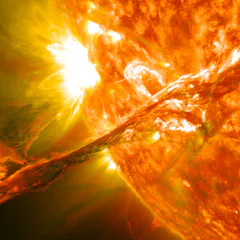
We’re currently a few years into the 25th studied solar cycle. An 11-year period of sun activity, this solar cycle is more active than previously expected.
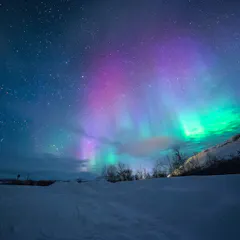
The aurora is one of nature’s most spectacular sights, a dazzling glow in the upper atmosphere driven by space weather.
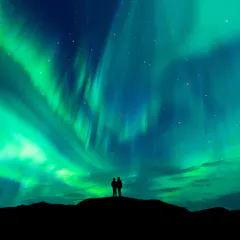
People expect to brave brutally cold landscapes if they want to catch sight of the aurora borealis. So people were stunned to see the ethereal light display as far south as Cornwall.
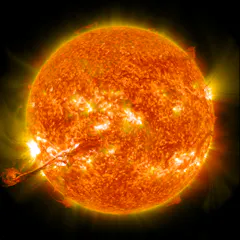
Space weather can affect satellites in a number of different ways, from frying electronics to increasing drag in the atmosphere.

It’s often said that the aurora, or the northern lights, is caused by ‘particles from the Sun’. But in reality things are more complicated.

A curious kid asks: Why are the northern lights only spotted at areas around the poles?
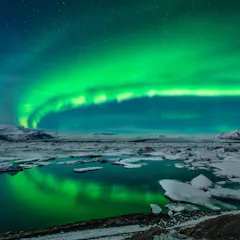
Depending on who you ask, the northern lights may, very occasionally, sound like ‘rustling silk’ or ‘two planks meeting flat ways’.
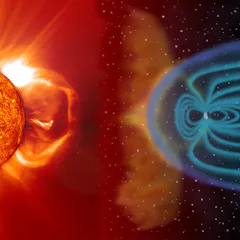
When solar particles reach the Earth, they not only produce spectacular auroras but also contribute to the chemical reactions leading to ozone depletion, which in turn influences climate patterns.
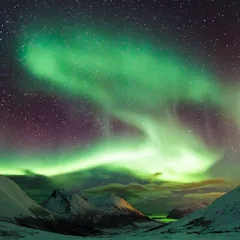
The northern lights might look like magic, but they can actually be explained by science – here’s how.
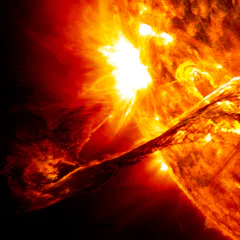
The wired Earth of the 21st century is at the mercy of the volatile nature of the sun.
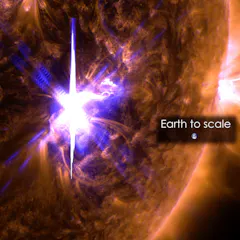
At a time in the sun’s cycle when space weather experts expect less solar activity, our star is going bonkers with solar flares and coronal mass ejections. What effects will Earth feel?
Top contributors
-

Senior Research Associate in Space and Planetary Physics, Lancaster University
-
Associate Professor, RMIT University
-
Researcher in Physics and Astronomy, Dartmouth College
-
ARC Future Fellow, Physics, University of Newcastle
-
Professor of Space Physics, Lancaster University
-
Research Officer, RMIT University
-
Professor of Electrical and Computer Engineering, Utah State University
-
Associate Professor, School of Physics, The University of Melbourne
-
Boston College
-
Boston College
-
Research Professor of Imaging Science, Rochester Institute of Technology
-
Post-Doctoral Research Assistant in Photobiology, University of Dundee
-
Lecturer in Mathematics, University of Dundee
-
Associate Professor of Space Systems, West Virginia University
-
RMIT University