
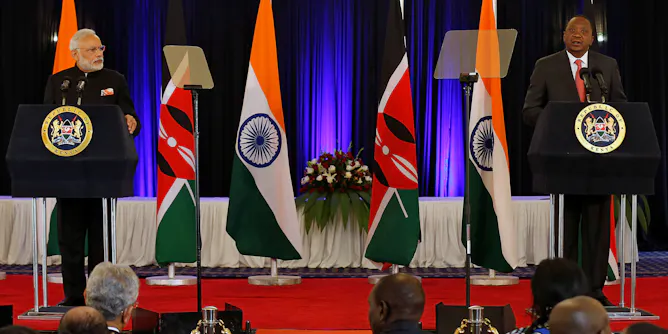
Narendra Modi’s first trip to Africa has widely been heralded as a success, but his brand of diplomacy has left the most pressing issues for the continent unaddressed.
Articles on Antiretroviral drugs
Displaying 41 - 60 of 75 articles
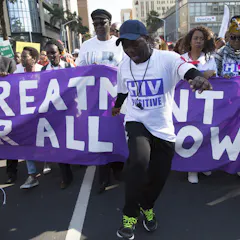
Current epidemiological and financial trends suggest there’s a major risk of a substantial shortfall in the funds required to sustain life-saving antiretroviral programmes.

Curing HIV – or at least achieving long-term remission – is possible, under the right circumstances.

Three new studies conducted in South Africa provide insights into the engine that drives HIV transmission in the country.

Activists, health-care workers and scientists in South Africa were faced with a horrific epidemic but went on a ruthless crusade to turn it around.
New guidelines from the World Health Organization mean more people are eligible for antiretrorviral therapy. It’s critical to find ways for people to start treatment without multiple clinic visits.
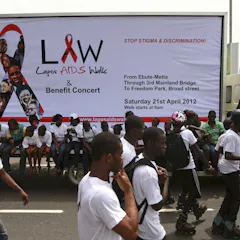
Creating HIV services at primary health-care centres in Nigeria may improve the uptake of antiretrovirals, but it won’t tackle the issue of stigma.
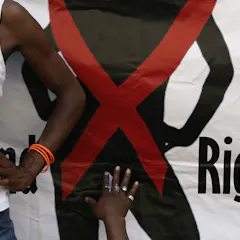
In South Africa, female sex workers go for HIV tests, receive counselling and use condoms – but don’t access antiretroviral treatments. More options are now available and can change this.
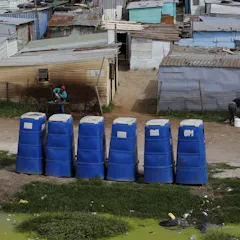
Interacting with communities can provide health planners with critical information that can help them solve health challenges in specific areas.
The call to action to address childhood vulnerability in Africa must go far beyond the 17.8 million children infected and affected by HIV.

If the vaginal ring becomes available for commercial use it will become one of the tools in the HIV prevention toolbox for women alongside female condoms and daily pre-exposure prophylaxis.
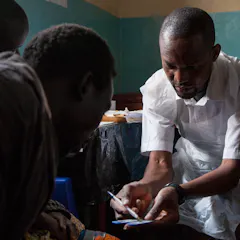
In sub-Saharan Africa more women may be infected with HIV than men - but men are more likely to die because of poor testing and treatment regimes.
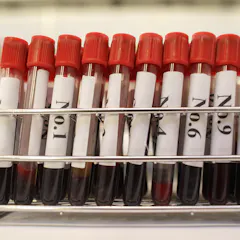
Despite the breakthroughs in HIV and AIDS research, without an effective vaccine, the world will not get to zero new infections and deaths.

Globally, the health community is moving to a point where there could be zero new HIV infections or deaths. But it has been a long road.
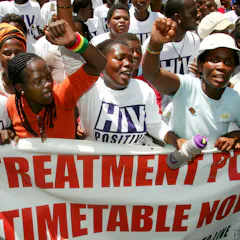
One of the remarkable achievements of South Africa’s Constitutional Court has been its role in improving the quality of the internal democratic processes within the governing ANC.

The closure of several mines in South Africa and production cuts could have a detrimental impact on the health of miners who rely on in-house HIV and TB treatment programmes.

South Africa’s programmes preventing HIV transmission from mothers to children have been hugely successful. But there are still gaps that need to be filled.

Thanks to treatment advances, people with HIV can and do live long and full lives. And that has led to a challenge that doctors and patients may not have imagined 35 years ago: the aging HIV patient.
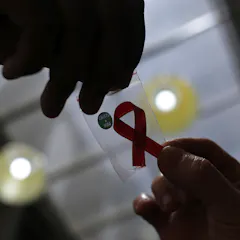
With nearly one-fifth of the globe’s HIV positive population, South Africa has the largest anti-retroviral program in the world. But HIV prevention still presents a big challenge for the country.

Just how much disclosure is it reasonable to expect from a sex partner, particularly if that relationship isn’t a serious and committed one?
Top contributors
-

Associate Professor, Public Health Ethics, School of Population Health, UNSW
-
Associate Professor and Director: Research at the Wits Reproductive Health and HIV Institute I, University of the Witwatersrand
-
Distinguished Professor, Infectious Disease and Oncology Research Institute, Faculty of Heath Sciences, University of the Witwatersrand, Executive Director Perinatal HIV Research Unit, Chief Scientific Officer, South African Medical Research Council
-
Professor of medicine and deputy director of the Desmond Tutu HIV Centre at the Institute of Infectious Disease and Molecular Medicine, University of Cape Town
-
Ezintsha, Faculty of Health Sciences, University of the Witwatersrand, University of the Witwatersrand
-
Melbourne Laureate Professor, University of Melbourne; Director, The Peter Doherty Institute for Infection and Immunity
-
Health Systems Researcher, Makerere University
-
Public Health Medicine Specialist, University of the Witwatersrand
-
Director of Implementation Science, Wits Reproductive Health & HIV Institute, University of the Witwatersrand
-
Professor of Global Health and Director, O'Neill Institute, Georgetown University
-
University of the Witwatersrand
-
Director of the Africa Centre for Population Health and Professor of Virology, University of KwaZulu-Natal
-
Professor (conjoint), School of Women's & Children's Health, UNSW and previously Head, Department of Immunology and Infectious Diseases and the HIV Service, Sydney Children's Hospital;, UNSW
-
Professor Emerita, Department of Sociology, University of Pennsylvania
-
Professor of Anthropology and Health, London School of Hygiene & Tropical Medicine