
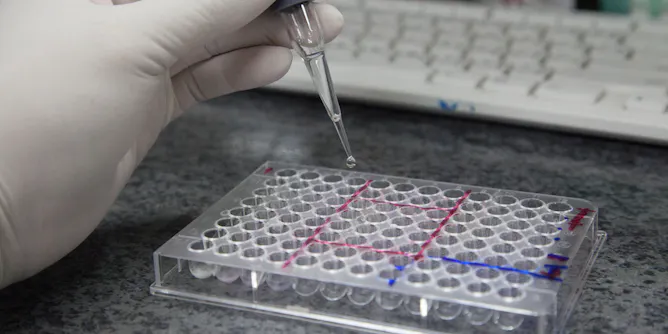
Introducing viral load testing at health facilities can help South Africa reach the United Nations target to end AIDS.
Articles on Antiretroviral drugs
Displaying 21 - 40 of 75 articles
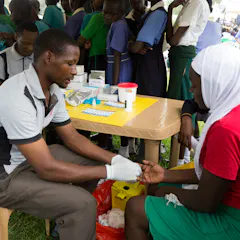
In Uganda stand-alone clinics for HIV treatment persist because of stigma and overcrowding.
Women and children remain the focus of HIV while men are disadvantaged in accessing testing and treatment in Africa.
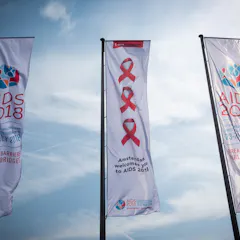
The HIV epidemic is far from over and it’s not time to disengage, says International Aids Society President Linda-Gail Bekker.

Health workers promote exclusive breastfeeding to HIV positive mothers more than they do to mothers who are negative.

In many parts of sub-Saharan Africa men who have sex with men encounter stigma and prejudice when accessing health services.

South Africa’s data rollout of its pre-exposure prophylaxis shows that there is a relatively slow, but increasing, uptake. However, more needs to be done to target young women.

A clinical trial currently underway in France could confirm that that HIV treatment can be safely reduced to just four days a week, while maintaining the same efficacy.
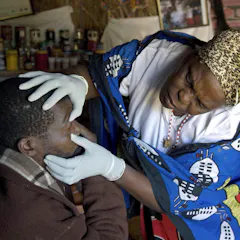
In rural areas where there are often fewer healthcare professionals available, traditional healers can have a role to play in promoting HIV treatment.
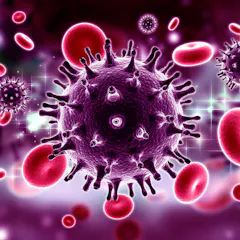
To get an effective vaccine for HIV/AIDS, scientists need to understand exactly how the virus works and immune system responds to it. African scientists have come one step closer.

Stigma stops people from getting tested for HIV, and staying on their treatment. Unless it’s addressed, the AIDS epidemic will persist.

The introduction of Pre Exposure Prophylaxis drugs in Kenya aims at reducing new HIV infections among people facing substantial ongoing risk.
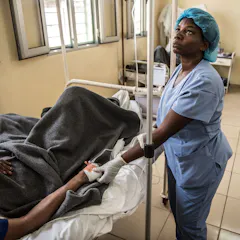
HIV remains a synonym for death in Kinshasa and many leave testing and treatment until it’s too late. It’s not common knowledge that an infected person can live a normal and healthy life.

South Africa has launched a plan to tackle HIV, TB and sexually transmitted infections – but much depends on its implementation over the next five years.

Up to 50% of the people who take the efavirenz antiretroviral react particularly badly to it and need to change drug regimens.

South Africa and Zimbabwe have made significant strides to roll out antiretrovirals. But the regional expansion of treatment programmes still needs work.

More than 250 000 patients at highest risk for cryptococcal meningitis but no symptoms will be screened in South Africa annually to reduce the number of deaths.

Medical circumcision in settings where there are high rates of HIV will only be successful if these interventions take into account local beliefs about circumcision.

Many people with moderate to severe chronic pain find it difficult to move around. By contrast, HIV-positive people who had chronic pain are still active.

Taking antiretrovirals is key to reducing HIV infection rates, but the challenge lies in making sure people who know they are infected actually take the drugs.
Top contributors
-

Associate Professor, Public Health Ethics, School of Population Health, UNSW
-
Associate Professor and Director: Research at the Wits Reproductive Health and HIV Institute I, University of the Witwatersrand
-
Distinguished Professor, Infectious Disease and Oncology Research Institute, Faculty of Heath Sciences, University of the Witwatersrand, Executive Director Perinatal HIV Research Unit, Chief Scientific Officer, South African Medical Research Council
-
Professor of medicine and deputy director of the Desmond Tutu HIV Centre at the Institute of Infectious Disease and Molecular Medicine, University of Cape Town
-
Ezintsha, Faculty of Health Sciences, University of the Witwatersrand, University of the Witwatersrand
-
Melbourne Laureate Professor, University of Melbourne; Director, The Peter Doherty Institute for Infection and Immunity
-
Health Systems Researcher, Makerere University
-
Public Health Medicine Specialist, University of the Witwatersrand
-
Director of Implementation Science, Wits Reproductive Health & HIV Institute, University of the Witwatersrand
-
Professor of Global Health and Director, O'Neill Institute, Georgetown University
-
University of the Witwatersrand
-
Director of the Africa Centre for Population Health and Professor of Virology, University of KwaZulu-Natal
-
Professor (conjoint), School of Women's & Children's Health, UNSW and previously Head, Department of Immunology and Infectious Diseases and the HIV Service, Sydney Children's Hospital;, UNSW
-
Professor Emerita, Department of Sociology, University of Pennsylvania
-
Professor of Anthropology and Health, London School of Hygiene & Tropical Medicine