
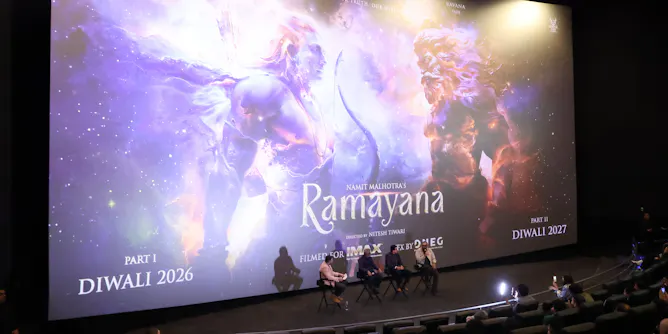
There is no single way to tell the story of the ‘Ramayana.’ People from different religious traditions and cultural backgrounds have reimagined the epic in countless ways.
Articles on Ancient texts
Displaying 1 - 20 of 41 articles

Hollywood has a habit of rendering complex literary heroes into one-dimensional figures. Nolan’s The Odyssey dodges this trap.
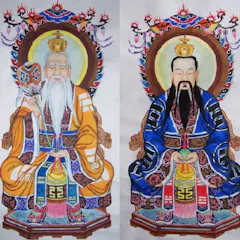
Daoism approaches the world not from the perspective that the world is broken or needs to be saved, but rather that it is naturally balanced.

The folk tales of Nasreddin Hoja, which likely originated in 13th-century Turkey, carry many lessons for us today.
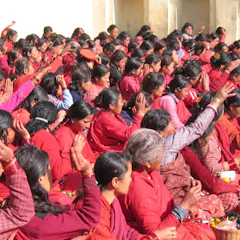
Swasthani holds a central place in Nepali culture. Its female characters uphold ideals of faithful wifehood – seen by some as patriarchal and by others as a source of strength.
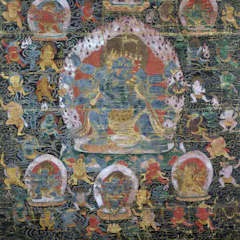
Rooted in the Buddhist teaching of the bardo − states of ‘in-between’ − the text offers a way to understand death, life and transformation as deeply intertwined.

‘Apocrypha’ means ‘hidden’ in Greek, but it is often used to describe texts that are outside the official biblical canon.
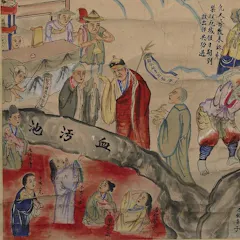
In some cultures, menstruation and childbirth are treated as polluting, not life-giving. One Buddhist text’s interpretation of ‘Blood Pond Hell’ shows how far such beliefs go – and how women respond.

The Kalevala, a poetic epic filled with myth, reflects the shared roots between Finnish and Karelian cultures.
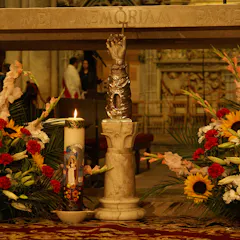
The Christian apocrypha, texts not included in the Bible, include stories of Jesus’ female followers – including St. Thecla.

Ancient evidence tells us these people held positions of power because of their gender ambiguity, not despite it.
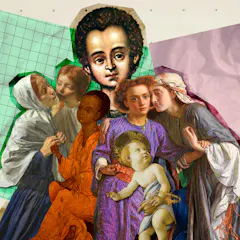
While there are many ancient texts focusing on Jesus as a baby and as a man, much less is known about him as a child. Here’s what some of them tell us.
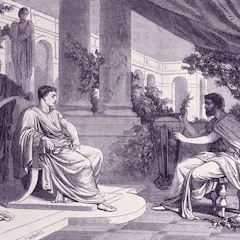
They worried deeply about the impact climate change would have on us as individuals, and on broader society.

The folktale, ‘The Bird Indifferent to Pain,’ offers insight into why audiences are drawn to the relentless jester – a comedic trope that has endured across cultures.

While the biblical figure of Samson is often characterized as driven by poor judgment, a Hebrew Bible scholar argues why he could instead be interpreted as a figure of emotional complexity.

Anime characters often face challenges that connect to long-standing Buddhist and Shintō teachings. In this course, students look closely at what anime is saying about life.
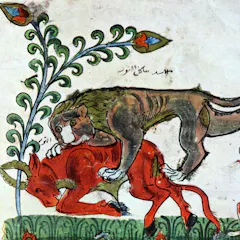
‘Pañcatantra,’ a striking collection of animal fables in which birds, lions and others speak and reason as humans do, guides leaders through 3 ethical positions.

Philosophers have always wrestled with how love can be so morally important, yet so personal and even arbitrary.

The 13th-century theologian’s influences included Greek, Muslim and Jewish thinkers.

The ancient classical texts of Hinduism taught that every age and stage of life need not be lived as a breathless race. They proposed living according to one’s natural capabilities.
Top contributors
-

Associate Teaching Professor Religious Studies, University of Tennessee
-
Associate Professor of Religious Studies, University of Tennessee
-
Associate Professor of Christianity, University of Denver
-
Associate Professor of American Studies, University of Notre Dame
-
Assistant Professor of Religious Studies, Case Western Reserve University
-
Associate Professor of Ancient Greek Philosophy, Michigan State University
-
Visiting Assistant Professor of Religious Studies, Oklahoma State University
-
Associate Professor of Classics and Digital Humanities, University of Florida
-
Professor of Religious Studies, Indiana University
-
Associate Professor, New Testament, & Inaugural Director of The Wesley Centre for Theology, Ethics, and Public Policy, University of Divinity
-
Principal Lecturer in Religion, Clemson University
-
PhD Candidate; Assyriologist, Macquarie University
-
Associate Professor of Middle Eastern and Ancient Mediterranean Studies, Binghamton University, State University of New York
-
Associate Teaching Professor, Arizona State University
-
Associate Professor of Classics, University of Manitoba