

The time, energy and skills needed to verify AI’s answers to your queries can erase any productivity gains that the technology provides.
Articles on AI agents
Displaying 1 - 20 of 37 articles

Agentic AI systems are not conscious – not even maybe.
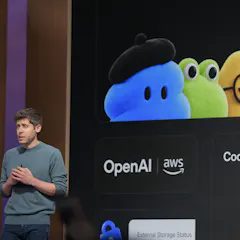
Cute designs can make AI technology feel harmless, but real hazards are still present.
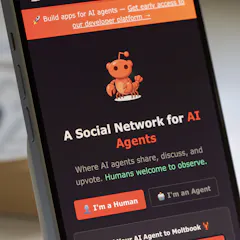
The AI agents do not truly experience friendship, but their exchanges are coherent and resemble the way humans correspond.

An expert on AI governance explains why these rare mistakes may soon be common, and with much higher stakes.

As AI agents begin shopping on our behalf, there’s a real risk cheaper products could put more pressure on vulnerable workers in global supply chains.

Just as car makers have to report and pay to fix faulty airbags, AI companies should be legally responsible for their faulty products.
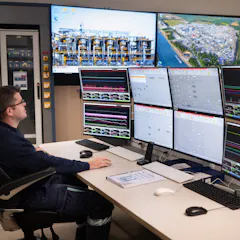
Having a human “in the loop” overseeing when an AI makes a decision is important, but what happens to that responsible human over time when the AI gets it right over and over again?

if AI shut down the electricity grid, it would swiftly shut down agriculture. Without fuel, refrigeration, irrigation and fertilizers, we would all have to get creative in feeding ourselves.

Meta can’t beat its rivals on raw AI capability. With its new Muse agent, it doesn’t need to.
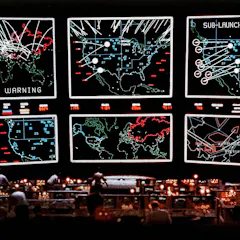
A hit 1983 movie illustrates what computer scientists have long known: If you give an AI agent a goal but don’t control what it can and can’t do, you shouldn’t be surprised by what it does.
The company’s Chief Strategy Officer Jason Kwon will appear before the federal parliamentary committee on Artificial Intelligence’s hearing next week.

Most Australian government entities are running outdated technology – and AI systems may reveal their weaknesses, intentionally or not.

AI expert Nick Jennings speaks to The Conversation Weekly podcast about calls for a slowdown in the development of frontier AI models.
We need to ask how ready Australian government systems are for increasingly capable AI agents.

In tests, some AI systems resisted being shut down. But an instinct to stay “alive” isn’t the reason they behaved that way.

We need to stop worrying about intelligent machines and start building intelligent societies.
Memory makes AI agents more useful, but it can also allow malicious instructions to remain hidden and influence decisions long after an attack.

AI agents cross company boundaries, but proof of their authority often does not. When they overstep, no single record shows what the user allowed.

The industry is rife with AI non-events that were wildly promoted and highly anticipated, but failed to deliver.
Top contributors
-

Professor in Business Information Systems, University of Sydney
-
Professor & Discipline Lead, AI and Analytics, Co-Director, La Trobe AI Institute, La Trobe University
-
Senior Research Associate in Media and Communications, University of Sydney
-
Vice-Chancellor and President, Loughborough University
-
Professorial Fellow (Artificial Intelligence), Melbourne Business School, The University of Melbourne
-
Associate Professor of Computer Science, Director of AMHR Lab, University of South Florida
-
Senior Lecturer, Media & Communication, RMIT University
-
Associate Professor of Computer Science, Quinnipiac University
-
Associate Professor, Supply Chain Analytics, University of Bradford
-
Assistant researcher, Luxembourg Institute of Science and Technology (LIST)
-
Head of the Software Engineering RDI Unit at LIST. FNR Pearl Chair. Affiliate Professor in CS at University of Luxembourg, Luxembourg Institute of Science and Technology (LIST)
-
Senior Fellow, Said Business School, University of Oxford
-
Professor of Strategic Studies at the Marine Corps University School of Advanced Warfighting; Scholar-in-Residence, American University School of International Service
-
Associate Professor of Marketing, Coastal Carolina University
-
Associate Professor in Business Analytics and AI, University of Bradford