
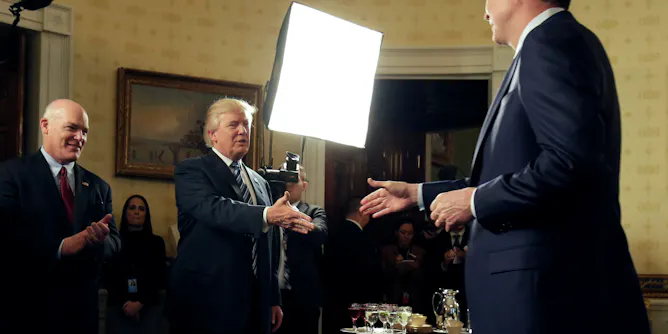
Past presidents have made strange requests of the FBI, some of which were documented by J. Edgar Hoover.
Articles on Accountability
Displaying 141 - 160 of 169 articles
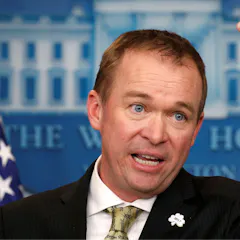
Trump’s budget director singled out Meals on Wheels as a waste of federal dollars. But identifying bad ways to spend taxpayer money is harder than it sounds.
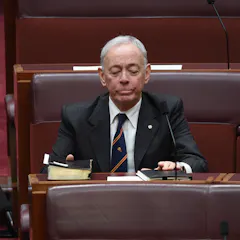
The key takeaway from the Bob Day case is that courts interpret the eligibility requirements for election strictly.
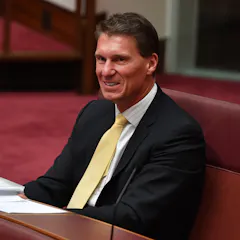
Politicians should be subject to a penalty regime similar to the far more stringent one that applies to company directors.

Attempts to deepen democracy in Africa by limiting presidential terms to two have not entirely quashed a culture of entitlement to rule. Glimpses of it persist, much against citizens’ wishes.

The current lack of transparency in Australian philanthropy raises ethical questions. Far from being a solely private activity, philanthropy needs greater public accountability.

Successive Australian governments have dehumanised refugees and kept Australians in the dark about what really goes on in the offshore detention centres on Nauru and Manus Island.

The Chinese £1bn investment in Sheffield, a former mining town in northern England, comes with valuable lessons about how Africa can maximise economic value in its dealings with China.
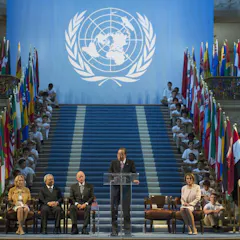
The ‘functional immunity’ granted to UN officials made good sense when the body was founded after World War II. But as its organisational functions have expanded, so has this immunity.

Political funding in Australia is governed by different rules for state (some of which do not require disclosure) and federal governments. And both levels suffer significant weaknesses.
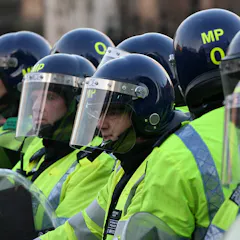
When we look at cases of police corruption and abuses, we must ask: who do the police really serve?
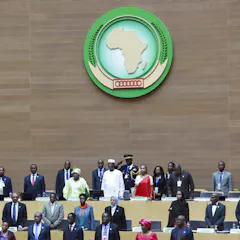
If the governing ANC ignores the calls for Zuma’s resignation,it may undermine South Africa’s leadership on the continent. It creates the idea that he can undermine the constitution with impunity.

Friday’s COAG meeting is a perfect opportunity for politicians to govern in the public interest: and that should start with reforming political donations.
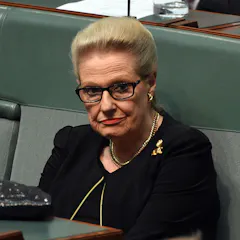
Only with a robust entitlements system will a repeat of Bronwyn Bishop’s “Choppergate” scandal be avoided.
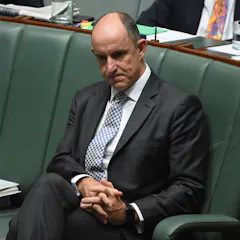
The principle underlying the ministerial standards is that ministers should uphold the public’s trust as they wield a great deal of power deriving from their public office.

Mobile video technology means outrageous behaviour and abuses can rapidly become public knowledge, but achieving just outcomes still depends on a political willingness to act on such knowledge.
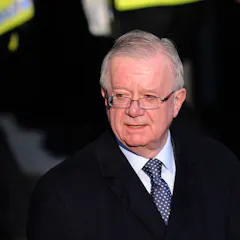
The Iraq inquiry, launched in 2009, still hasn’t published its report.

The Australian Border Force is the culmination of the move towards militarised border security. This commenced in earnest with the introduction of Operation Sovereign Borders in September 2013.
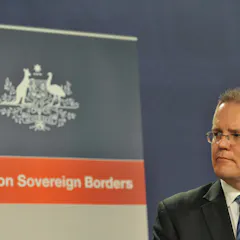
The withholding of information about government actions in asylum seeker policy undermines its democratic accountability to the Australian people.
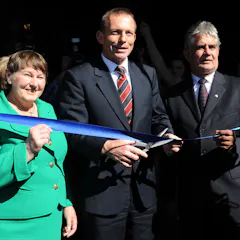
‘Better Communities’ funding is supposedly non-partisan: every electorate gets $300,000 for local projects. But only incumbent MPs have a say in this spending and 60% of them are government members.
Top contributors
-

Chief Research Specialist in Democracy and Citizenship at the Human Science Research Council and a Research Fellow Centre for African Studies, University of the Free State
-
Adjunct Professor, National Centre for Australian Studies, Monash University
-
Senior Lecturer in Law, Charles Sturt University
-
Political Scientist, University of the Western Cape
-
Professor of the Practice of International Development, Johns Hopkins University
-
Professor Emeritus of Public Law, University of Cape Town
-
Democracy Deputy Program Director, Grattan Institute
-
Professor of Law and Adjunct Professor of Political Science, Wayne State University
-
Research Director: Developmental, Capable and Ethical State (DCES) research division, and Coordinator of the South African Social Attitudes Survey (SASAS), Human Sciences Research Council
-
Assistant researcher, University of Sydney
-
Chief executive officer, Grattan Institute
-
Emeritus Associate Professor in Public Law, UCT. Visiting Adjunct Professor, WITS School of Governance; Director, Africa Programme, University of Cambridge Institute for Sustainability Leadership, University of Cambridge
-
Associate Professor, Faculty of Law, Monash University
-
Assistant Professor of Government, Smith College
-
Associate Professor, Grady College of Journalism and Mass Communication, University of Georgia