

First Nations media organisations play a crucial role in emergency situations. However
Articles on Aboriginal and Torres Strait Islander peoples
Displaying 201 - 220 of 320 articles
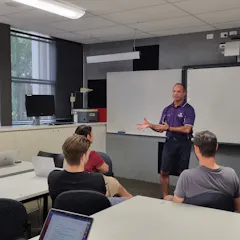
Indigenous education provides all students with a rich and well-rounded knowledge of Australia’s history. However research shows Indigenous teachers are scarce and poorly supported.
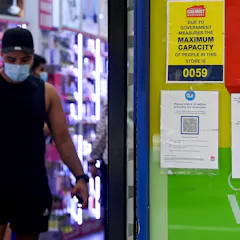
The government has decided it’s time for Australia to open up and get “back to normal.” This has made life more dangerous for vulnerable groups such as First Nations people.

The latest IPCC Report lacked Aboriginal and Torres Strait Islander lead authors. This is a severe limitation to understanding and responding to climate change in this country.
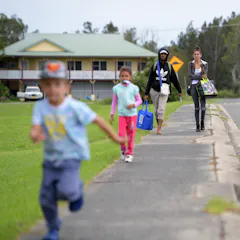
Australia’s east coast flooding is forcing people to confront challenges such as evacuations and loss of property. However, Aboriginal people are being left to find their own way through this crisis.

Indigenous people in Australia face incredible challenges when it comes to self-employment. Research shows shows supporting Indigenous entrepreneurship can be one way to address this.
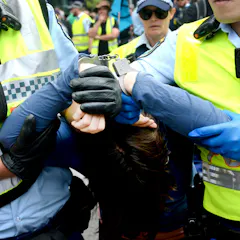
Strip-searching prisoners has been found to breach human rights. Will the Victorian government implement changes to strip-searching policies in places of detention?
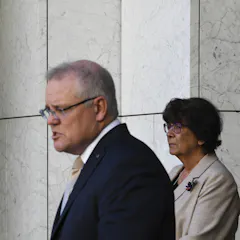
Scott Morrison’s comments on the 14th anniversary of the Stolen Generations’ Apology show a lack of understanding of what is really needed to ensure healing for First Nations peoples.

Contact languages are widely spoken by many First Nations children. These languages must be recognised and valued in the classroom to better meet students’ learning needs.
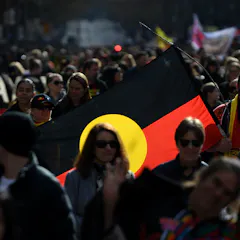
Putting the Voice to Parliament in the constitution is not only workable within Australia’s parliamentary system, it is key to its success.
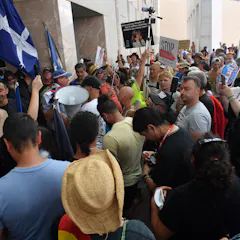
Recently, white protesters have attempted to co-opt Indigenous peoples’ call for sovereignty and self-determination for their own agendas.
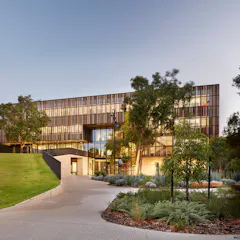
Culturally safe spaces are pivotal in the academic success of First Nations students.

Mission, a series of Noel Pearson’s essays, speeches and eulogies, delves into many of the key parts of the author’s life and politics.
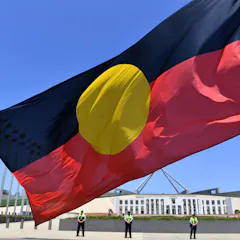
Would Australians vote for an Indigenous Voice in the Constitution, or just approve the parliament simply legislating a Voice?
Australians may support one, both, or neither.
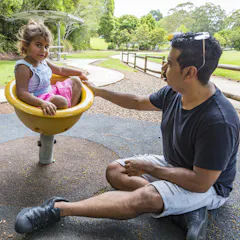
As we edge closer to another anniversary of Kevin Rudd’s National Apology to the Stolen Generations, the number of First Nations children in out-of-home has increased.
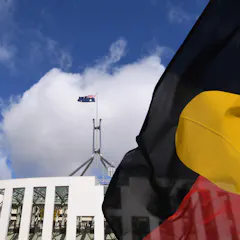
This week, Prime Minister Scott Morrison announced the federal government had made the Aboriginal flag ‘freely available for public use’. What does this mean from a legal standpoint?
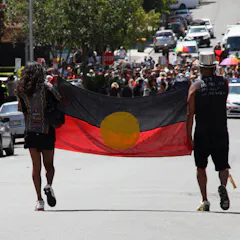
The Aboriginal flag cannot just be ‘freed’. It is an emblem of our emotion, our loves and losses. It holds our faith, our hope and our future.
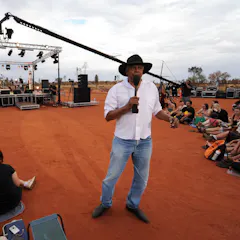
First Nations media are leading better conversations about the significance of the day – and issues facing Indigenous communities every day of the year.
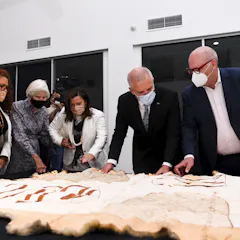
The proposed National Resting Place in Canberra will be a vital step towards a more complete telling of this nation’s story.
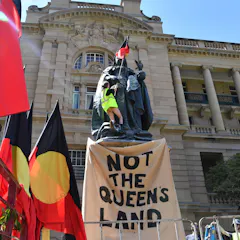
Treaties with First Nations people are being developed across Australia. However, without a history of treaty law in Australia, serious questions arise about the best approach.
Top contributors
-

Professor, Critical Indigenous Studies and Director of The Centre for Global Indigenous Futures, Macquarie University
-
Professorial Fellow, University of Canberra
-
Managing Director, Her Story Consulting & Postdoctoral fellow, Australian National University
-
Research Fellow in Disaster Resilience, Monash University
-
Chief Investigator for the Australian Research Council Centre of Excellence for the Elimination of Violence against Women (CEVAW), School of Philosophical, Historical & International Studies, School of Social Sciences (SOSS), Monash University
-
Associate Dean Education, Gnibi College, Southern Cross University
-
Professor, Australian and Aboriginal History, Faculty of Arts, Design and Architecture, Convenor: Indigenous Land & Justice Research Group, UNSW
-
Principal Research Fellow, James Cook University
-
Senior Lecturer of Indigenous Studies, Indigenous Education and Research Centre, James Cook University
-
Senior Lecturer in Law at the University of Queensland, The University of Queensland
-
Lecturer, Department of Indigenous Studies, Macquarie University
-
Lecturer, Griffith Law School, Griffith University
-
PhD Candidate, University of Technology Sydney
-
Research Fellow (Indigenous Diplomacy), Australian National University
-
Senior Lecturer in Education/Applied Linguistics, Curtin University