
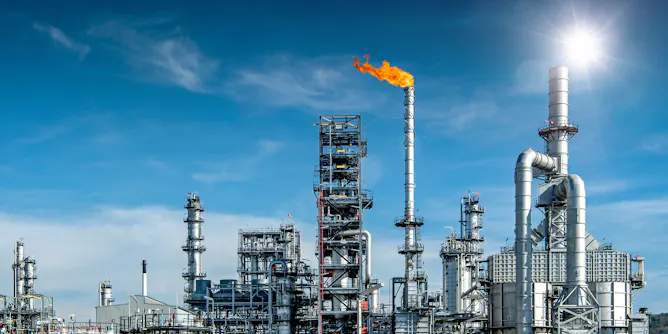
The 142 fossil fuel producers collectively exceeded the limits on coal, gas and oil production required to achieve the Paris Agreement goals by between 63% and 70%.
Articles on 1.5 degrees
Displaying 21 - 40 of 79 articles

The Pacific Ocean is entering the hot phase of its temperature cycle, an event that will turbo-charge global warming.
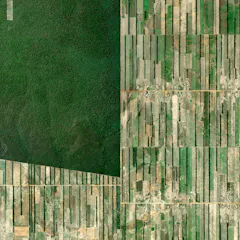
Surging deforestation in Bolivia means the country now ranks as one of the highest carbon emitters in the world.

Rising sea levels threaten the low-lying island nation with the world’s third-largest shipping register. That’s why it’s leading efforts to cut shipping emissions in an equitable way.
Our annual reports will update the world on the climate’s vital signs.
There’s a 98% chance of a record hot year by 2028, and a 66% chance of exceeding the 1.5°C threshold for at least that year, according to the latest World Meteorological Organization update.

Developing countries are expected to quit coal faster than any energy transition in history.
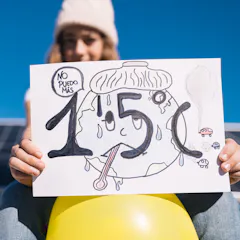
There is no safe limit to global warming – there is only what people deem to be acceptable damage.
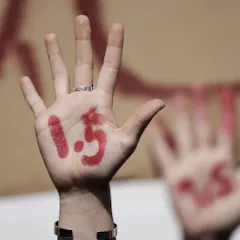
A leading climate scientist explains why going over 1.5 degrees Celsius puts the world in a danger zone.
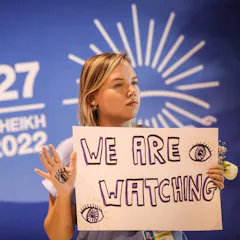
The agreed loss and damage fund was a breakthrough in an otherwise inconclusive conference.

A recent paper suggested damaging climate tipping points could be closer than first thought.
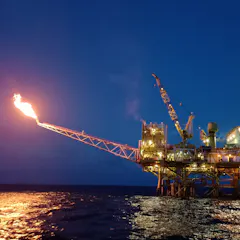
More than 400 proposed fossil fuel extraction projects threaten to blow the world’s 1.5°C target.
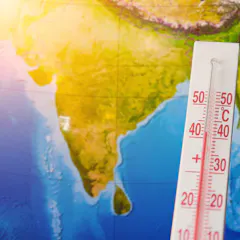
Every tenth of a degree makes climate change significantly worse.
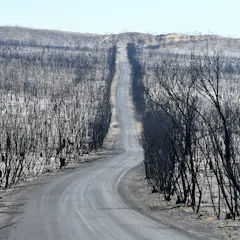
The Coalition’s climate policy is consistent with a very dangerous 3°C of global warming. But one party is comfortably consistent with keeping warming at safe levels.

Emission of greenhouse gases is on the rise, an indication that the worst lies ahead.
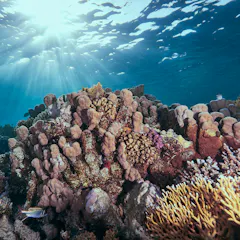
Marine heatwaves will happen so often that reefs will struggle to weather successive bleaching events.

Canada has neglected to keep up with China’s climate politics, putting the future of the country’s fossil fuel exports at risk.

COP26 saw progress and announcements, but the commitments made by states — in addition to having to pass the test of implementation —fall far short of what the science requires.

We need new experiments to model Earth’s climate if global warming is stabilised at 1.5°C. A new paper explains why.
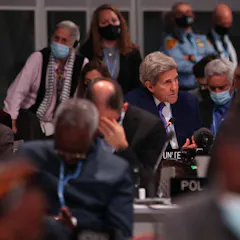
The world promised progress at the Glasgow climate conference. Now it has to turn those promises into reality. A former senior UN official describes what to watch for in the coming year.
Top contributors
-

Professor of Physical Climate Change; Director of the Priestley Centre for Climate Futures, University of Leeds
-
Adjunct Professor of Energy, Murdoch University
-
Chief Research Scientist, CSIRO Environment; Executive Director, Global Carbon Project, CSIRO
-
ARC Future Fellow and Associate Professor in Climate Science, ARC Centre of Excellence for 21st Century Weather, The University of Melbourne
-
Professor of Energy Systems, UCL
-
Professor and Climate Scientist, Department of Geography, Planning and Environment, Concordia University
-
Senior Researcher, Center for International Climate and Environment Research - Oslo
-
Professor of Earth System Science, UCL
-
Research Group Leader, International Institute for Applied Systems Analysis (IIASA)
-
Professor of Infrastructure Engineering and International Development, UCL
-
climate campaigner
-
Researcher in Earth System Resilience, University of Sussex
-
Associate Professor of Law, University of Waikato
-
Director of Research and Lecturer - Grantham Institute Climate Change & the Environment, Imperial College London
-
Lecturer in International Development, UCL