
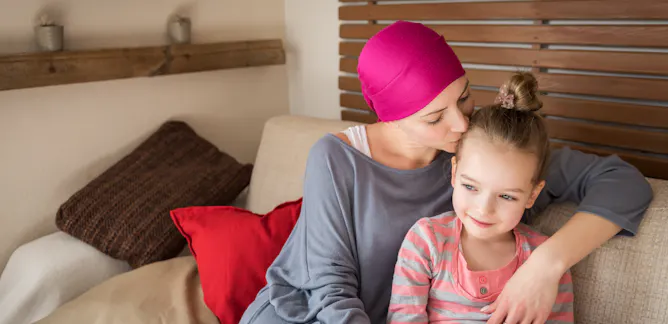
That depends on a number of factors, including the cancer you had initially, as well as your genes, environment and lifestyle.
WEHI (Walter and Eliza Hall Institute of Medical Research)

WEHI is where the world’s brightest minds collaborate and innovate to make life-changing scientific discoveries that help people live healthier for longer. Our medical researchers have been serving the community for more than 100 years, making transformative discoveries in cancers, infectious and immune diseases, developmental disorders and healthy ageing. WEHI brings together diverse and creative people with different experience and expertise to solve some of the world’s most complex health problems. With partners across science, health, government, industry, and philanthropy, we are committed to long-term discovery, collaboration and translation. At WEHI, we are brighter together.
Links
Articles

Stopping cells from dividing into new cells is one way to fight cancer. This is how the drug abemaciclib works.
A cancer that spreads is much more dangerous. Here’s why – and how it happens.
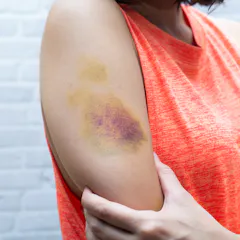
Lots of people report bruising easily. What do doctors look for to see if it might be caused by something serious?
Studi kami pada tikus menunjukkan perubahan epigenetik pada ibu dapat diturunkan ke keturunannya untuk mempengaruhi waktu kritis dalam bagaimana tulang belakang berkembang.
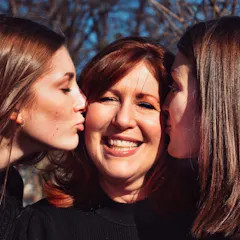
Our study in mice shows epigenetic changes in the mother can be passed to her offspring to influence a critical time in how the spine develops.

Tracking mosquitoes is essential to understanding their pest and public health risks. You can help too – here’s how.

Australian scientists are no more honest or dishonest than those in other countries that have national bodies to investigate research fraud. We have a sport integrity watchdog but not one for research.

If you have risk factors around blood clots, heart attack or stroke, this should actually be an impetus to get vaccinated sooner rather than later.

While we don’t know exactly what causes it yet, there are a few leading theories put forward by researchers around the world.

For people who are immunodeficient, the usual controls of the immune system don’t work as well. This can affect how they respond to vaccines. But this group should still get the COVID jab.
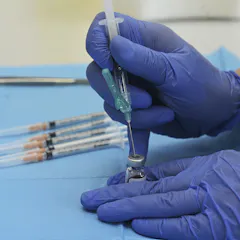
Australia’s keenly awaited COVID vaccine rollout begins today. So how will it work, and will the vaccine be the end of all our coronavirus-related problems?

Children in the study seemed to display a very strong “innate” immune response.

It may not be long before Australia’s health sector offers predictive genomic analysis to patients. If this happens, could chatbots help lessen the load on genetic counsellors?
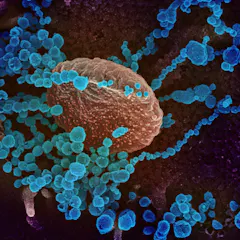
If the coronavirus is a lock, a drug to defeat it is a key that needs to fit just right.
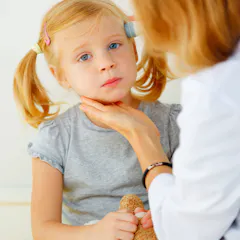
A rare type of inflammatory disease that causes repeated bouts of high temperatures can run in families. Here’s what we know so far.
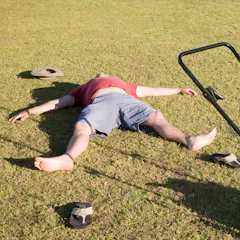
The cornerstone of our adaptive immune system is the ability to remember the various infections we have encountered. Quite literally, if it doesn’t kill you, it makes your immune system stronger.
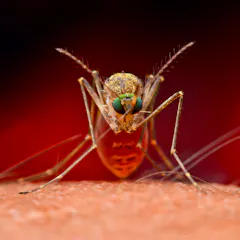
Today, human populations carry heavy genetic marks from the war with malaria. And it is the red blood cell (erythrocyte) that mostly bears the scars.
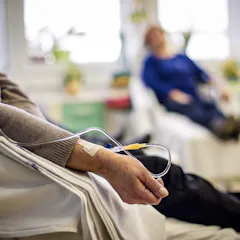
We have no reliable way of knowing which patients’ cancer will return after surgery, so often chemotherapy is given to mop up any remaining cancer cells that may have gone undetected.

As we age, our DNA accumulates damage, which can increase our risk of developing
cancer. But our cells work hard to guard against cancer – new research explains how.
Authors
-

Clinician Scientist, WEHI (Walter and Eliza Hall Institute of Medical Research)
-
Laboratory Head, Immunology Division, WEHI (Walter and Eliza Hall Institute of Medical Research)
-
Associate Professor, WEHI (Walter and Eliza Hall Institute of Medical Research)
-
Medical Researcher, WEHI (Walter and Eliza Hall Institute of Medical Research)
-
Laboratory Head, WEHI (Walter and Eliza Hall Institute of Medical Research)
-
Senior Research Officer, Blood Cells and Blood Cancer, WEHI (Walter and Eliza Hall Institute of Medical Research)
-
Researcher, WEHI (Walter and Eliza Hall Institute of Medical Research)
-
Masters of Research Student, WEHI (Walter and Eliza Hall Institute of Medical Research)
-
Head, Molecular Medicine Laboratory, WEHI (Walter and Eliza Hall Institute of Medical Research)
-
Postdoctoral Research Fellow, WEHI (Walter and Eliza Hall Institute of Medical Research)
-
PhD Student, Epigenetics and Development Division, WEHI (Walter and Eliza Hall Institute of Medical Research)
-
Immunology and Allergy Lead, Snow Centre for Immune Health, WEHI (Walter and Eliza Hall Institute of Medical Research)
-
Head, Melbourne School of Population and Global Health, The University of Melbourne, WEHI (Walter and Eliza Hall Institute of Medical Research)
-
Senior Research Officer, Blood Cells and Blood Cancer Division, WEHI (Walter and Eliza Hall Institute of Medical Research)
-
Laboratory Head, Immunology Division, WEHI (Walter and Eliza Hall Institute of Medical Research)