

Without a national office for research integrity, Australia risks losing scientists and research funders to countries with more robust setups.
WEHI (Walter and Eliza Hall Institute of Medical Research)

WEHI is where the world’s brightest minds collaborate and innovate to make life-changing scientific discoveries that help people live healthier for longer. Our medical researchers have been serving the community for more than 100 years, making transformative discoveries in cancers, infectious and immune diseases, developmental disorders and healthy ageing. WEHI brings together diverse and creative people with different experience and expertise to solve some of the world’s most complex health problems. With partners across science, health, government, industry, and philanthropy, we are committed to long-term discovery, collaboration and translation. At WEHI, we are brighter together.
Links
Articles
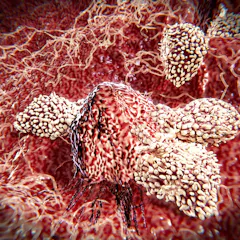
Immunotherapy drugs work by increasing the patient’s own immune response. The most successful examples of immunotherapies are drugs that act as antibodies, of which Keytruda is one.
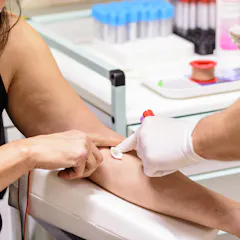
Kabar gembira. Ilmuwan telah mengembangkan sebuah tes darah baru yang menjanjikan mendeteksi delapan kanker berbeda.
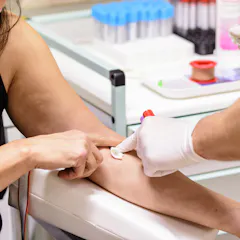
There are currently few effective and non-invasive methods to screen for early stages of cancer. But scientists have now developed a new blood test that promises to detect eight different cancers.

Women have evolved to have stronger immunity than men. But this comes with downsides -
women are more likely to have autoimmune diseases due to their “reactive” immune systems.

Doxycycline is an antibiotic drug that kills a wide, weird and wonderful range of bugs that are often difficult to treat with other antibiotics.
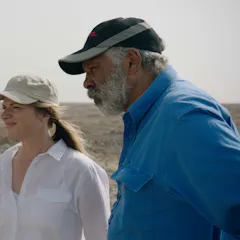
The SBS documentary DNA Nation tracks three people on their ‘individual genetic journey’. But for Indigenous Australians in particular, genetic testing is a can of worms - politically, ethically and technically.

Mefloquine was one of around 250,000 chemical compounds tested for malaria-killing activity in the 1960s by the United States military who needed to protect troops from malaria in the tropics.

New research has found children who are born with overly active immune cells are more likely to develop allergies to milk, eggs, peanuts, wheat and other common foods.
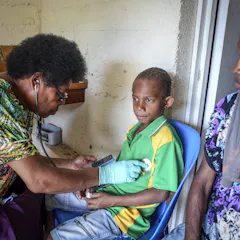
A large number of children with malaria in the Asia-Pacific have relapses of the disease, not new infections. Malaria-programs must target these latent infections to completely eliminate the disease.

The scientific community reacts to the news that Dr Alan Finkel has been appointed Australia’s New Chief Scientist as of 2016.

The 1000 Genome Project has revealed the genetic variations that exist among people around the world, and discovered that some people are missing many genes.

What is it like to be a woman working in the sciences? While there are hurdles to overcome, there are joys as well. The new SAGE initiative hopes to make STEM even more amenable to women.

Jolie Pitt has announced more surgery, this time to mitigate her risk of developing ovarian cancer. But this should ideally not have the same “Jolie effect” as her last operation.

Amateurs and experts worked together to unravel the mystery of a new moth, the first discovery of its kind in 40 years.

Postdoctoral scientists – postdocs – are the engines of biomedical research. As early career researchers, they conduct the most experiments and are responsible for sculpting how we treat disease in decades…

Few discoveries have revolutionised the practice of medicine as much as the discovery of human red blood cell groups. Unlike modern vampire and Time Lord mythologies, blood groups don’t have a particular…
A Federal Court decision to allow gene patents could open the way for existing patents to be enforced more strongly in Australia, according to an expert in intellectual property. Biotechnology companies…

AUSTRALIA 2025: How will science address the challenges of the future? In collaboration with Australia’s chief scientist Ian Chubb, we’re asking how each science discipline will contribute to Australia…

In this third instalment of GM in Australia – a series looking at the facts, ethics, regulations and research into genetically modified crops – Ashley Ng explains how GM foods are determined safe to eat…
Authors
-

Clinician Scientist, WEHI (Walter and Eliza Hall Institute of Medical Research)
-
Laboratory Head, Immunology Division, WEHI (Walter and Eliza Hall Institute of Medical Research)
-
Associate Professor, WEHI (Walter and Eliza Hall Institute of Medical Research)
-
Medical Researcher, WEHI (Walter and Eliza Hall Institute of Medical Research)
-
Laboratory Head, WEHI (Walter and Eliza Hall Institute of Medical Research)
-
Senior Research Officer, Blood Cells and Blood Cancer, WEHI (Walter and Eliza Hall Institute of Medical Research)
-
Researcher, WEHI (Walter and Eliza Hall Institute of Medical Research)
-
Masters of Research Student, WEHI (Walter and Eliza Hall Institute of Medical Research)
-
Head, Molecular Medicine Laboratory, WEHI (Walter and Eliza Hall Institute of Medical Research)
-
Postdoctoral Research Fellow, WEHI (Walter and Eliza Hall Institute of Medical Research)
-
PhD Student, Epigenetics and Development Division, WEHI (Walter and Eliza Hall Institute of Medical Research)
-
Immunology and Allergy Lead, Snow Centre for Immune Health, WEHI (Walter and Eliza Hall Institute of Medical Research)
-
Head, Melbourne School of Population and Global Health, The University of Melbourne, WEHI (Walter and Eliza Hall Institute of Medical Research)
-
Senior Research Officer, Blood Cells and Blood Cancer Division, WEHI (Walter and Eliza Hall Institute of Medical Research)
-
Laboratory Head, Immunology Division, WEHI (Walter and Eliza Hall Institute of Medical Research)