

What’s missing are clear rules about who controls farm data and how farmers’ needs are met.
University of KwaZulu-Natal

The University of KwaZulu-Natal was formed on 1 January 2004 as a result of the merger between the University of Durban-Westville and the University of Natal. The new university brings together the rich histories of both the former universities.
The University of Durban-Westville was established in the 1960s as the University College for Indians on Salisbury Island in Durban Bay. Student numbers throughout the 1960s were low as a result of the Congress Alliances’ policy of shunning apartheid structures. This policy gave way in the 1980s to a strategy of “education under protest” which sought to transform apartheid institutions into sites of struggle. Student numbers grew rapidly and in 1971, the college was granted university status. The following year, the newly-named University of Durban-Westville moved into its modern campus in Westville and was a site of major anti-apartheid struggle. It became an autonomous institution in 1984, opening up to students of all races.
Founded in 1910 as the Natal University College in Pietermaritzburg, the University of Natal was granted independent university status in 1949 owing to its rapid growth in numbers, its wide range of courses and its achievements in and opportunities for research. By that time, the NUC was already a multi-campus institution, having been extended to Durban after World War 1. The distinctive Howard College building was opened in 1931, following a donation by Mr T B Davis, whose son Howard Davis was killed during the Battle of Somme in World War I. In 1946, the government approved a Faculty of Agriculture in Pietermaritzburg and, in 1947, a Medical School for African, Indian and Coloured students in Durban.
The two KwaZulu-Natal universities were among the first batch of South African institutions to merge in 2004 in accordance with the government’s higher educational restructuring plans that will eventually see the number of higher educational institutions in South Africa reduced from 36 to 21. Confirmed by a Cabinet decision in December 2002, the mergers are the culmination of a wide-ranging consultative process on the restructuring of the Higher Education Sector that began in the early 1990s.
Links
Articles
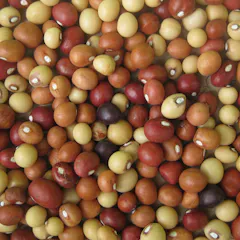
Using daily weather instead of seasonal averages, researchers mapped where and when to plant bambara groundnut in Eswatini and South Africa.
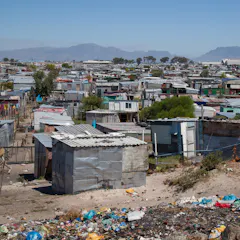
Potholes and water outages often begin with bad planning. A town planner explains seven ways South Africans can push municipalities to do better.

South Africa’s first five-year pollen calendars reveal when allergy seasons hit seven cities, and how sufferers can prepare before symptoms start.

Teenage pregnancy makes visible the pressures, relationships and reproductive conditions that shape young people’s lives across southern Africa.
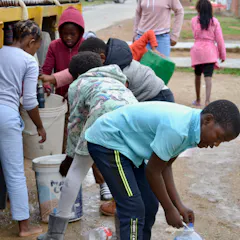
South Africa is running short of water, but new research finds scarcity is only part of the problem: water is also not being shared fairly among those who need it.
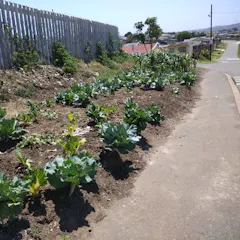
South African cities could create dedicated spaces where picking indigenous plants is safe.
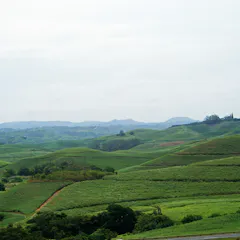
Isolated interventions are unlikely to help small sugarcane growers. Improving productivity requires integrated support systems.
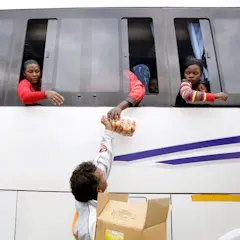
There’s more to being a refugee than crossing a border.
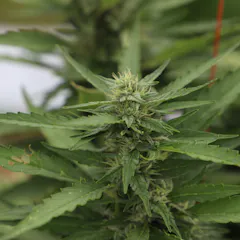
Researchers have used drones and ground sensors to get the first ever measurements of exactly how much water hemp crops consume.
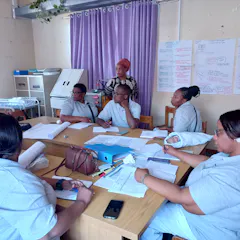
Care improves when healthcare professionals are given the tools to find their own solutions.
Un puissant épisode de super El Niño se profile. Les leçons tirées par l’Afrique des catastrophes climatiques passées peuvent aider le monde à s’y préparer.
A powerful Super El Niño is looming. Africa has learned hard lessons from past climate disasters that could help the world prepare.

A high proportion of South Africans complete grade 12 despite evidence of learning gaps – how is this possible?
Weak surveillance and climate change could allow deadly hantaviruses to spread unnoticed across African countries, raising the risk of future outbreaks.
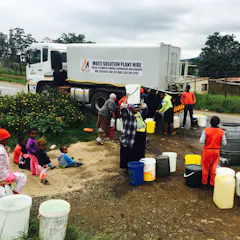
Water tankers are meant for emergencies but are fast becoming the norm for many communities.
Thousands of hectares of communal land set aside for smallholder farmers’ use in South Africa are lying fallow because of collapsed government irrigation systems.

His image is the watermark in South African passports, but he is not as widely known as leaders like Nelson Mandela and Desmond Tutu.
Decades of experimentation revealed slow ecological processes and long-term interactions that have international scientific value.

Far from being simply glamorous or transactional, relationships with a “blesser” expose young women to risks.
Authors
-

Professor in Agrometeorology, University of KwaZulu-Natal
-
Environmental Scientist in the Geography department, University of KwaZulu-Natal
-
Senior researcher, University of KwaZulu-Natal
-
Professor Gender and Childhood Sexuality, University of KwaZulu-Natal
-
Full Professor, University of KwaZulu-Natal
-
Associate Professor of Geography and Palaeoecologist, University of KwaZulu-Natal
-
Programme Manager (Crop Protection) & Senior Entomologist, South African Sugarcane Research Institute; University of KwaZulu-Natal
-
Full Professor in Anthropology, University of KwaZulu-Natal
-
Postdoctoral research fellow, University of KwaZulu-Natal
-
Agrometeorologist and Researcher in the Sustainable and Healthy Food Systems – Southern Africa programme, University of KwaZulu-Natal
-
Honorary Research Fellow, University of KwaZulu-Natal
-
Research Fellow in the Centre for Water Resources Research, University of KwaZulu-Natal
-
Researcher in Hydrology in the Centre for Water Resources Research (CWRR), University of KwaZulu-Natal
-
Postdoctoral Researcher in the Department of Anthropology, University of KwaZulu-Natal
-
Professor, Department of Geography, University of KwaZulu-Natal