

Climate adaptation funders want projects ready to launch. But new research shows why communities must help design climate solutions if the projects are to last.
University of Cape Town

Located on the slopes of Devil’s Peak in Cape Town, the University of Cape Town is a leading, research-intensive university in South Africa and on the continent, known for its academic excellence and pioneering scholarship. The university is home to a third of South Africa’s A-rated researchers (acknowledged by the Department of Science and Technology as international leaders in their field) and a fifth of the country’s national research chairs. UCT encourages students and staff to use their expertise to speed up social change and economic development across the country and continent, while pursuing the highest standards of excellence in academic knowledge and research: developing African solutions to African challenges that are also shared by developing nations around the world.
UCT, like the city of Cape Town, has a vibrant, cosmopolitan community drawn from all corners of South Africa. It also attracts students and staff from more than 100 countries in Africa and the rest of the world. The university has strong partnerships and networks with leading African and other international institutions - helping to enrich the academic, social and cultural diversity of the campus as well as to extend the reach of UCT’s academic work.
Links
Articles
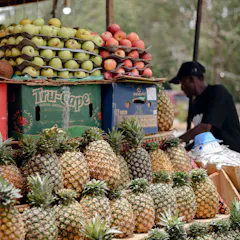
Organisations with close ties to a local community, and others with ties to the wider economy, can make an effective pairing.

African universities can help solve social problems by changing their own institutions, supporting emerging ventures and bringing other problem-solvers together.

Renforcer l'assiette fiscale dans les contextes où les capacités sont limitées revient à rendre l'État plus visible et plus crédible.

Building the tax base in low-capacity settings is about making the state more visible and more credible.

Many of the genes our study identified were involved with immune responses.
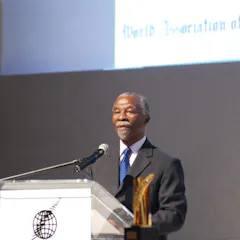
Mbeki’s leadership contributed to institutional weaknesses that emerged more fully after he left office.
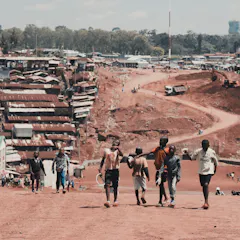
Frameworks built mainly on the data and institutions of the global north risk being least accurate where inequality is most severe.

The new credit rating agency set up by African countries was not established to replace the existing rating architecture but to expand it.

South Africa’s first five-year pollen calendars reveal when allergy seasons hit seven cities, and how sufferers can prepare before symptoms start.
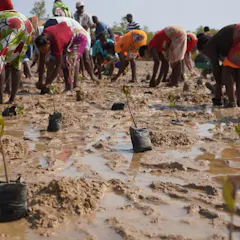
Restaurer les écosystèmes africains exige des services climatiques croisant prévisions et savoirs autochtones.

People restoring Africa’s ecosystems need climate services that combine forecasts with Indigenous knowledge and information about land, water and livelihoods.
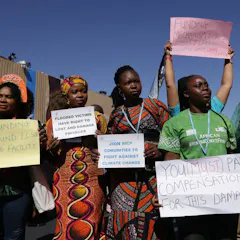
Le financement de la lutte contre le changement climatique ne devrait pas être dissocié du financement du développement.

Partnerships need to grapple with the tension between what to preserve and what to change rather than be paralysed by it.

While some creators proudly embrace the label of sex worker, many others reject it outright.

Climate finance should not be separated from development funding.

Tupac est la preuve que le fait d'être jeune, en marge de la société et noir ne signifie pas forcément être impuissant.

Tupac is proof that being young, marginal and Black does not necessarily mean being powerless.
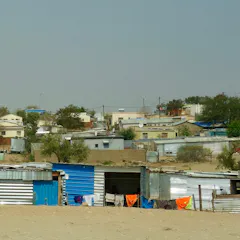
Caregivers said their priorities were pension increases, a dedicated allowance, food security and basic infrastructure.
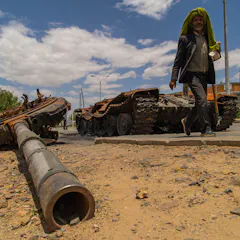
An incomplete peace agreement has become a useful political tool to the Ethiopian government, the TPLF and Eritrea.
Authors
-

Senior research officer: Climate Adaptation in the African Climate and Development Initiative (ACDI), University of Cape Town
-
Senior Lecturer, Graduate School of Business, University of Cape Town, University of Cape Town
-
Professor of Political Studies, University of Cape Town
-
Senior Lecturer in Educational Development, University of Cape Town
-
Medical Research Officer, Division of Allergology and Clinical Immunology, University of Cape Town
-
Course coordinator: Language in Humanities, University of Cape Town
-
Director of African Climate and Development Initiative, Professor in Environmental and Geographical Science, University of Cape Town
-
Professor & Chair, Department of Paediatrics and Child Health, University of Cape Town
-
Academic Staff Development Lecturer, Centre for Higher Education Development, University of Cape Town
-
PhD candidate Department of Environmental & Geographical Science, University of Cape Town
-
Post Doctoral Researcher, Graduate School of Business (GSB), University of Cape Town
-
UCT Emeritus Professor and Senior Research Scholar; Director of ARUA's African Centre of Excellence for Inequality Research within SALDRU., University of Cape Town
-
Professor, University of Cape Town
-
Phd Student, University of Cape Town
-
Postdoctoral Researcher at the UCT Lung Institute, University of Cape Town