

When humans are happy, they may smile, or laugh, or dance - but what do animals do? Melissa, age 12, wants to know how she can tell if her cat is happy and likes you.
University of Adelaide

The University of Adelaide unites and serves those striving to change the world—and themselves—for the better. It’s a place where history is made.
Established in 1874, we’re home to over 29,000 students and 3,000 staff, all working to create progress. For our community. For all.
This is a university of outstanding quality—ranked among the top 1% globally—in the heart of Australia’s most liveable city*.
We’ve made a habit of breaking new ground. We were Australia’s first university to welcome female students. The first to offer degrees in science and business. The first with a conservatorium of music.
Among those who’ve studied, taught, or conducted research here are five Nobel Laureates; Australia’s first female prime minister; the first Australian astronaut to walk in space; Australia’s first female Supreme Court judge.
And our bold spirit continues to drive us to excel today. In research, we’re rising to challenges in a huge range of fields—with work universally rated world-standard or above. While in education, we’re recognised among the top 100 universities globally in 23 different subject areas†.
We can’t wait to see what’s next.
*Economist Intelligence Unit, 2021. Excellence in Research Australia, 2018. †Total unique entries across QS World University Rankings by Subject, and Academic Ranking of World Universities by Subject, 2021.
Links
Articles

Scientists say they now know that high energy cosmic ray particles that bombard Earth are coming from outside our galaxy. But the actual source still remains a mystery.
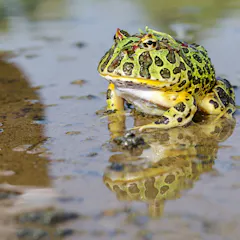
The South American horned frogs are ambush predators and use their powerful jaws to prey on large animals.

The first generation of medical artificial intelligence systems are already rolling out to clinics. What are the plus- and down-sides?

As Congress takes up the issue of immigration, we turned to our global network of scholars to get their perspective on how points systems work.

The songs of Tribal Voice offered hope and strength to generations of Yolŋu people and gave audiences elsewhere a rare insight into the resolve and aspirations of Indigenous Australia.

Earth’s thermostat can fail spectacularly at times. Around 700 million years ago, huge volcanic eruptions triggered “Snowball Earth”.

The video gaming industry has transitioned from a group of backyard innovators to an industry of multi-billion dollar companies.

Modern chefs are serving up ice cream, cakes, even sushi covered in gold. But gold in food came into its own in late medieval Europe, when eating gold wad thought to be virtuous, and one could find gilded whole roast peacocks.

The idea of a hot and sunny land is so baked into our thinking about Australia that we’ve failed to design and build houses that protect us from the cold.

The APRA inquiry puts the regulator in the tricky position of trying to be seen to be tough on bank scandals but juggling its close relationship with the government and the CBA.

In the marriage equality debate, those who once fought against protections for religious freedom are suddenly all for it.

Smart city thinking makes good use of rapidly developing technology to help make cities work better, easier-to-navigate, safer, healthier and more enjoyable places to live.

Science papers are supposed to be communication tools - and yet hardly anyone can understand them, even other scientists.

Most law schools frown upon their students questioning how laws were originally conceived. But a Canadian law school once argued convincingly that law should be taught as a social science.

The new study on birth defects and vitamin B3 has important implications, but researchers didn’t actually give any of this vitamin to humans.

Despite concerns about corruption, the high cost of living and a stagnating economy, Kenyans may have handed Uhuru Kenyatta a second term.

If something goes wrong in pregnancy, a boy baby is more likely to be born malnourished or stillborn than a girl. This may have an evolutionary basis.

Releasing just 100 mice carrying a faulty gene designed to stop them reproducing can remove an entire population of 50,000, a new study shows, paving the way for new eradication efforts.

A world first study shows CRISPR can remove a target gene from early stage human embryos. But with the advance in science come weighty ethical dilemmas.
Authors
No experts from University of Adelaide have registered yet.