

In Killernova, celebrations of history, nature and heritage are tinged with despair at contemporary degradation of nature, bringing catastrophic loss.
The University of Melbourne

The University of Melbourne is a global leader in higher education. Across our campuses we convene brilliant minds from different disciplines and sectors to come together to address important questions and tackle grand challenges. In a disrupted world, that capacity has never been more important.
Our vision is to equip our students with a distinctive, future-facing education personalised around their ambitions and needs, enriched by global perspectives and embedded in a richly collaborative research culture. As active citizens and future leaders, our students represent our greatest contribution to the world, and are at the heart of everything we do.
We serve society by engaging with our communities and ensuring education and research are inspired from the outset by need and for the benefit of society, while remaining committed to allowing academic freedom to flourish. In this, we remain true to our purpose and fulfil our mission as a public-spirited organisation, dedicated to the principles of fairness, equality and excellence in everything we do.
We strive for an environment that is inclusive and celebrates diversity.
Beyond our campuses we imagine an Australia that is ambitious, forward thinking and increasing its reputation and influence globally. We are committed to playing a part in achieving this – building on our advantageous location in one of the world’s most exciting cities and across the state of Victoria, in a region rapidly becoming a hub for innovative education, research and collaboration.
Links
Articles
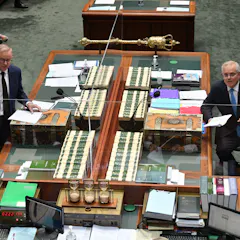
With two months until a federal election, Labor maintains a big lead in the latest Newspoll, with the opposition leader gaining ground as preferred prime minister.

Just as access to vaccines was vastly more difficult for low-income countries, the same is now true for the virus’ treatments: at potentially great cost to the world.

Are we setting up individuals and families for ruin by allowing them to build back in areas where they can’t afford insurance? And should taxpayers bear the huge costs of future rescues and relief?
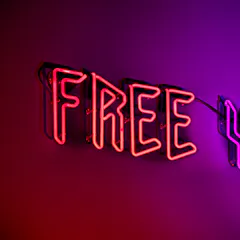
Sebastian Goldspink’s 2022 Adelaide Biennial of Australian Art: Free/State is a conceptual riposte to this colonial settler history, and much more.

Australia’s News Media Bargaining Code has garnered global interest – but the Canadians want a model with more transparency.

Pebisnis perempuan menjadi penggerak bisnis fesyen Muslim Indonesia. Di balik karakter wiraswasta etis mereka, desainer busana Muslim masih abai dalam eksploitasi buruh murah dalam industri konveksi.
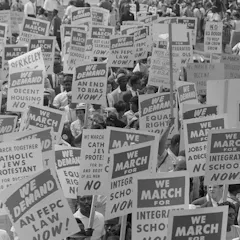
A new book argues that bias is at the root of many social divisions and inequalities, but remains optimistic about our capacity to change.
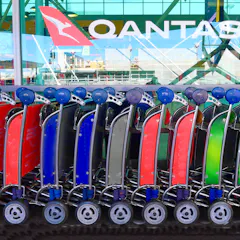
It isn’t at all clear Australia can find enough migrants to meet the Treasury’s proposed target. Even if it can, net migration is determined by other things.
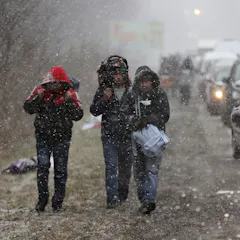
The intensifying conflict in the Ukraine has raised the issue of racism not only in Ukraine, but Europe. Three specific and related dimensions of racism are evident in this complex conflict.
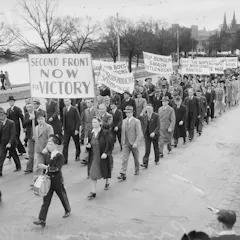
The final work of a gifted historian charts the rise and fall of the Communist Party of Australia.
Our study found high levels of trust in media reports – but that trust can be eroded by fact-checking. Journalists need to rethink the way they report political stories.

Food is a fundamental human right. But governments have left it to charities and food suppliers to step in after disasters. That has to change as climate change throws up greater stresses.
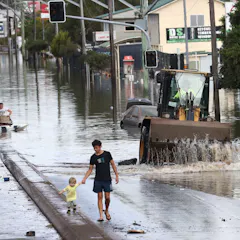
Natural disasters are driving up insurance costs. The Australian government’s plan to drive them down won’t help much.

Like a coffee you can’t finish stirring, a ‘time crystal’ is a strange quantum state of matter than never settles down to equilibrium.
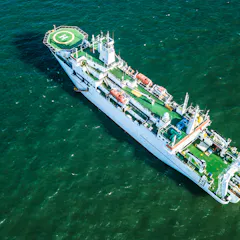
Undersea cables are made of bundles of glass fibres, each one as thick as a strand of human hair.
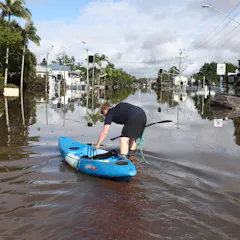
How does this compare to Australia’s previous floods? And can we expect more frequent floods at this scale under climate change? The answers aren’t straightforward.
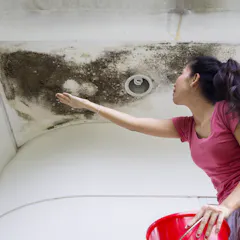
In a damp or water-damaged environment, toxic mould species grow and release spores that can cause health problems if inhaled.

Over the past half a century, Australian women’s art has gone from the margins to the mainstream. A new book mapping this story is a flawed, colourful kaleidoscope.
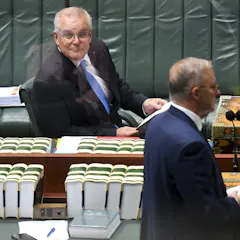
Latest results show Labor ahead of the Coalition federally as well as in South Australia, Queensland and possibly NSW.
Authors
-

Election Analyst (Psephologist) at The Conversation; and Honorary Associate, School of Mathematics and Statistics, The University of Melbourne
-
Guest Research Fellow, School of Computing and Information Systems, The University of Melbourne
-
Professor of Sociology of Law and Deviance, Università di Bologna; University of Essex; The University of Melbourne
-
McKenzie Research Fellow, The University of Melbourne
-
Research assistant, Movember Institute of Men's Health, The University of Melbourne
-
Senior Research Associate, School of Agriculture, Food and Ecosystem Sciences, The University of Melbourne
-
Paleontologist, The University of Melbourne
-
Senior Lecturer, Centre for Advancing Journalism, The University of Melbourne
-
Research Fellow, Centre for Youth Mental Health, The University of Melbourne
-
Deputy Vice-Chancellor (Global, Culture and Engagement), The University of Melbourne
-
Emeritus professor, History, The University of Melbourne
-
Professor of Health Economics, The University of Melbourne
-
Associate Professor and Head, Behavioural Neuropharmacology Laboratory, The University of Melbourne
-
Lecturer in History, The University of Melbourne
-
Associate Professor, Centre for Youth Mental Health, The University of Melbourne