

The first challenge is to attract new teachers, the second is to keep them. More pay might help with recruitment, but research suggests we need to look at the conditions of work to stem the losses.
The University of Melbourne

The University of Melbourne is a global leader in higher education. Across our campuses we convene brilliant minds from different disciplines and sectors to come together to address important questions and tackle grand challenges. In a disrupted world, that capacity has never been more important.
Our vision is to equip our students with a distinctive, future-facing education personalised around their ambitions and needs, enriched by global perspectives and embedded in a richly collaborative research culture. As active citizens and future leaders, our students represent our greatest contribution to the world, and are at the heart of everything we do.
We serve society by engaging with our communities and ensuring education and research are inspired from the outset by need and for the benefit of society, while remaining committed to allowing academic freedom to flourish. In this, we remain true to our purpose and fulfil our mission as a public-spirited organisation, dedicated to the principles of fairness, equality and excellence in everything we do.
We strive for an environment that is inclusive and celebrates diversity.
Beyond our campuses we imagine an Australia that is ambitious, forward thinking and increasing its reputation and influence globally. We are committed to playing a part in achieving this – building on our advantageous location in one of the world’s most exciting cities and across the state of Victoria, in a region rapidly becoming a hub for innovative education, research and collaboration.
Links
Articles

Billionaire Mike Cannon-Brookes has compared his consortium’s takeover bid for AGL to playing chess. So what moves should we expect next?
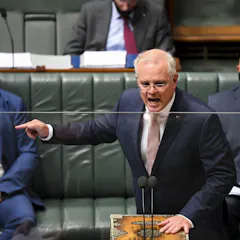
The Morrison government has gone hard on accusing Labor of being China’s “pick” at the federal election, and in doing so is leading the country down a dangerous path.
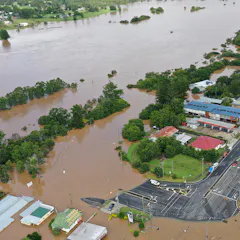
A weather system called ‘atmospheric rivers’ is causing this inundation. In March last year, an atmospheric river brought 800kg of water vapour over Sydney every second.
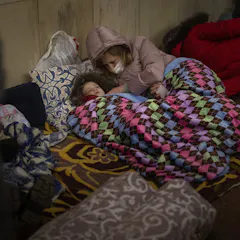
Countering Putin’s information strategy involves making two key arguments.

Plus, the social pressure some people feel to be happy in the world’s happiest countries. Listen to The Conversation Weekly.

While public health measures in schools and hospitals aim to reduce COVID transmission, people with disability who have support workers in their homes have largely been forgotten.
Rather than listening to the grievances of illegal farm workers Australia is threatening them with exploitation while broadening the means by which agricultural employers can bring workers into Australia.

Construction is one of Australia’s fastest growing industries and offers higher than average wages. It is also Australia’s most male dominated industry.

Low-income households are disproportionately affected by rising energy prices. A new report compares approaches to energy affordability in the EU and Australia.

Some of the Coalition’s fall in both Essential and Resolve polls appears to be going to other right-wing parties, which may be boosted by vaccine scepticism.
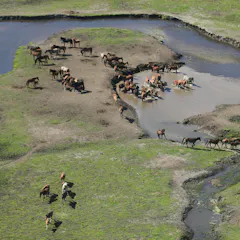
Compassionate conservationists believe all animals have a right to be here, even introduced species like wild horses. Their vocal critics are avoiding vital ethical questions around conservation.

We can waste an awful lot of time on social media because of the engaging, even addictive, nature of platforms like Tiktok. But teachers are now exploiting these qualities for learning languages.

Increasing perceptions of corruption in Australia could be suppressing economic growth by as much as 0.6%

Strip-searching prisoners has been found to breach human rights. Will the Victorian government implement changes to strip-searching policies in places of detention?

They say to improve your mood you should fake a smile and roll with the crowd. But research suggests the more pressure you feel to be happy, the worse you’ll end up feeling.
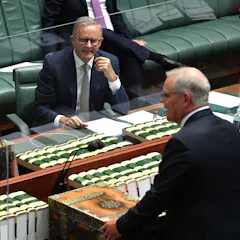
A new poll shows a 3% drop in the Greens’ primary vote, while another has Josh Frydenberg ahead of Scott Morrison and Peter Dutton as preferred Liberal leader.
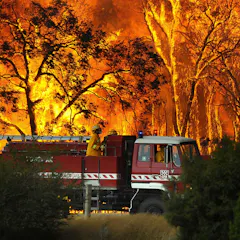
Indigenous fire management holds the key to a safer, more sustainable future on our flammable continent.

Dietary guidelines can do a better job clarifying the differences between beneficial and harmful forms of processing.

It is problematic that the Nine network chose to run an interview with the prime minister of this nature – and it remains to be seen if it handles the opposition leader in the same way.
Authors
-

Election Analyst (Psephologist) at The Conversation; and Honorary Associate, School of Mathematics and Statistics, The University of Melbourne
-
Guest Research Fellow, School of Computing and Information Systems, The University of Melbourne
-
Professor of Sociology of Law and Deviance, Università di Bologna; University of Essex; The University of Melbourne
-
McKenzie Research Fellow, The University of Melbourne
-
Research assistant, Movember Institute of Men's Health, The University of Melbourne
-
Senior Research Associate, School of Agriculture, Food and Ecosystem Sciences, The University of Melbourne
-
Paleontologist, The University of Melbourne
-
Senior Lecturer, Centre for Advancing Journalism, The University of Melbourne
-
Research Fellow, Centre for Youth Mental Health, The University of Melbourne
-
Deputy Vice-Chancellor (Global, Culture and Engagement), The University of Melbourne
-
Emeritus professor, History, The University of Melbourne
-
Professor of Health Economics, The University of Melbourne
-
Associate Professor and Head, Behavioural Neuropharmacology Laboratory, The University of Melbourne
-
Lecturer in History, The University of Melbourne
-
Associate Professor, Centre for Youth Mental Health, The University of Melbourne