

Our ability to cool the planet takes humanity into uncharted territory. In a new paper published today, researchers discuss the big unknowns in a post net-zero world.
The University of Melbourne

The University of Melbourne is a global leader in higher education. Across our campuses we convene brilliant minds from different disciplines and sectors to come together to address important questions and tackle grand challenges. In a disrupted world, that capacity has never been more important.
Our vision is to equip our students with a distinctive, future-facing education personalised around their ambitions and needs, enriched by global perspectives and embedded in a richly collaborative research culture. As active citizens and future leaders, our students represent our greatest contribution to the world, and are at the heart of everything we do.
We serve society by engaging with our communities and ensuring education and research are inspired from the outset by need and for the benefit of society, while remaining committed to allowing academic freedom to flourish. In this, we remain true to our purpose and fulfil our mission as a public-spirited organisation, dedicated to the principles of fairness, equality and excellence in everything we do.
We strive for an environment that is inclusive and celebrates diversity.
Beyond our campuses we imagine an Australia that is ambitious, forward thinking and increasing its reputation and influence globally. We are committed to playing a part in achieving this – building on our advantageous location in one of the world’s most exciting cities and across the state of Victoria, in a region rapidly becoming a hub for innovative education, research and collaboration.
Links
Articles

Adults today may have grown up dreaming they would live to see working jet packs and robot assistants but few people imagined it would be possible to create life without reproductive cells.
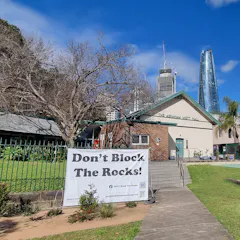
A bid to amend plans for the final stage of the Barangaroo project would once again favour developers’ interests over the public interest. It shows how badly the planning process has been undermined.
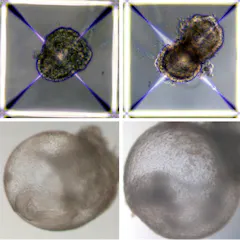
Créer un embryon artificiel qui soit capable de rejouer, sous nos yeux, les premiers jours de la vie : la prouesse, menée ici chez la souris, était attendue. Qu’y a-t-il derrière cette réussite ?

Is it harder to choose between four flavours of jam, or two different electricity plans?
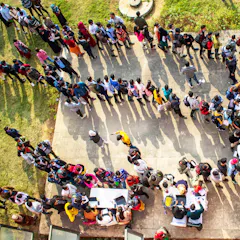
India’s young people have much to offer a nation struggling to find work for all
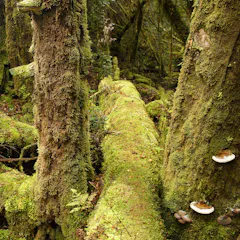
Some of these trees can be over 30 metres high. Others, can live for centuries or, for the Huon pine, up to an astonishing ten millennia.

A lucid, demanding book on the psychology and neurobiology of trauma has become a publishing phenomenon. It resonates, writes Nick Haslam, with an age in which people are seeing trauma everywhere.

Shirley Barrett burst onto the international scene when her debut film, Love Serenade won the Caméra d’Or at Cannes Film Festival.

Before the pandemic, our cities had a simple plan: let population growth drive economic activity. But the world is changing and the perpetual growth mindset has to change with it.
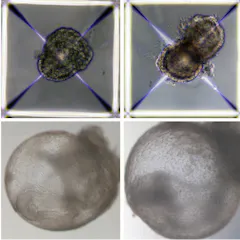
In a huge milestone, researchers have grown a mouse embryo entirely from stem cells. Could humans be next?

Will spring bring an end to the cold and the rain?
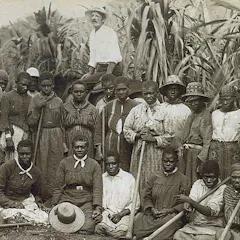
Forced labour in the cane fields of Queensland has had a lasting influence of the Australian nation.

Payday lender Cigno has exposed the limitations of ASIC powers intended to protect consumers from harm.

Epidurals deliver nerve-blocking drugs into the back for pain relief during labour and after surgeries. Epidural kits are currently in short supply, with their use prioritised for obstetric patients.
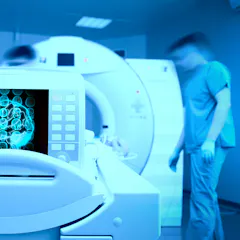
If global health care was a country, it would be the world’s fifth largest emitter. There are simple ways health care can reduce its emissions, starting with scans and gases.

The first thing Australian medical research needs is more money. The second thing is making funding allocation less of a lottery.

A recent review of studies concluded depression is not caused by a lack of serotonin in the brain. But this doesn’t mean antidepressants, which work on serotonin, aren’t effective.
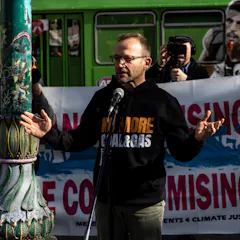
Under the Greens’ proposal, future projects, such as a new mine or high emissions industrial plant, would be assessed on the climate harms they’d potentially cause.
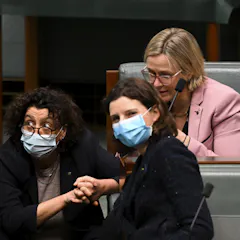
From Barbados to Finland, we’ve seen women’s leadership on climate bring fair, innovative and ambitious policies.
Authors
-

Election Analyst (Psephologist) at The Conversation; and Honorary Associate, School of Mathematics and Statistics, The University of Melbourne
-
Guest Research Fellow, School of Computing and Information Systems, The University of Melbourne
-
Professor of Sociology of Law and Deviance, Università di Bologna; University of Essex; The University of Melbourne
-
McKenzie Research Fellow, The University of Melbourne
-
Research assistant, Movember Institute of Men's Health, The University of Melbourne
-
Senior Research Associate, School of Agriculture, Food and Ecosystem Sciences, The University of Melbourne
-
Paleontologist, The University of Melbourne
-
Senior Lecturer, Centre for Advancing Journalism, The University of Melbourne
-
Research Fellow, Centre for Youth Mental Health, The University of Melbourne
-
Deputy Vice-Chancellor (Global, Culture and Engagement), The University of Melbourne
-
Emeritus professor, History, The University of Melbourne
-
Professor of Health Economics, The University of Melbourne
-
Associate Professor and Head, Behavioural Neuropharmacology Laboratory, The University of Melbourne
-
Lecturer in History, The University of Melbourne
-
Associate Professor, Centre for Youth Mental Health, The University of Melbourne