

We don’t yet know if Anthony Albanese’s pledge to do politics differently will hold. But the media will do a great disservice to Australians if they remain wedded to their old ways.
The University of Melbourne

The University of Melbourne is a global leader in higher education. Across our campuses we convene brilliant minds from different disciplines and sectors to come together to address important questions and tackle grand challenges. In a disrupted world, that capacity has never been more important.
Our vision is to equip our students with a distinctive, future-facing education personalised around their ambitions and needs, enriched by global perspectives and embedded in a richly collaborative research culture. As active citizens and future leaders, our students represent our greatest contribution to the world, and are at the heart of everything we do.
We serve society by engaging with our communities and ensuring education and research are inspired from the outset by need and for the benefit of society, while remaining committed to allowing academic freedom to flourish. In this, we remain true to our purpose and fulfil our mission as a public-spirited organisation, dedicated to the principles of fairness, equality and excellence in everything we do.
We strive for an environment that is inclusive and celebrates diversity.
Beyond our campuses we imagine an Australia that is ambitious, forward thinking and increasing its reputation and influence globally. We are committed to playing a part in achieving this – building on our advantageous location in one of the world’s most exciting cities and across the state of Victoria, in a region rapidly becoming a hub for innovative education, research and collaboration.
Links
Articles

In this new Australian work, sound, image and physical body are decoupled, and gradually splintered like the many facets of our online presence.

Who’s allowed to ask to work from home – and who isn’t? This is what unions are arguing for to extend that right to more people.
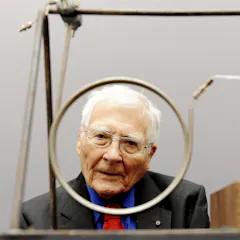
Famous for his Gaian theory, James Lovelock was a maverick and a revolutionary thinker.
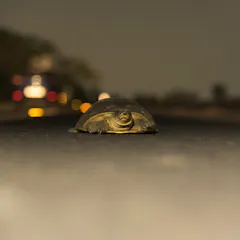
While artificially illuminating the night allows humans to make use of the the night, in doing so we catastrophically change the environment for all other species. How can we fix this?

As well as abuse, many Australian have also experienced threats of harm and harassing behaviour.

Direct-acting antivirals can cure hepatitis C in eight to 12 weeks. But while the rate of uptake in Australia has slowed, a greater proportion of those undertaking treatment are in prison.
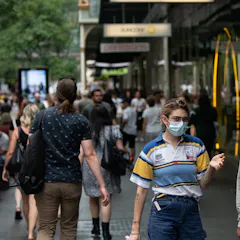
Just because a variant spreads faster, it doesn’t necessarily mean it has a higher R0.
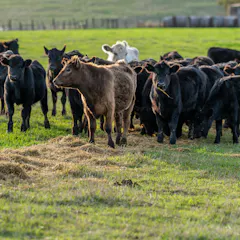
Effective biosecurity involves more than just what happens at the airport. And it doesn’t come cheap.
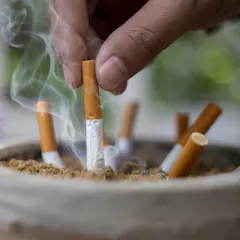
Legislation now entering parliament aims to make Aotearoa New Zealand smokefree by 2025. Forecast effects show huge potential health gains, especially for Māori.

The good news is there are evidence-based strategies that can help you discipline your child without using violence.

Seen from above, parts of our cities now have very little green space, and we’re losing the green corridors that enable wildlife to move between the remaining urban habitats.
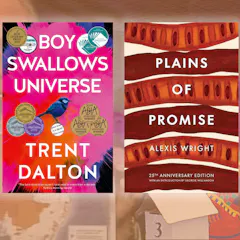
What do popular ‘settler’ Australian stories like The Castle and Trent Dalton’s books say about who we are? What do they evade? Jeanine Leane investigates the state of post-Mabo Australian literature.

Having so many threatened species live among us in our towns and cities reflects the impacts of urban development but is also an opportunity for us all to pitch in and ensure their survival.
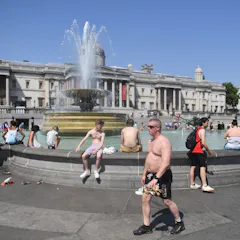
Summer heat may be far from people’s minds here in Australia. But Europe’s ordeal is yet another sign changes in Earth’s climate have already reached dangerous levels.

Four of Labor’s reform pledges are linked to the urgent issue of democratic reform

Only 15.8% of the population in low-income countries is double-dosed. Vaccine hoarding by high income countries is to blame.

Based on certain criteria, New Zealand is clearly ‘winning’. But getting policy settings right over the long haul is about more than just having the most favourable assessment on selected criteria.

The humanities are labouring under a culture of managerialism – could the answer lie in reconnecting old traditions to post-1960s progressivism?

Australia has its lowest unemployment rates in almost 50 years – helped along by high numbers of employees off work sick.
Authors
-

Election Analyst (Psephologist) at The Conversation; and Honorary Associate, School of Mathematics and Statistics, The University of Melbourne
-
Guest Research Fellow, School of Computing and Information Systems, The University of Melbourne
-
Professor of Sociology of Law and Deviance, Università di Bologna; University of Essex; The University of Melbourne
-
McKenzie Research Fellow, The University of Melbourne
-
Research assistant, Movember Institute of Men's Health, The University of Melbourne
-
Senior Research Associate, School of Agriculture, Food and Ecosystem Sciences, The University of Melbourne
-
Paleontologist, The University of Melbourne
-
Senior Lecturer, Centre for Advancing Journalism, The University of Melbourne
-
Research Fellow, Centre for Youth Mental Health, The University of Melbourne
-
Deputy Vice-Chancellor (Global, Culture and Engagement), The University of Melbourne
-
Emeritus professor, History, The University of Melbourne
-
Professor of Health Economics, The University of Melbourne
-
Associate Professor and Head, Behavioural Neuropharmacology Laboratory, The University of Melbourne
-
Lecturer in History, The University of Melbourne
-
Associate Professor, Centre for Youth Mental Health, The University of Melbourne