

Official advice suggests warming your house to 18°C. But it’s perfectly possible to live in an unheated house with personal warming devices and better clothing.
The University of Melbourne

The University of Melbourne is a global leader in higher education. Across our campuses we convene brilliant minds from different disciplines and sectors to come together to address important questions and tackle grand challenges. In a disrupted world, that capacity has never been more important.
Our vision is to equip our students with a distinctive, future-facing education personalised around their ambitions and needs, enriched by global perspectives and embedded in a richly collaborative research culture. As active citizens and future leaders, our students represent our greatest contribution to the world, and are at the heart of everything we do.
We serve society by engaging with our communities and ensuring education and research are inspired from the outset by need and for the benefit of society, while remaining committed to allowing academic freedom to flourish. In this, we remain true to our purpose and fulfil our mission as a public-spirited organisation, dedicated to the principles of fairness, equality and excellence in everything we do.
We strive for an environment that is inclusive and celebrates diversity.
Beyond our campuses we imagine an Australia that is ambitious, forward thinking and increasing its reputation and influence globally. We are committed to playing a part in achieving this – building on our advantageous location in one of the world’s most exciting cities and across the state of Victoria, in a region rapidly becoming a hub for innovative education, research and collaboration.
Links
Articles
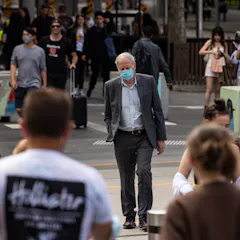
Despite its defeat at the election, the Morrison government’s pandemic legacy is hindering Australia’s ability to manage the pandemic.
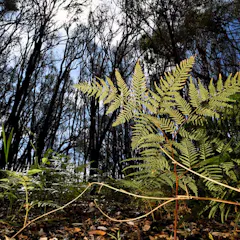
Kami meminta enam ahli untuk menominasikan buku-buku yang dapat membantu kami menghindari bencana lingkungan. Inilah yang mereka katakan.
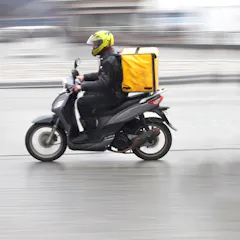
Our five years of research reveals an industry facing push back from both workers and customers. Many workers we spoke with sought to leave the gig economy.
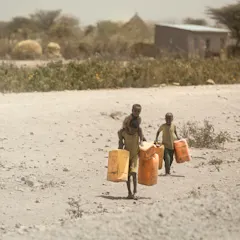
Most rich white countries, including Australia, refuse to accept the climate debt they owe to poorer countries and communities.
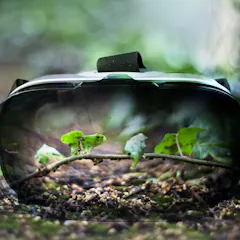
The use of virtual reality and augmented reality in environmental education is controversial, but there are clear benefits.

Our ability to use mathematical modelling is accelerating breakthrough discoveries in health care and biotechnology.

Australian researchers will welcome the newly announced review of how their main source of non-medical federal funding, the Australian Research Council, operates. There’s a lot to consider.

Getting enough iron is tricky – even if we eat enough, we might not absorb enough. But diversifying the menu and looking for fortified foods can help.

While COVID has become less deadly, it has disproportionately claimed the lives of older and poorer Australians. Others have missed out on necessary preventative care during the pandemic.
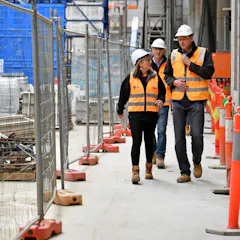
Infrastructure has been rife with controversy for years. Can a new department secretary make a difference?
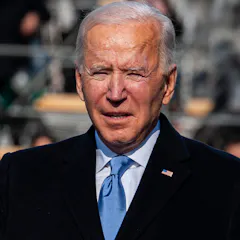
The public expects transparency about politicians’ earnings, but it’s not the only area where elite groups have an advantage.
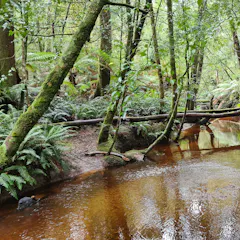
New research finds nature restoration only marginally lowers global warming. This pours cold water on the idea of using carbon offsets to solve the climate crisis.
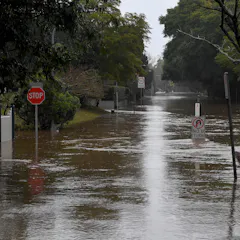
People feel more secure knowing there’s a levee nearby - but this can backfire, leading to more development on floodplains. Australia needs to tackle the incentives behind these risky developments.

The legendary British theatre director Peter Brook died on Saturday, age 97. His clarifying focus on what really matters in theatre can be felt across the spectrum of contemporary theatre.

The new paper also found some mammals are suffering due to a lack of fire.

The Hellfire Club in Stranger Things is a school DnD club – but the real Hellfire Club from history which it’s based upon is far more scandalous and notorious.
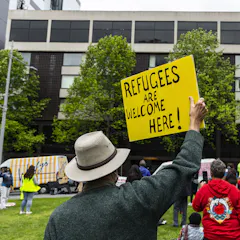
Our report sets out practical reforms that can be implemented relatively simply, within existing legislative provisions and with only minimal changes to policy and regulations.
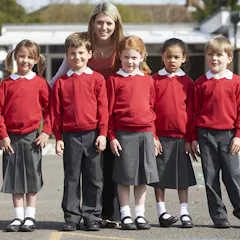
New Victorian Child Safe Standards make organisations that work with children and young people legally responsible for their well-being. But what does this mandatory requirement mean in practice?
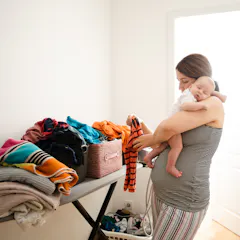
We must redress the challenges of unpaid domestic work and the mental load on women’s physical, mental and economic health and well-being.
Authors
-

Election Analyst (Psephologist) at The Conversation; and Honorary Associate, School of Mathematics and Statistics, The University of Melbourne
-
Guest Research Fellow, School of Computing and Information Systems, The University of Melbourne
-
Professor of Sociology of Law and Deviance, Università di Bologna; University of Essex; The University of Melbourne
-
McKenzie Research Fellow, The University of Melbourne
-
Research assistant, Movember Institute of Men's Health, The University of Melbourne
-
Senior Research Associate, School of Agriculture, Food and Ecosystem Sciences, The University of Melbourne
-
Paleontologist, The University of Melbourne
-
Senior Lecturer, Centre for Advancing Journalism, The University of Melbourne
-
Research Fellow, Centre for Youth Mental Health, The University of Melbourne
-
Deputy Vice-Chancellor (Global, Culture and Engagement), The University of Melbourne
-
Emeritus professor, History, The University of Melbourne
-
Professor of Health Economics, The University of Melbourne
-
Associate Professor and Head, Behavioural Neuropharmacology Laboratory, The University of Melbourne
-
Lecturer in History, The University of Melbourne
-
Associate Professor, Centre for Youth Mental Health, The University of Melbourne