

With Victoria’s parliament expected to vote on the bill this week, four legal experts recommend ways to make it better.
The University of Melbourne

The University of Melbourne is a global leader in higher education. Across our campuses we convene brilliant minds from different disciplines and sectors to come together to address important questions and tackle grand challenges. In a disrupted world, that capacity has never been more important.
Our vision is to equip our students with a distinctive, future-facing education personalised around their ambitions and needs, enriched by global perspectives and embedded in a richly collaborative research culture. As active citizens and future leaders, our students represent our greatest contribution to the world, and are at the heart of everything we do.
We serve society by engaging with our communities and ensuring education and research are inspired from the outset by need and for the benefit of society, while remaining committed to allowing academic freedom to flourish. In this, we remain true to our purpose and fulfil our mission as a public-spirited organisation, dedicated to the principles of fairness, equality and excellence in everything we do.
We strive for an environment that is inclusive and celebrates diversity.
Beyond our campuses we imagine an Australia that is ambitious, forward thinking and increasing its reputation and influence globally. We are committed to playing a part in achieving this – building on our advantageous location in one of the world’s most exciting cities and across the state of Victoria, in a region rapidly becoming a hub for innovative education, research and collaboration.
Links
Articles
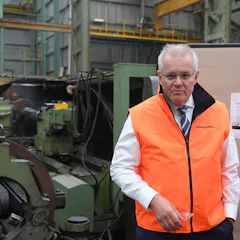
The prime minister’s approval ratings have suffered a slump in recent weeks - but at this stage that does not mean anything for next year’s election.

The hope we need is realistic – not wishful thinking, denial or delay disguised as naïve optimism.
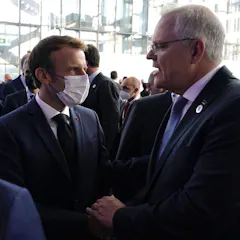
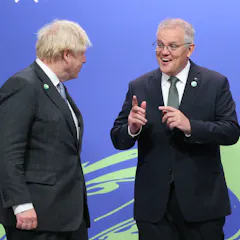
Post Macron and Morrison, what exactly is diplomacy and why is it in decline?
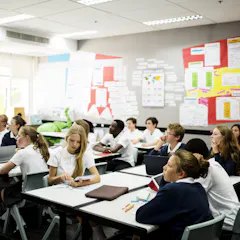
Our study is the first of its kind to test many of the possible mechanisms behind the positive effects peers may have on other students.

Être heureux et positif tout le temps, ce n’est pas possible… C’est même le meilleur moyen d’être au final malheureux. La psychologie explore comment passer d’une positivité toxique à utile.
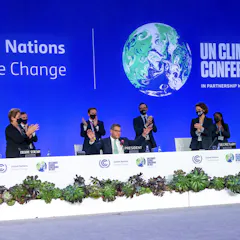
Has the summit delivered on its goals?

Only in coming years will we know if COP26 was a real game-changer for the planet, or just empty promises and spin.

The Morrison government’s great refusal to take action on climate may come back to haunt Australia when we seek the cooperation of other countries.

We must take significant and rapid action now, to ensure cities play their part in limiting dangerous global warming and withstand the climate challenges ahead.

You’d think class sizes would be an important consideration for students when choosing a university, but universities don’t make that information public. They should.

The pandemic has driven the rapid uptake of programs that use artificial intelligence to monitor students sitting exams remotely. New research highlights the need for caution in its use.
We already have most technologies Australia needs to make the clean energy transition. What’s missing is a plan to deploy them at huge scale.

There’s more than one way to get companies to do what you want. Sometime the threat of a vote at an annual general meeting is enough.

Yes, trees and soils can absorb and store carbon, but the carbon doesn’t stay stored forever. That’s one of the problems with how net-zero plans for the climate are being designed.

The Yoo-rrook Justice Commission is a royal commission seeking truth-telling on the historical and contemporary injustices experienced by First Nations peoples in Victoria.
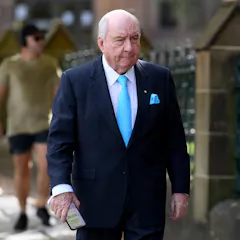
The controversial broadcaster seems to have run out of platforms, not because of the harm he has done, but because he is no longer bringing in big advertising dollars.

The most important thing to avoid is intrusive, probing questioning straight away. The media and the public should also refrain from speculative, premature comment.

Despite more spending on mental health services, suicide rates continue to climb. So in light of two major new reports released this week, we need to rethink our strategy to save lives.

In 1992 64% of the top 1% had been there the year before. By 2017 that proportion had grown to 73%.
Authors
-

Election Analyst (Psephologist) at The Conversation; and Honorary Associate, School of Mathematics and Statistics, The University of Melbourne
-
Guest Research Fellow, School of Computing and Information Systems, The University of Melbourne
-
Professor of Sociology of Law and Deviance, Università di Bologna; University of Essex; The University of Melbourne
-
McKenzie Research Fellow, The University of Melbourne
-
Research assistant, Movember Institute of Men's Health, The University of Melbourne
-
Senior Research Associate, School of Agriculture, Food and Ecosystem Sciences, The University of Melbourne
-
Paleontologist, The University of Melbourne
-
Senior Lecturer, Centre for Advancing Journalism, The University of Melbourne
-
Research Fellow, Centre for Youth Mental Health, The University of Melbourne
-
Deputy Vice-Chancellor (Global, Culture and Engagement), The University of Melbourne
-
Emeritus professor, History, The University of Melbourne
-
Professor of Health Economics, The University of Melbourne
-
Associate Professor and Head, Behavioural Neuropharmacology Laboratory, The University of Melbourne
-
Lecturer in History, The University of Melbourne
-
Associate Professor, Centre for Youth Mental Health, The University of Melbourne