

Taliban telah menunjukkan indikasi kekerasan dan penindasan terhadap perempuan seiring dengan kembalinya Taliban menguasai Afghanistan.
The University of Melbourne

The University of Melbourne is a global leader in higher education. Across our campuses we convene brilliant minds from different disciplines and sectors to come together to address important questions and tackle grand challenges. In a disrupted world, that capacity has never been more important.
Our vision is to equip our students with a distinctive, future-facing education personalised around their ambitions and needs, enriched by global perspectives and embedded in a richly collaborative research culture. As active citizens and future leaders, our students represent our greatest contribution to the world, and are at the heart of everything we do.
We serve society by engaging with our communities and ensuring education and research are inspired from the outset by need and for the benefit of society, while remaining committed to allowing academic freedom to flourish. In this, we remain true to our purpose and fulfil our mission as a public-spirited organisation, dedicated to the principles of fairness, equality and excellence in everything we do.
We strive for an environment that is inclusive and celebrates diversity.
Beyond our campuses we imagine an Australia that is ambitious, forward thinking and increasing its reputation and influence globally. We are committed to playing a part in achieving this – building on our advantageous location in one of the world’s most exciting cities and across the state of Victoria, in a region rapidly becoming a hub for innovative education, research and collaboration.
Links
Articles
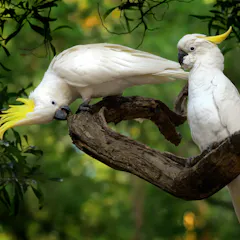
Spring is rapidly approaching and many birds are hunting for the best nesting sites. Competition is fierce — especially for species that nest in tree hollows.
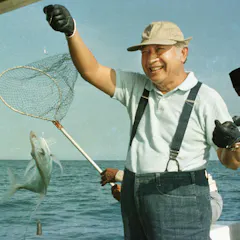
Soeharto’s rise to become the billionaire autocrat of the world’s fourth largest country would have seemed very unlikely in his childhood.
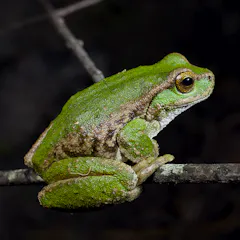
We’ve identified three frog species very likely to already be extinct. Another four species on our list are still surviving, but not likely to make it to 2040 without help.
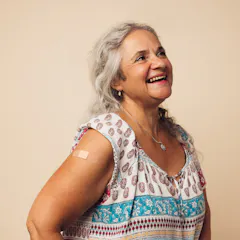
With the reality of the COVID situation in Australia, particularly in New South Wales, some older adults could literally die waiting.

Australian retirees can keep stashing away more superannuation, unused, for another year, even though the crisis prompting the concession has passed. The big winners? Rich retirees and their kids.

The pandemic has battered the arts and culture sector in Indonesia. Many producers and organizers have been forced to cancel events, concerts and movie releases.

Persilangan berbagai latar belakang sosial, ekonomi, dan keterampilan berkesenian menentukan bagaimana respons pekerja kreatif muda di Yogyakarta.
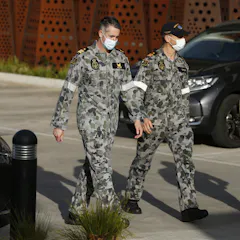
As troops enforce Sydney’s lockdown, two experts explain why using military rhetoric and personnel may undermine efforts to control the virus, especially among communities most vulnerable to COVID.
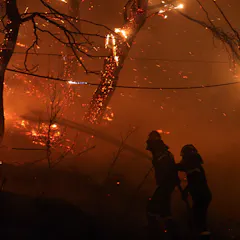
Academic research can shed light on crucial questions about what life on Earth will be like under the most plausible emissions scenarios. And a warning: the answers are confronting.
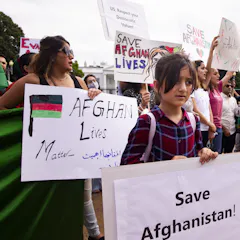
The Taliban have given every indication women and girls will face violence and repression as they back control of Afghanistan.

We found two small air cleaners in a single hospital room could clear 99% of potentially infectious COVID aerosols within 5.5 minutes.

Palmer’s anti-lockdown ads were not breaching any laws, so the decision about whether to run them become a purely ethical one. In the end, Nine has made the right decision.
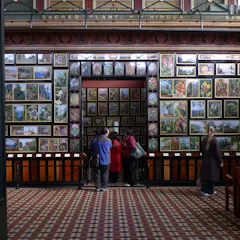
A special gallery in London’s Kew Gardens allows the visitor to travel the world via the 800-plus detailed paintings of Marianne North, Victorian-era adventurer and botanical artist.

Indigenous artists have been engraving rock shelters for millennia - long before the Kimberley’s celebrated rock art paintings. Now the rocks’ natural coatings are yielding clues to the engravings’ creation.
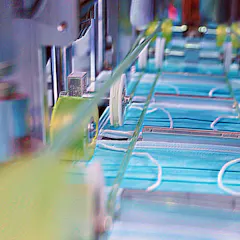
A major investigation finds the essential supplies most at risk are personal protective equipment and chemicals. Onshore manufacturing mightn’t do much to help.
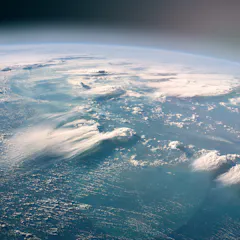
IPCC reports are often used as legal tool for bringing the powerful to account. And the more Australia’s governments and businesses lag on climate change, the more litigation we’re likely to see.
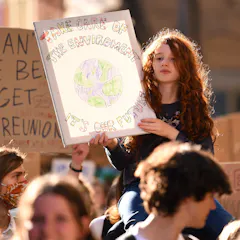
With climate action more crucial than ever, the IPCC needs to communicate clearly and strongly to as many people as possible. So how is it going so far?

Cassette tapes were the first great advancement in portable recording and playback. You can draw a direct line between them and the music apps on every smartphone today.
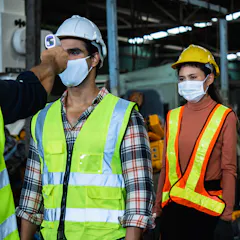
There are only limited circumstances where workplace vaccine mandates are likely to be found legally justifiable.
Authors
-

Election Analyst (Psephologist) at The Conversation; and Honorary Associate, School of Mathematics and Statistics, The University of Melbourne
-
Guest Research Fellow, School of Computing and Information Systems, The University of Melbourne
-
Professor of Sociology of Law and Deviance, Università di Bologna; University of Essex; The University of Melbourne
-
McKenzie Research Fellow, The University of Melbourne
-
Research assistant, Movember Institute of Men's Health, The University of Melbourne
-
Senior Research Associate, School of Agriculture, Food and Ecosystem Sciences, The University of Melbourne
-
Paleontologist, The University of Melbourne
-
Senior Lecturer, Centre for Advancing Journalism, The University of Melbourne
-
Research Fellow, Centre for Youth Mental Health, The University of Melbourne
-
Deputy Vice-Chancellor (Global, Culture and Engagement), The University of Melbourne
-
Emeritus professor, History, The University of Melbourne
-
Professor of Health Economics, The University of Melbourne
-
Associate Professor and Head, Behavioural Neuropharmacology Laboratory, The University of Melbourne
-
Lecturer in History, The University of Melbourne
-
Associate Professor, Centre for Youth Mental Health, The University of Melbourne