

The universe has a finite age — 13.8 billion years to be exact. So if it had a beginning, why is it so difficult to say for sure whether it will have an end?
The University of Melbourne

The University of Melbourne is a global leader in higher education. Across our campuses we convene brilliant minds from different disciplines and sectors to come together to address important questions and tackle grand challenges. In a disrupted world, that capacity has never been more important.
Our vision is to equip our students with a distinctive, future-facing education personalised around their ambitions and needs, enriched by global perspectives and embedded in a richly collaborative research culture. As active citizens and future leaders, our students represent our greatest contribution to the world, and are at the heart of everything we do.
We serve society by engaging with our communities and ensuring education and research are inspired from the outset by need and for the benefit of society, while remaining committed to allowing academic freedom to flourish. In this, we remain true to our purpose and fulfil our mission as a public-spirited organisation, dedicated to the principles of fairness, equality and excellence in everything we do.
We strive for an environment that is inclusive and celebrates diversity.
Beyond our campuses we imagine an Australia that is ambitious, forward thinking and increasing its reputation and influence globally. We are committed to playing a part in achieving this – building on our advantageous location in one of the world’s most exciting cities and across the state of Victoria, in a region rapidly becoming a hub for innovative education, research and collaboration.
Links
Articles

14% of Australians aged 18-49 are unwilling to get vaccinated, and almost 15% are unsure.

Many interactions between teacher and student may appear insignificant or random, but they are important for learning and building relationships.
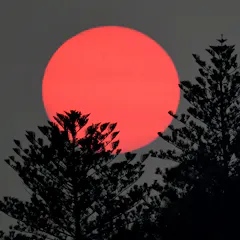
IPCC authors go beyond the headlines to explain how 1.5°C warming is measured – and why there’s still reason to hope, and act, if Earth exceeds that limit.
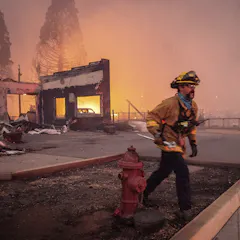
The Intergovernmental Panel on Climate Change has released its long-awaited report. From accelerating emissions to intensifying disasters to rising sea levels, its authors lay out the new findings.

Australians who normally live overseas will face an even tougher time coming back to Australia, under new rules that start this week.
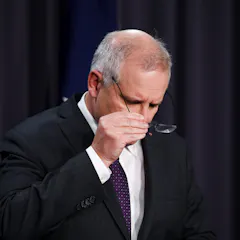
The prime minister has taken a hit in the polls over the poor vaccine rollout as the country’s biggest cities again deal with lockdowns.

A solid post-Olympic plan and the support of others can make all the difference when it comes to transitioning to a ‘normal’ life.
An article in the eminent US magazine Science has triggered debate over whether scientists should use climate models. Here’s what you should know about climate models ahead of today’s IPCC report.
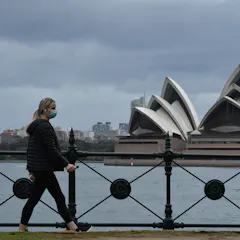
NSW needs to mandate masks outdoors, provide adequate financial support, set up a ‘ring of steel’, use rapid tests for essential workers, and ensure cases not in full isolation get to zero, among others.
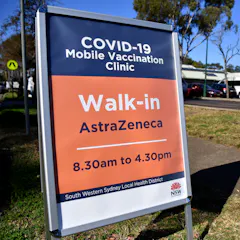
Cash incentives are likely to be effective for people who are willing to get vaccinated, but haven’t done so yet. Freedom incentives could shift those who are unsure or unwilling.
Penelitian terakhir kami menemukan bahwa kerumitan sistem data COVID-19 di Indonesia telah menjadi masalah.
Our latest study finds that the complexities of Indonesia’s COVID-19 data management have contributed to this problem.
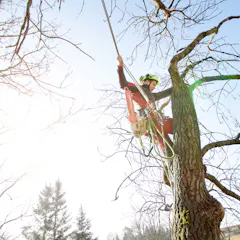
As a tree scientist who works with urban trees, I can assure you some large, old trees are well worth leaving alone, even you find them annoying sometimes.
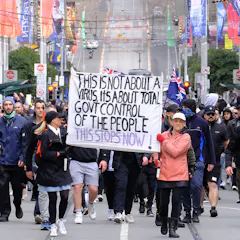
Equality and corruption perceptions appear to explain more than 80% of the differences in trust levels between nations.

When it comes to the study of international relations and power, Australian scholar Coral Bell was a superstar.

The recent discovery of the bodies of Indigenous children being found in Canada reminds us of the dark history of Australia’s treatment of young First Peoples and children here in Australia.
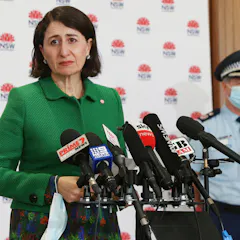
The media empire now seems to be wrestling with internal division over masks, vaccines and lockdowns – while being careful not to damage the Coalition ahead of the next election.
Recent changes to defamation laws may give political commentators more room to manoeuvre, but up-and-coming satirists will still face challenges to safely practice their craft.

Memories are easier to recall if they happen in unusual contexts, and our sense of time depends on how much things change. And being in lockdown is not conducive to either of these things.
Authors
-

Election Analyst (Psephologist) at The Conversation; and Honorary Associate, School of Mathematics and Statistics, The University of Melbourne
-
Guest Research Fellow, School of Computing and Information Systems, The University of Melbourne
-
Professor of Sociology of Law and Deviance, Università di Bologna; University of Essex; The University of Melbourne
-
McKenzie Research Fellow, The University of Melbourne
-
Research assistant, Movember Institute of Men's Health, The University of Melbourne
-
Senior Research Associate, School of Agriculture, Food and Ecosystem Sciences, The University of Melbourne
-
Paleontologist, The University of Melbourne
-
Senior Lecturer, Centre for Advancing Journalism, The University of Melbourne
-
Research Fellow, Centre for Youth Mental Health, The University of Melbourne
-
Deputy Vice-Chancellor (Global, Culture and Engagement), The University of Melbourne
-
Emeritus professor, History, The University of Melbourne
-
Professor of Health Economics, The University of Melbourne
-
Associate Professor and Head, Behavioural Neuropharmacology Laboratory, The University of Melbourne
-
Lecturer in History, The University of Melbourne
-
Associate Professor, Centre for Youth Mental Health, The University of Melbourne