

Last week the Bureau of Meteorology declared a negative Indian Ocean Dipole — a natural climate phenomenon set to bring wet weather. Let’s look at what you can expect, and the role of climate change.
The University of Melbourne

The University of Melbourne is a global leader in higher education. Across our campuses we convene brilliant minds from different disciplines and sectors to come together to address important questions and tackle grand challenges. In a disrupted world, that capacity has never been more important.
Our vision is to equip our students with a distinctive, future-facing education personalised around their ambitions and needs, enriched by global perspectives and embedded in a richly collaborative research culture. As active citizens and future leaders, our students represent our greatest contribution to the world, and are at the heart of everything we do.
We serve society by engaging with our communities and ensuring education and research are inspired from the outset by need and for the benefit of society, while remaining committed to allowing academic freedom to flourish. In this, we remain true to our purpose and fulfil our mission as a public-spirited organisation, dedicated to the principles of fairness, equality and excellence in everything we do.
We strive for an environment that is inclusive and celebrates diversity.
Beyond our campuses we imagine an Australia that is ambitious, forward thinking and increasing its reputation and influence globally. We are committed to playing a part in achieving this – building on our advantageous location in one of the world’s most exciting cities and across the state of Victoria, in a region rapidly becoming a hub for innovative education, research and collaboration.
Links
Articles
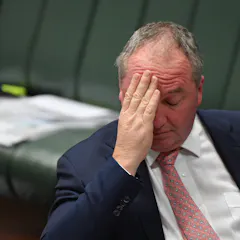
Polling results suggest the ousting of Michael McCormack in favour of Joyce could hurt the Coalition

The competition for soft power is at the heart of the Olympics. This year, the opening ceremony will be crucial for Japan.

These will not only be the most expensive Summer Games ever, they have likely come at a tremendous reputational cost for the IOC.

Digital technology and COVID-19 have transformed the ways universities are delivering courses. But some are taking a minimalist low-cost approach, while others are aiming higher.
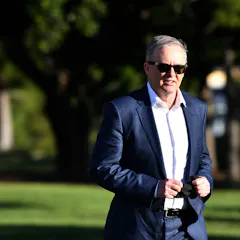
Voters are punishing the Coalition, and particularly Prime Minister Scott Morrison, for the vaccine debacle, but they may yet be saved by a strong economy.
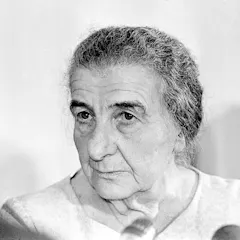
Meir was a remarkable woman, but her legacy is a complex one, with many suffering in her quest for a Jewish and Zionist Israel.

The question for the Victorian Law Reform Commission is whether such a move would curb the behaviour of the alleged offender rather than forcing victims to curb theirs.

Using geology and AI, a virtual model of how the Earth’s tectonic plates have evolved can help reveal deposits of copper.

Behind the vitriol over whether Sydney should be in lockdown is a window into how power operates in New South Wales.
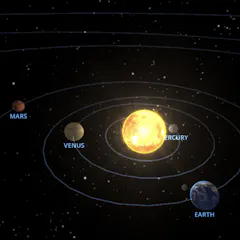
Mars, Venus and the crescent Moon will all come together in the sky just after sunset on Tuesday.

Our work suggests we could have achieved much lower unemployment than we have in recent years, without driving up inflation.

The proposed NDIS independent assessments have been controversial. And data from a pilot doesn’t really tell us whether they’d deliver positive outcomes for Australians with disability.

A new survey of Taiwanese and Australian citizens has revealed some surprising results about their views on security and China.

The rise of the Delta variant does seem to be associated with more COVID transmission in schools than what we’ve seen previously. But kids are much less likely to become severely unwell.
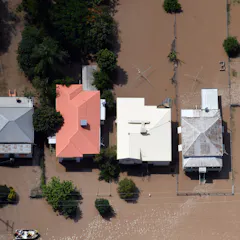
The Morrison government’s reinsurance pool is the exact policy the Australian Competition and Consumer Commission recommended against.
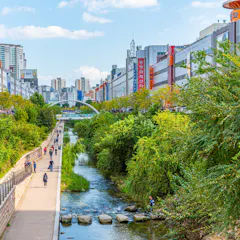
Despite their good intentions, cities rarely have the full set of skills and capabilities to turn their plans into a reality. Our research looks at what needs to change.
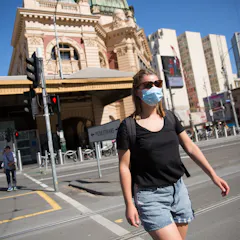
This generation faces wicked problems without simple, single solutions. We need to move beyond the short-term, issue du jour approach that has dominated government responses in recent decades.
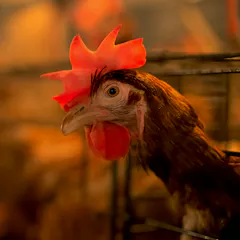
Egg production standards are about more than just a happy compromise. Hens are sentient, intelligent beings. Like us, they deserve a good life.

We know that the COVID pandemic has increased economic inequality around the world - here’s how children understand, and respond to, other people having much more than others.
Authors
-

Election Analyst (Psephologist) at The Conversation; and Honorary Associate, School of Mathematics and Statistics, The University of Melbourne
-
Guest Research Fellow, School of Computing and Information Systems, The University of Melbourne
-
Professor of Sociology of Law and Deviance, Università di Bologna; University of Essex; The University of Melbourne
-
McKenzie Research Fellow, The University of Melbourne
-
Research assistant, Movember Institute of Men's Health, The University of Melbourne
-
Senior Research Associate, School of Agriculture, Food and Ecosystem Sciences, The University of Melbourne
-
Paleontologist, The University of Melbourne
-
Senior Lecturer, Centre for Advancing Journalism, The University of Melbourne
-
Research Fellow, Centre for Youth Mental Health, The University of Melbourne
-
Deputy Vice-Chancellor (Global, Culture and Engagement), The University of Melbourne
-
Emeritus professor, History, The University of Melbourne
-
Professor of Health Economics, The University of Melbourne
-
Associate Professor and Head, Behavioural Neuropharmacology Laboratory, The University of Melbourne
-
Lecturer in History, The University of Melbourne
-
Associate Professor, Centre for Youth Mental Health, The University of Melbourne