

Even when we immunise all Australians who want to be protected against COVID-19, we’re unlikely to achieve herd immunity through vaccination alone. We need three other measures to open our borders.
The University of Melbourne

The University of Melbourne is a global leader in higher education. Across our campuses we convene brilliant minds from different disciplines and sectors to come together to address important questions and tackle grand challenges. In a disrupted world, that capacity has never been more important.
Our vision is to equip our students with a distinctive, future-facing education personalised around their ambitions and needs, enriched by global perspectives and embedded in a richly collaborative research culture. As active citizens and future leaders, our students represent our greatest contribution to the world, and are at the heart of everything we do.
We serve society by engaging with our communities and ensuring education and research are inspired from the outset by need and for the benefit of society, while remaining committed to allowing academic freedom to flourish. In this, we remain true to our purpose and fulfil our mission as a public-spirited organisation, dedicated to the principles of fairness, equality and excellence in everything we do.
We strive for an environment that is inclusive and celebrates diversity.
Beyond our campuses we imagine an Australia that is ambitious, forward thinking and increasing its reputation and influence globally. We are committed to playing a part in achieving this – building on our advantageous location in one of the world’s most exciting cities and across the state of Victoria, in a region rapidly becoming a hub for innovative education, research and collaboration.
Links
Articles

The question of whether we should be vaccinating children and adolescents against COVID-19 is currently being debated. Here’s why the answer is ‘not yet’.

It’s no coincidence that more books about trees are popping up. There is an air of desperation in new books by Peter Wohllben, Janine Burke and others.
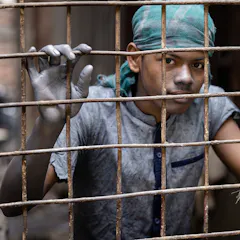
How responsible are we for the slavery that is directly connected to our consumer choices and what can we do to reduce it?
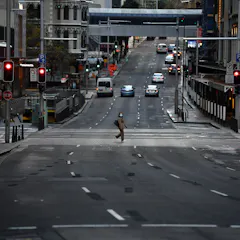
Our modelling shows the elimination strategy, including early, sharp lockdowns, remains Australia’s best policy.
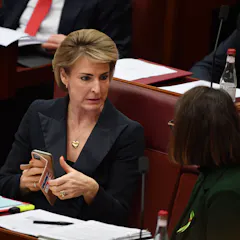
The bill put forth last week would bring welcome reforms to the Sex Discrimination Act and Fair Work Act. But it doesn’t go nearly far enough to protect women or prevent harassment at work.
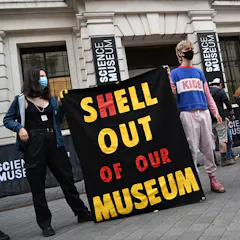
Perth’s Fringe World is being critiqued, again, for accepting sponsorship from Woodside Petroleum.

Universities must meaningfully acknowledge they are sited on unceded First Nations land and Indigenous culture should be recognised in campus design. These steps are vital for reconciliation.
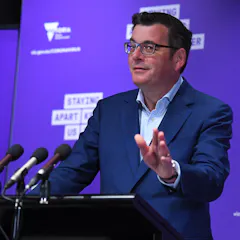
It’s not as simple as NSW is good and Victoria is bad, but it’s not a long way from it, either.

Polling reflects wide dissatisfaction with the vaccine rollout. Despite this, the Coalition is still in a winning position for the next election.

Australian surrealism has long been understood as if it was imported from Paris. This new exhibition places two Czech-Australian émigrés at the heart of the movement.

Only 6,000 women used self-collection in cervical screening between 2017 and 2019, out of about one million women eligible. We need to boost those numbers if we’re ever to eliminate cervical cancer.
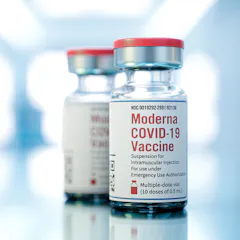
This myth is still circulating online. Here’s why the chance of this happening is next to zero.

If problems in such schemes are not addressed, the credibility of soil carbon trading will be undermined. Ultimately the climate - and the planet - will be the loser.
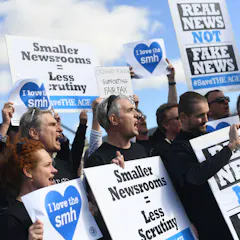
The huge cuts to Australian journalism over the past decade have decimated mentoring in the industry. This is not easy to see with the naked eye but it has a huge impact on what gets produced.
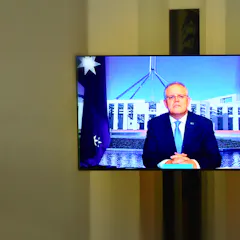
A new global study found Australia was one of only four countries of 120 where there was even “adequate” accountability on COVID-19 spending.

The idea that children suffer from going to childcare and having mothers who work is outdated nonsense – and the research backs it up.
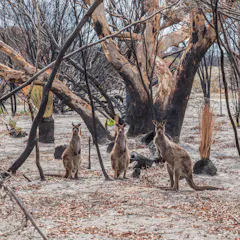
Australia has one of the worst track records in the world for species extinctions. The federal government’s proposed changes could weaken our already inadequate environment law.

Many people with PTSD also have depression, anxiety or some other mental health issue. This treatment might help where other treatments haven’t.
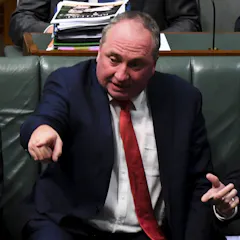
At the end of the day, net-zero by 2050 is a risky and inadequate goal, especially for wealthy nations such as Australia.
Authors
-

Election Analyst (Psephologist) at The Conversation; and Honorary Associate, School of Mathematics and Statistics, The University of Melbourne
-
Guest Research Fellow, School of Computing and Information Systems, The University of Melbourne
-
Professor of Sociology of Law and Deviance, Università di Bologna; University of Essex; The University of Melbourne
-
McKenzie Research Fellow, The University of Melbourne
-
Research assistant, Movember Institute of Men's Health, The University of Melbourne
-
Senior Research Associate, School of Agriculture, Food and Ecosystem Sciences, The University of Melbourne
-
Paleontologist, The University of Melbourne
-
Senior Lecturer, Centre for Advancing Journalism, The University of Melbourne
-
Research Fellow, Centre for Youth Mental Health, The University of Melbourne
-
Deputy Vice-Chancellor (Global, Culture and Engagement), The University of Melbourne
-
Emeritus professor, History, The University of Melbourne
-
Professor of Health Economics, The University of Melbourne
-
Associate Professor and Head, Behavioural Neuropharmacology Laboratory, The University of Melbourne
-
Lecturer in History, The University of Melbourne
-
Associate Professor, Centre for Youth Mental Health, The University of Melbourne