

If problems in such schemes are not addressed, the credibility of soil carbon trading will be undermined. Ultimately the climate - and the planet - will be the loser.
The University of Melbourne

The University of Melbourne is a global leader in higher education. Across our campuses we convene brilliant minds from different disciplines and sectors to come together to address important questions and tackle grand challenges. In a disrupted world, that capacity has never been more important.
Our vision is to equip our students with a distinctive, future-facing education personalised around their ambitions and needs, enriched by global perspectives and embedded in a richly collaborative research culture. As active citizens and future leaders, our students represent our greatest contribution to the world, and are at the heart of everything we do.
We serve society by engaging with our communities and ensuring education and research are inspired from the outset by need and for the benefit of society, while remaining committed to allowing academic freedom to flourish. In this, we remain true to our purpose and fulfil our mission as a public-spirited organisation, dedicated to the principles of fairness, equality and excellence in everything we do.
We strive for an environment that is inclusive and celebrates diversity.
Beyond our campuses we imagine an Australia that is ambitious, forward thinking and increasing its reputation and influence globally. We are committed to playing a part in achieving this – building on our advantageous location in one of the world’s most exciting cities and across the state of Victoria, in a region rapidly becoming a hub for innovative education, research and collaboration.
Links
Articles
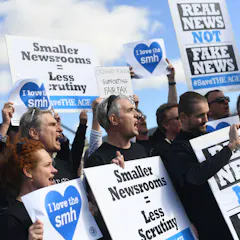
The huge cuts to Australian journalism over the past decade have decimated mentoring in the industry. This is not easy to see with the naked eye but it has a huge impact on what gets produced.
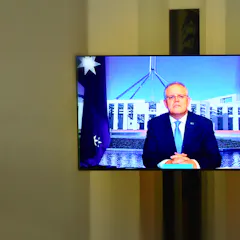
A new global study found Australia was one of only four countries of 120 where there was even “adequate” accountability on COVID-19 spending.

The idea that children suffer from going to childcare and having mothers who work is outdated nonsense – and the research backs it up.
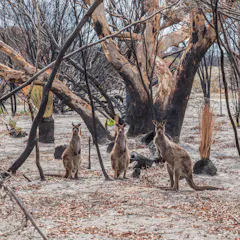
Australia has one of the worst track records in the world for species extinctions. The federal government’s proposed changes could weaken our already inadequate environment law.

Many people with PTSD also have depression, anxiety or some other mental health issue. This treatment might help where other treatments haven’t.
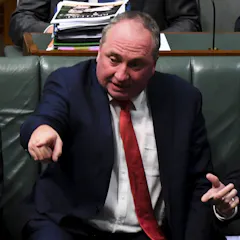
At the end of the day, net-zero by 2050 is a risky and inadequate goal, especially for wealthy nations such as Australia.
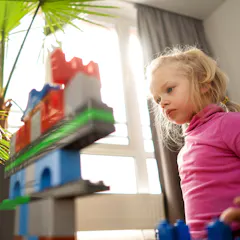
People with ADHD can struggle with day-to-day things other people find easy, with little understanding and acknowledgement from others.

China has administered more than one billion doses of its homegrown COVID-19 vaccines, the majority of which were developed by local companies Sinovac and Sinopharm. So what do we know about them?

Despite sending Victorians into their fourth lockdown, the Andrews government retains a healthy lead in polling and is favoured to win the next election.
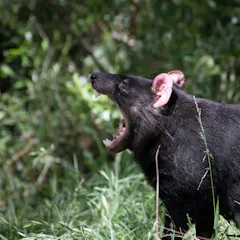
Tassie devils are notorious scavengers, eating everything from echidnas to stranded whales. Understanding how their teeth wear down can help us feed and protect captive populations.
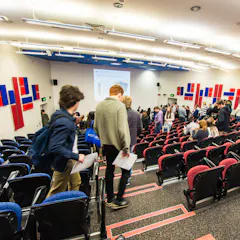
At best, when universities differentiate and specialise it can marshal talent and sharpen their focus. At worst. though, this debate can present universities with a false dilemma.
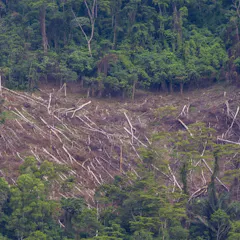
COVID-19 memiliki dampak positif dan negatif bagi lingkungan hidup di Indonesia, tapi prospek jangka panjang bagi lingkungan pasca-pandemi terlihat mengkhawatirkan.
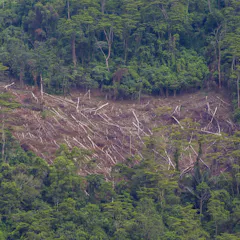
COVID-19 has had both positive and negative implications for the Indonesian environment, but post-pandemic prospects are not looking good.

The once secret paintings of Hilma af Klint are a revelation both for their beauty and for highlighting the impact of spiritualism on how artists see the world.
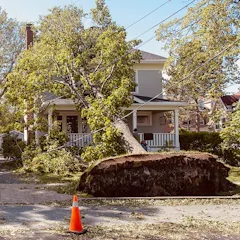
A better understanding of the science behind falling trees – followed by informed action – will help keep us safe and ensure trees continue to provide their many benefits.
Examining the records of 2,900 nursing homes we’ve found no evidence that where there’s more competition there’s better care or lower prices.

Politically and socially, Australia is fast expanding its engagement with India and her neighbours. Universities, in contrast, have wound back their commitment to South Asian studies.
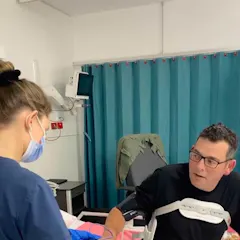
It is difficult for the media to deal in fake news – but the Andrews conspiracy story has been handled very well.

If you have risk factors around blood clots, heart attack or stroke, this should actually be an impetus to get vaccinated sooner rather than later.
Authors
-

Election Analyst (Psephologist) at The Conversation; and Honorary Associate, School of Mathematics and Statistics, The University of Melbourne
-
Guest Research Fellow, School of Computing and Information Systems, The University of Melbourne
-
Professor of Sociology of Law and Deviance, Università di Bologna; University of Essex; The University of Melbourne
-
McKenzie Research Fellow, The University of Melbourne
-
Research assistant, Movember Institute of Men's Health, The University of Melbourne
-
Senior Research Associate, School of Agriculture, Food and Ecosystem Sciences, The University of Melbourne
-
Paleontologist, The University of Melbourne
-
Senior Lecturer, Centre for Advancing Journalism, The University of Melbourne
-
Research Fellow, Centre for Youth Mental Health, The University of Melbourne
-
Deputy Vice-Chancellor (Global, Culture and Engagement), The University of Melbourne
-
Emeritus professor, History, The University of Melbourne
-
Professor of Health Economics, The University of Melbourne
-
Associate Professor and Head, Behavioural Neuropharmacology Laboratory, The University of Melbourne
-
Lecturer in History, The University of Melbourne
-
Associate Professor, Centre for Youth Mental Health, The University of Melbourne