

Perth’s City of Stirling, which honours James Stirling, is considering a name change. New research shows how Stirling’s family’s wealth was built on the back of slavery business.
The University of Melbourne

The University of Melbourne is a global leader in higher education. Across our campuses we convene brilliant minds from different disciplines and sectors to come together to address important questions and tackle grand challenges. In a disrupted world, that capacity has never been more important.
Our vision is to equip our students with a distinctive, future-facing education personalised around their ambitions and needs, enriched by global perspectives and embedded in a richly collaborative research culture. As active citizens and future leaders, our students represent our greatest contribution to the world, and are at the heart of everything we do.
We serve society by engaging with our communities and ensuring education and research are inspired from the outset by need and for the benefit of society, while remaining committed to allowing academic freedom to flourish. In this, we remain true to our purpose and fulfil our mission as a public-spirited organisation, dedicated to the principles of fairness, equality and excellence in everything we do.
We strive for an environment that is inclusive and celebrates diversity.
Beyond our campuses we imagine an Australia that is ambitious, forward thinking and increasing its reputation and influence globally. We are committed to playing a part in achieving this – building on our advantageous location in one of the world’s most exciting cities and across the state of Victoria, in a region rapidly becoming a hub for innovative education, research and collaboration.
Links
Articles

Australotitan was a massive long-necked sauropod estimated to weigh the equivalent of 1,400 red kangaroos.
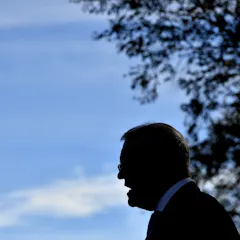
In this week’s Newspoll, Morrison scored his lowest net approval since the COVID crisis started last year. Anthony Albanese also clocked a record low.

While we don’t know exactly what causes it yet, there are a few leading theories put forward by researchers around the world.

Sejujurnya, tidak ada yang benar-benar tahu. Tapi itu mungkin ada hubungannya dengan fakta bahwa sinyal dari hidung dan mata kamu tiba di area yang sama di otak kamu.
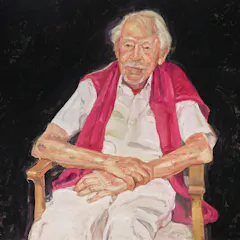
In its centenary year, the Trustees of the Art Gallery of New South Wales could not resist the symbolism of awarding the Archibald Prize to Peter Werner’s portrait of the 100 year old Guy Warren.
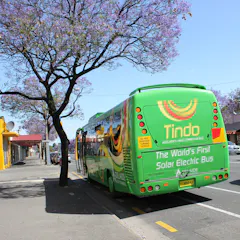
Transport is the one sector where Australia hasn’t reined in the growth in greenhouse gas emissions. Electric cars will cut emissions but still leave us with all the other problems of car use.

Chance matters. It’s unlikely Victoria is doing anything that ‘makes us’ more likely to have outbreaks leading to lockdowns.
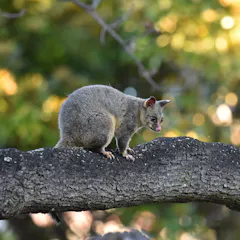
When a big old tree dies or is cut down, even if we plant a new one we might have to wait hundreds of years before it provides a good possum house.

Los datos de estudios recientes sobre la administración mixta de vacunas sugieren que puede proporcionar niveles de anticuerpos más altos que dos dosis de un solo fabricante.
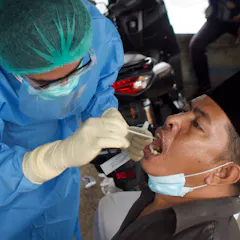
New cases have more than doubled in the past two weeks, sparking concerns that last month’s Eid holiday could have been a super-spreader event.

The Su-re site has provided a historical connection between local Tibetans in the highlands with Nepali Sherpas in the Himalayan lowlands.
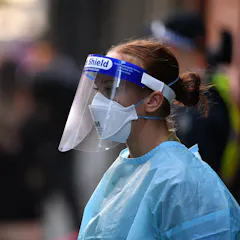
The government says hotel quarantine is ‘serving Australia very well’. But if you look at the leaks as a proportion of COVID-positive returnees, it’s a different story.
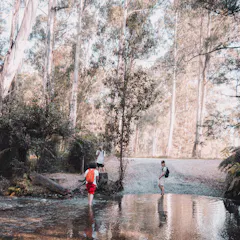
Children need to connect with Australia’s bountiful variety of trees. New picture books are helping them to do so.
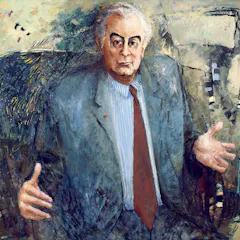
It’s 100 years since the Art Gallery of NSW first held the Archibald Prize. Though loathed by some critics, it is an annual snapshot of the kind of society we are, and who our heroes might be.

Does it matter where COVID came from? In the ongoing war of words between the US and China, the answer is a resounding ‘yes’.

For now, it seems the benefits to Australia’s public health may be better served by other technology. And the public cost of maintaining the COVIDSafe app may not be in our collective interest.

Drainpipe, torn or skinny, denim jeans have a history of unsettling the powerful.
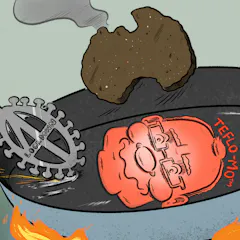
After months of favourable coverage, this weekend may have marked a turning point in the media’s portrayal of Scott Morrison.

Just as BLM is forcing a reckoning with systemic racism, there is new attention being paid to the origins of the Palestinians’ struggles.
Authors
-

Election Analyst (Psephologist) at The Conversation; and Honorary Associate, School of Mathematics and Statistics, The University of Melbourne
-
Guest Research Fellow, School of Computing and Information Systems, The University of Melbourne
-
Professor of Sociology of Law and Deviance, Università di Bologna; University of Essex; The University of Melbourne
-
McKenzie Research Fellow, The University of Melbourne
-
Research assistant, Movember Institute of Men's Health, The University of Melbourne
-
Senior Research Associate, School of Agriculture, Food and Ecosystem Sciences, The University of Melbourne
-
Paleontologist, The University of Melbourne
-
Senior Lecturer, Centre for Advancing Journalism, The University of Melbourne
-
Research Fellow, Centre for Youth Mental Health, The University of Melbourne
-
Deputy Vice-Chancellor (Global, Culture and Engagement), The University of Melbourne
-
Emeritus professor, History, The University of Melbourne
-
Professor of Health Economics, The University of Melbourne
-
Associate Professor and Head, Behavioural Neuropharmacology Laboratory, The University of Melbourne
-
Lecturer in History, The University of Melbourne
-
Associate Professor, Centre for Youth Mental Health, The University of Melbourne