

The court described climate change as ‘the greatest inter-generational injustice ever inflicted by one generation of humans upon the next’.
The University of Melbourne

The University of Melbourne is a global leader in higher education. Across our campuses we convene brilliant minds from different disciplines and sectors to come together to address important questions and tackle grand challenges. In a disrupted world, that capacity has never been more important.
Our vision is to equip our students with a distinctive, future-facing education personalised around their ambitions and needs, enriched by global perspectives and embedded in a richly collaborative research culture. As active citizens and future leaders, our students represent our greatest contribution to the world, and are at the heart of everything we do.
We serve society by engaging with our communities and ensuring education and research are inspired from the outset by need and for the benefit of society, while remaining committed to allowing academic freedom to flourish. In this, we remain true to our purpose and fulfil our mission as a public-spirited organisation, dedicated to the principles of fairness, equality and excellence in everything we do.
We strive for an environment that is inclusive and celebrates diversity.
Beyond our campuses we imagine an Australia that is ambitious, forward thinking and increasing its reputation and influence globally. We are committed to playing a part in achieving this – building on our advantageous location in one of the world’s most exciting cities and across the state of Victoria, in a region rapidly becoming a hub for innovative education, research and collaboration.
Links
Articles
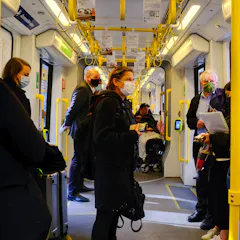
The COVID-19 variant responsible for Victoria’s latest outbreak is one of three Indian variant sub-types, which spreads more easily than the original strain. Here’s what we know so far.
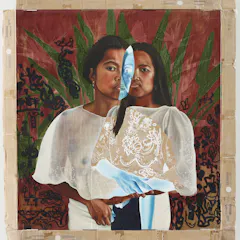
The Archibald Prize celebrates its centenary with a list of finalists that includes plenty of artists’ portraits and some notable change makers.

Recent elections in Australia, the US and the UK have seen left-leaning parties lose votes among non-university educated whites. One way to win them back might be to disassociate from ‘elite’ opinion.

The International Society for Stem Cell Research’s newly released guidelines aim to address new ethical challenges posed by stem cell advances such as model embryos and human-monkey hybrid embryos.

NSW is looking to update its heritage laws, as other states have done. But what actually is heritage?
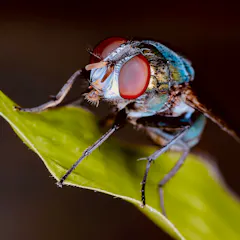
New findings suggest the loss of fertility at high temperatures is a major threat to the survival of some species.
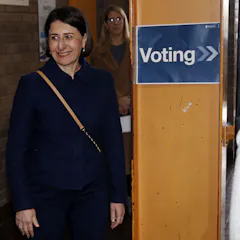
In the latest release of polls, the Morrison government also leads Albanese’s Labor when it comes to economic management.
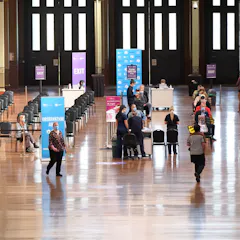
In a pandemic or any other emergency, the first ethical duty of the media is to report accurately and soberly, and specifically not to induce unjustified anxiety or panic.

Some students may wonder why they bothered returning to campus. Others are struggling online. But lecturers who do engage students think deeply about how they do it, using all available tools.

Premiering in 1937 in Frankfurt during the Third Reich, there is a ritualistic force to Carl Orff’s Carmina Burana. This makes it a guilty pleasure for some and perfect fodder for ad jingles.
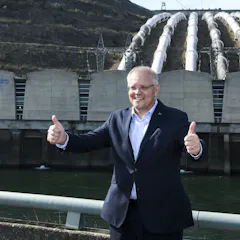
Government-owned firms are often branded as uncompetitive, stuck in the past and unable to truly innovate. But they’re sometimes better suited than private firms to drive new, clean technologies.
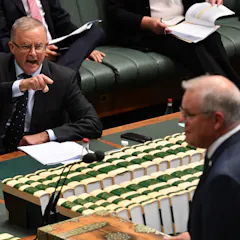
Governments rarely experience a big bounce after budgets - and this year’s seems to be no exception.

Timber company VicForests won its appeal last week and logging is set to resume. Let’s take a look at the dramatic implications for wildlife and the law.

Aboriginal and Torres Strait Islander children are increasingly being removed from their families and placed into out-of-home care, raising concerns of another Stolen Generation.
The line between what is normal and what is pathological has blurred. We risk our collective sanity and our planet if we stick to business as usual.

The budget splashed out extra money for almost every sector deemed important to economic recovery (or politically sensitive). But with universities in a state of financial crisis, they missed out.

This week’s budget assumes all Australians will have the chance to be fully vaccinated by the end of the year. It’s ambitious but possible.

The federal budget’s A$2.3 billion for mental health may well make it easier to access services. But there’s no guarantee this will translate to improved mental health in Australia — here’s why.

The government needs to address the whole ecosystem of the arts, increasing funding to the Australia Council so individual artists and small organisations get adequate support.
Authors
-

Election Analyst (Psephologist) at The Conversation; and Honorary Associate, School of Mathematics and Statistics, The University of Melbourne
-
Guest Research Fellow, School of Computing and Information Systems, The University of Melbourne
-
Professor of Sociology of Law and Deviance, Università di Bologna; University of Essex; The University of Melbourne
-
McKenzie Research Fellow, The University of Melbourne
-
Research assistant, Movember Institute of Men's Health, The University of Melbourne
-
Senior Research Associate, School of Agriculture, Food and Ecosystem Sciences, The University of Melbourne
-
Paleontologist, The University of Melbourne
-
Senior Lecturer, Centre for Advancing Journalism, The University of Melbourne
-
Research Fellow, Centre for Youth Mental Health, The University of Melbourne
-
Deputy Vice-Chancellor (Global, Culture and Engagement), The University of Melbourne
-
Emeritus professor, History, The University of Melbourne
-
Professor of Health Economics, The University of Melbourne
-
Associate Professor and Head, Behavioural Neuropharmacology Laboratory, The University of Melbourne
-
Lecturer in History, The University of Melbourne
-
Associate Professor, Centre for Youth Mental Health, The University of Melbourne