

Over half of the 50 nations in the International Federation of Journalists survey said coverage of China had become more positive in their national media since the onset of the pandemic.
The University of Melbourne

The University of Melbourne is a global leader in higher education. Across our campuses we convene brilliant minds from different disciplines and sectors to come together to address important questions and tackle grand challenges. In a disrupted world, that capacity has never been more important.
Our vision is to equip our students with a distinctive, future-facing education personalised around their ambitions and needs, enriched by global perspectives and embedded in a richly collaborative research culture. As active citizens and future leaders, our students represent our greatest contribution to the world, and are at the heart of everything we do.
We serve society by engaging with our communities and ensuring education and research are inspired from the outset by need and for the benefit of society, while remaining committed to allowing academic freedom to flourish. In this, we remain true to our purpose and fulfil our mission as a public-spirited organisation, dedicated to the principles of fairness, equality and excellence in everything we do.
We strive for an environment that is inclusive and celebrates diversity.
Beyond our campuses we imagine an Australia that is ambitious, forward thinking and increasing its reputation and influence globally. We are committed to playing a part in achieving this – building on our advantageous location in one of the world’s most exciting cities and across the state of Victoria, in a region rapidly becoming a hub for innovative education, research and collaboration.
Links
Articles

To tell you the truth, nobody really knows. But it’s probably got to do with the fact that signals from your nose and your eyes arrive in the same area of your brain.
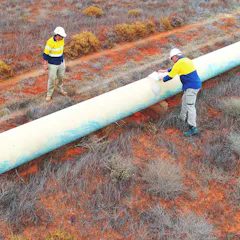
Pipelines, dams, gadgets: does water management really need to be all about control and power? Adopting less masculine ideas and working with nature may be more prudent.
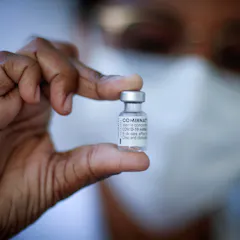
Vaccination is likely to substantially reduce virus transmission by reducing the pool of people who become infected, and reducing virus levels in people who do get infected.

Los gobiernos y los servicios sanitarios deberían invertir en equipos de generación y concentración de oxígeno para abastecer todas las necesidades del sistema hospitalario.
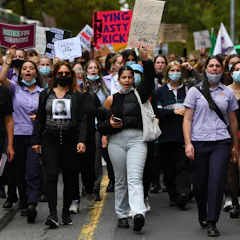
While Mother’s Day is often surrounded by cloying sentiment, Australian mums have a long history of political activism and forcing social change.

The Brereton report is providing an opportunity for the ADF to rethink its core values. It ignores changing social expectations at its peril.
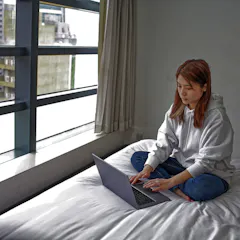
International students have been admirably persistent in studying online for more than a year. But as other countries open their doors, Australia risks losing them if it fails to show they are wanted.

There’s not enough scholarly evidence to suggest game companies can control our minds or our wallets.

Popular psychology is all over book shops, podcasts and Netflix specials. The value of these ideas is hotly debated but even unguided, self-administered bibliotherapy may bring mental health benefits.

Roadsides have long been reserved for parking cars, but the pandemic led to many experiments with other ways of using scarce and valuable public space. We can put it to better and more flexible uses.
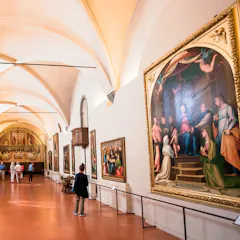
The Renaissance San Marco convent, now a museum, is where Fra Angelico lived and painted under the patronage of Cosimo de’ Medici. It was also where Savonarola proclaimed the Bonfire of the Vanities.
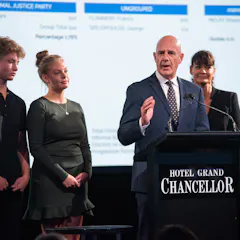
Peter Gutwein is returned as Tasmanian premier, another incumbent state government winning an election on the back of sound COVID management.
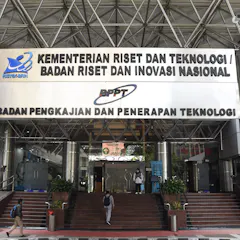
The institutional design of BRIN allows for political intervention, showing how the Indonesian government is unwilling to prioritise research and technology.
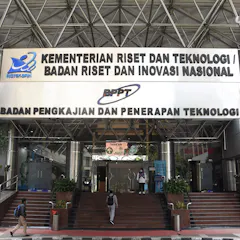
Desain BRIN yang rawan campur tangan politik menunjukkan keengganan pemerintah mengutamakan riset dan teknologi.
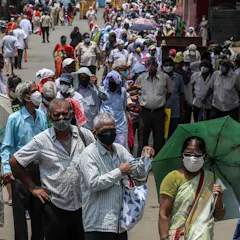
COVID-19 has created a temporary but desperate minority of Australians. These are the roughly 34,000 citizens overseas who say they are stranded.
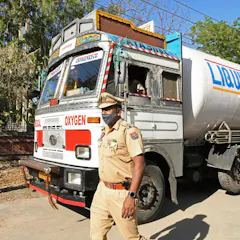
For now, governments and health services should invest in bedside oxygen concentrators and oxygen generators to supply whole hospital needs.
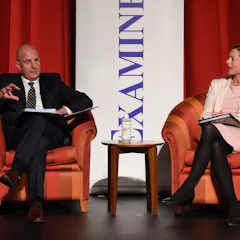
With a state election on Saturday, polls are showing different trends. Meanwhile, vaccine wariness among Australians is growing.

Early reports suggested an apparent increase in OCD relapse rates and symptom severity during the pandemic. But a year on, we’re learning this may not be the case.
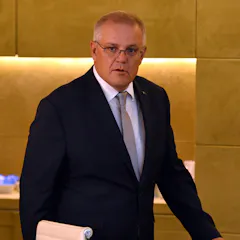
Scott Morrison’s popularity is holding firm against a troubled vaccine rollout and controversies about the treatment of women.
Authors
-

Election Analyst (Psephologist) at The Conversation; and Honorary Associate, School of Mathematics and Statistics, The University of Melbourne
-
Guest Research Fellow, School of Computing and Information Systems, The University of Melbourne
-
Professor of Sociology of Law and Deviance, Università di Bologna; University of Essex; The University of Melbourne
-
McKenzie Research Fellow, The University of Melbourne
-
Research assistant, Movember Institute of Men's Health, The University of Melbourne
-
Senior Research Associate, School of Agriculture, Food and Ecosystem Sciences, The University of Melbourne
-
Paleontologist, The University of Melbourne
-
Senior Lecturer, Centre for Advancing Journalism, The University of Melbourne
-
Research Fellow, Centre for Youth Mental Health, The University of Melbourne
-
Deputy Vice-Chancellor (Global, Culture and Engagement), The University of Melbourne
-
Emeritus professor, History, The University of Melbourne
-
Professor of Health Economics, The University of Melbourne
-
Associate Professor and Head, Behavioural Neuropharmacology Laboratory, The University of Melbourne
-
Lecturer in History, The University of Melbourne
-
Associate Professor, Centre for Youth Mental Health, The University of Melbourne