

Media regulation in Australia has always been weak, fragmented and lacking in public visibility. It has also never had a government bold enough to do anything about it.
The University of Melbourne

The University of Melbourne is a global leader in higher education. Across our campuses we convene brilliant minds from different disciplines and sectors to come together to address important questions and tackle grand challenges. In a disrupted world, that capacity has never been more important.
Our vision is to equip our students with a distinctive, future-facing education personalised around their ambitions and needs, enriched by global perspectives and embedded in a richly collaborative research culture. As active citizens and future leaders, our students represent our greatest contribution to the world, and are at the heart of everything we do.
We serve society by engaging with our communities and ensuring education and research are inspired from the outset by need and for the benefit of society, while remaining committed to allowing academic freedom to flourish. In this, we remain true to our purpose and fulfil our mission as a public-spirited organisation, dedicated to the principles of fairness, equality and excellence in everything we do.
We strive for an environment that is inclusive and celebrates diversity.
Beyond our campuses we imagine an Australia that is ambitious, forward thinking and increasing its reputation and influence globally. We are committed to playing a part in achieving this – building on our advantageous location in one of the world’s most exciting cities and across the state of Victoria, in a region rapidly becoming a hub for innovative education, research and collaboration.
Links
Articles

During the height of the pandemic, people with disability felt they had been forgotten and were not a priority. In the vaccine rollout, the government is repeating its past mistakes.

With the end of JobKeeper come changes that will force more people to search for work.
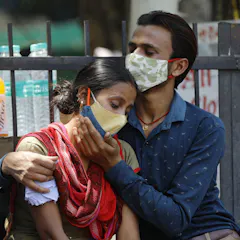
Prime Minister Narendra Modi prioritised vaccine exports over the domestic roll-out and encouraged large crowds at political rallies. Now, India is paying the consequences.
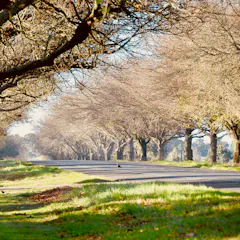
Avenues of Honour were planted to remind us of the sacrifice and suffering of our servicemen and women. But as the years wore on, many declined or disappeared.

Amid the trauma and boredom of war, soldiers turned to reading — often magazines they wrote themselves.

By raising funds the way they do, companies deplete the wealth of shareholders who didn’t take part.
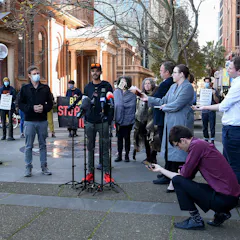
The Royal Commission into Aboriginal Deaths in Custody made recommendations to ensure ethical reporting of these deaths. Despite this, harmful and inaccurate reporting still abounds.
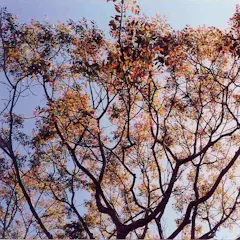
Native deciduous trees are rare in Australia, which means many of the red, yellow and brown leaves we associate with autumn come from introduced species.

The amount of risk from overseas arrivals depends not just on Australia’s vaccination rates, but also on the particular circumstances of the country from which people are travelling.

To deter Google and other big tech companies from misleading users about data collection, the Federal Court should impose heavy fines.

Researchers made human-monkey chimeras, by adding human stem cells to monkey embryos. Some embryos were cultured for 19 days after fertilisation.
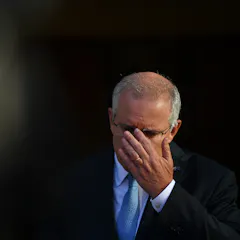
The Morrison government’s decision to drop vaccination targets goes against decades of research and evidence on the importance of goal-setting.
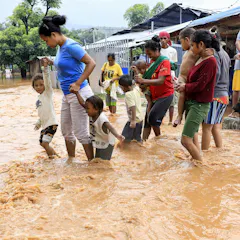
In flood-ravaged Dili, COVID-19 restrictions were abandoned as the disaster unfolded. But it means an already escalating pandemic situation may spiral out of control.

Everest didn’t become the highest mountain overnight. This process was excruciatingly slow; a result of complex interactions between the solid earth, the atmosphere and the biosphere.
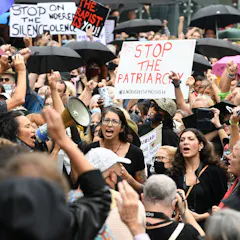
Recent polls have shown a disparity between men and women’s support for the prime minister in the wake of horrendous stories about the treatment of women. How can the data help us understand that?
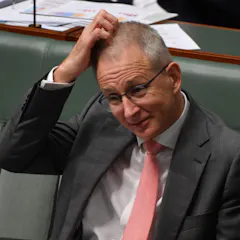
Arts Minister Paul Fletcher has taken aim at what he calls a ‘cosy club’ of arts elites. But his claim of ‘unprecedented’ arts funding and a push for greater fairness don’t add up.

Uncle Segar is an expert on many things including the land, sea and sky. This knowledge is then captured in his artworks.

Treating online education as a cheap alternative to lectures will be a mistake. At first universities will probably have to allow more preparation time and invest more in training and technology.
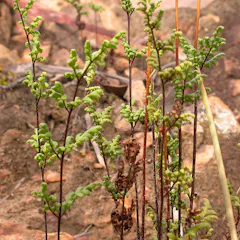
This Easter, read about this remarkable species of resurrection fern — plants that appear dead and dry, but under the right conditions rapidly spring to life.
Authors
-

Election Analyst (Psephologist) at The Conversation; and Honorary Associate, School of Mathematics and Statistics, The University of Melbourne
-
Guest Research Fellow, School of Computing and Information Systems, The University of Melbourne
-
Professor of Sociology of Law and Deviance, Università di Bologna; University of Essex; The University of Melbourne
-
McKenzie Research Fellow, The University of Melbourne
-
Research assistant, Movember Institute of Men's Health, The University of Melbourne
-
Senior Research Associate, School of Agriculture, Food and Ecosystem Sciences, The University of Melbourne
-
Paleontologist, The University of Melbourne
-
Senior Lecturer, Centre for Advancing Journalism, The University of Melbourne
-
Research Fellow, Centre for Youth Mental Health, The University of Melbourne
-
Deputy Vice-Chancellor (Global, Culture and Engagement), The University of Melbourne
-
Emeritus professor, History, The University of Melbourne
-
Professor of Health Economics, The University of Melbourne
-
Associate Professor and Head, Behavioural Neuropharmacology Laboratory, The University of Melbourne
-
Lecturer in History, The University of Melbourne
-
Associate Professor, Centre for Youth Mental Health, The University of Melbourne