

The media have great power in shaping our ideas of people, places and ideas that are beyond our experience. And some need to get much better at how they treat women.
The University of Melbourne

The University of Melbourne is a global leader in higher education. Across our campuses we convene brilliant minds from different disciplines and sectors to come together to address important questions and tackle grand challenges. In a disrupted world, that capacity has never been more important.
Our vision is to equip our students with a distinctive, future-facing education personalised around their ambitions and needs, enriched by global perspectives and embedded in a richly collaborative research culture. As active citizens and future leaders, our students represent our greatest contribution to the world, and are at the heart of everything we do.
We serve society by engaging with our communities and ensuring education and research are inspired from the outset by need and for the benefit of society, while remaining committed to allowing academic freedom to flourish. In this, we remain true to our purpose and fulfil our mission as a public-spirited organisation, dedicated to the principles of fairness, equality and excellence in everything we do.
We strive for an environment that is inclusive and celebrates diversity.
Beyond our campuses we imagine an Australia that is ambitious, forward thinking and increasing its reputation and influence globally. We are committed to playing a part in achieving this – building on our advantageous location in one of the world’s most exciting cities and across the state of Victoria, in a region rapidly becoming a hub for innovative education, research and collaboration.
Links
Articles
We need a layered strategy — depending on the amount of community transmission – to ensure the response isn’t the same every time with each snap lockdown: to close schools. Here’s how to do it.
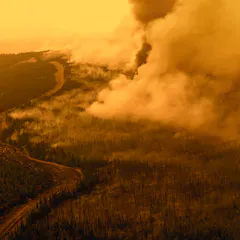
As bushfires become larger under climate change, the area exposed to intense and severe fires is likely to increase.
Our report draws on data from more than 1,000 participants who told us of their experiences through community meetings, repeated surveys years after the fires or in-depth interviews.
After a terrible few weeks, the prime minister’s approval rating has plunged. Meanwhile, a redistribution sees Victoria gain a seat and WA lose one.
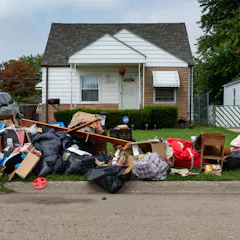
Social disadvantage can cause stress that leads to changes in ‘connectivity’ between brain regions, potentially harming adolescents’ ability to plan, set goals, and self-reflect.
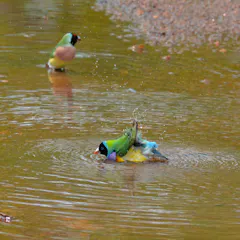
This autumn, embrace puddles. Even tiny pools of water can be essential for birds, trees and pets — from washing away chemicals on leaves to forcing worms to emerge.

In criminology, there are many theories to account for why men are more likely than women to commit crimes – and they may hold the key to changing those figures.

CEOs, including at oil companies and airlines, are relying on trees and oceans to capture and store carbon for them, but the numbers don’t add up.
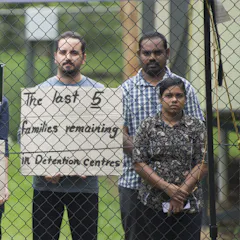
Those who have been released have little financial or social support, confining them to lives of precarity, dependency and impoverishment in our community.
Government incentives might boost the numbers of collaborative research projects, but academics also must work on their relationships with industry practitioners to ensure everyone contributes fully.
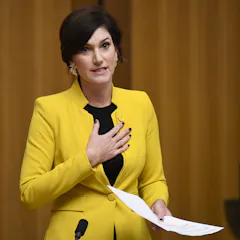
New research finds that women standing for election to local councils experience much more gendered abuse and bullying than men – and it is likely this puts them off wanting to run at all.

Two research groups have turned human skin cells into structures resembling an early-stage human embryo, paving the way for exciting new research avenues, and opening up some tricky ethical questions.
The focus on rankings has been more a symptom than a cause of the challenge Australian universities face, namely a structural change in their revenue base.

Apakah dibukanya akses Clubhouse ke pengguna Android akan membuat aplikasi ini menjadi lebih inklusif? Mengingat bahasan di media sosial secara umum yang masih sering bias kelas, nampaknya tidak.

More than 30 million people play Roblox every day - and millions also make their own games for the booming kid-friendly digital platform.
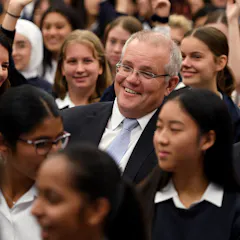
We hear a lot about the Morrison government ‘kicking the can down the road’ on emissions reduction. New research reveals the precise burden that forces onto young Australians.

An enabling approach was more likely to create attitudes among suppliers that were conducive to learning.
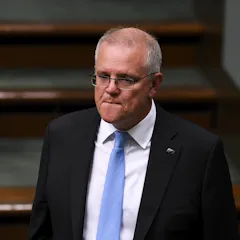
Prime Minister Scott Morrison’s strong ratings in the Newspoll and Essential poll suggest the slow vaccine rollout and anger among women might not be hurting the government yet.
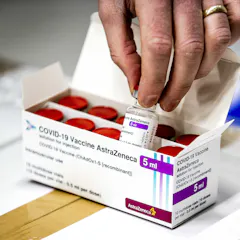
Data from clinical trials and the real world COVID vaccine rollout suggest blood clots occur no more frequently in vaccinated people than they do in the general population.
Authors
-

Election Analyst (Psephologist) at The Conversation; and Honorary Associate, School of Mathematics and Statistics, The University of Melbourne
-
Guest Research Fellow, School of Computing and Information Systems, The University of Melbourne
-
Professor of Sociology of Law and Deviance, Università di Bologna; University of Essex; The University of Melbourne
-
McKenzie Research Fellow, The University of Melbourne
-
Research assistant, Movember Institute of Men's Health, The University of Melbourne
-
Senior Research Associate, School of Agriculture, Food and Ecosystem Sciences, The University of Melbourne
-
Paleontologist, The University of Melbourne
-
Senior Lecturer, Centre for Advancing Journalism, The University of Melbourne
-
Research Fellow, Centre for Youth Mental Health, The University of Melbourne
-
Deputy Vice-Chancellor (Global, Culture and Engagement), The University of Melbourne
-
Emeritus professor, History, The University of Melbourne
-
Professor of Health Economics, The University of Melbourne
-
Associate Professor and Head, Behavioural Neuropharmacology Laboratory, The University of Melbourne
-
Lecturer in History, The University of Melbourne
-
Associate Professor, Centre for Youth Mental Health, The University of Melbourne