

A major new report presents the latest data on the health impacts in a warming world. It found there were 296,000 heat-related deaths in people over 65 years in 2018.
The University of Melbourne

The University of Melbourne is a global leader in higher education. Across our campuses we convene brilliant minds from different disciplines and sectors to come together to address important questions and tackle grand challenges. In a disrupted world, that capacity has never been more important.
Our vision is to equip our students with a distinctive, future-facing education personalised around their ambitions and needs, enriched by global perspectives and embedded in a richly collaborative research culture. As active citizens and future leaders, our students represent our greatest contribution to the world, and are at the heart of everything we do.
We serve society by engaging with our communities and ensuring education and research are inspired from the outset by need and for the benefit of society, while remaining committed to allowing academic freedom to flourish. In this, we remain true to our purpose and fulfil our mission as a public-spirited organisation, dedicated to the principles of fairness, equality and excellence in everything we do.
We strive for an environment that is inclusive and celebrates diversity.
Beyond our campuses we imagine an Australia that is ambitious, forward thinking and increasing its reputation and influence globally. We are committed to playing a part in achieving this – building on our advantageous location in one of the world’s most exciting cities and across the state of Victoria, in a region rapidly becoming a hub for innovative education, research and collaboration.
Links
Articles
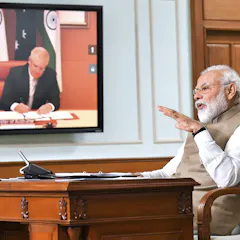
Hindi is the most widely spoken language of India and of the many people of Indian origin in Australia. The teaching of Hindi has been in decline at a time when the need for it has never been greater.
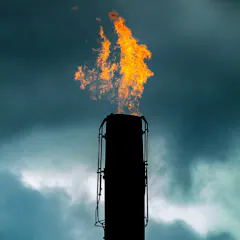
It reveals in alarming detail how gas emissions are cancelling out the gains won by Australia’s renewables boom, and uncovers misleading claims underpinning our gas-led economic recovery.

Criminal trials may hold offenders to account but they are far from perfect. The Victorian Law Reform Commission is looking at how restorative justice could be used for sexual offences.
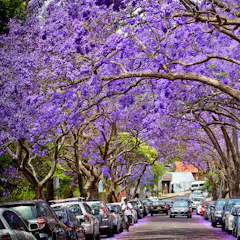
Over spring and early summer, jacarandas and their purple haze line many Australian streets. But how much do you really know about them?

After becoming Peru’s third president in six days, Francisco Sagasti must both lead the country into elections and build a better democracy. It’s a test Peruvian leaders largely failed 20 years ago.
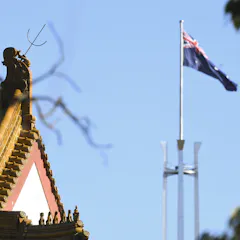
Australia can’t remake China into a completely different country. Instead, we need to see it as a challenge to be managed — not an enemy.
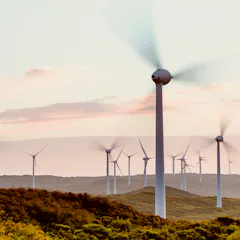
The states have been forced to act alone on renewable energy after the federal government effectively vacated the policy space. But if not managed carefully, the strategy may backfire.
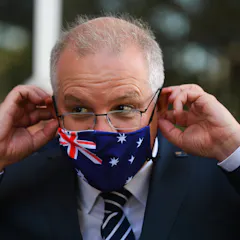
Two-thirds of respondents in the last poll of the year said they were satisfied with Prime Minister Scott Morrison’s performance, a reflection of his handling of COVID-19.

The decision recognises that water rights are critical for Indigenous people to restore customs, protect their culture, become economically independent and heal Country.
Australia has just run a real-life experiment.

We interviewed consumers about ethical fashion choices - they were well intentioned but overwhelmed. There are, however, some good sources of information for conscious shoppers.

Some scientists say attributing ‘human-like’ qualities to animals is misleading. Others say it’s a great tool for conservation. Either way, the Netflix hit My Octopus Teacher has a positive message.

Its “opt-in” proposal means some homeowners will never switch over and will never pay land tax.

Many important Australian books have found themselves out-of-print and hard-to-find. The Untapped project aims to change that, bringing classics to a library near you.

Data from around the world, including Australia, indicate the pandemic has made things more difficult for people with eating disorders for a variety of reasons.
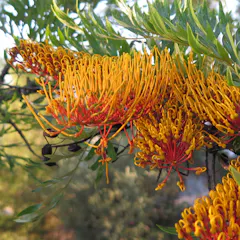
Silky oaks, or Grevillea robusta, are in bloom. These hardy, attractive trees light up the sky in late spring – but handle with care.

While enrolments for men over the age of 25 increased, numbers fell for women in this age group. A likely reason for the difference is caring responsibilities, which increased during the pandemic.
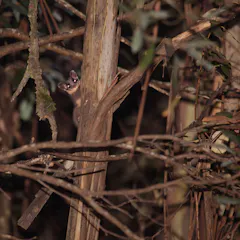
A major new research paper reveals which species are most at risk from changing fire regimes around the world.
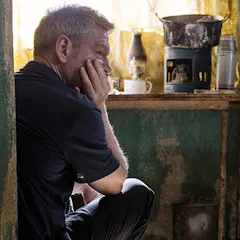
Kevin Brophy’s favourite detective — Kurt Wallander — has aged just ahead of him, made mistakes and lived vividly.
Authors
-

Election Analyst (Psephologist) at The Conversation; and Honorary Associate, School of Mathematics and Statistics, The University of Melbourne
-
Guest Research Fellow, School of Computing and Information Systems, The University of Melbourne
-
Professor of Sociology of Law and Deviance, Università di Bologna; University of Essex; The University of Melbourne
-
McKenzie Research Fellow, The University of Melbourne
-
Research assistant, Movember Institute of Men's Health, The University of Melbourne
-
Senior Research Associate, School of Agriculture, Food and Ecosystem Sciences, The University of Melbourne
-
Paleontologist, The University of Melbourne
-
Senior Lecturer, Centre for Advancing Journalism, The University of Melbourne
-
Research Fellow, Centre for Youth Mental Health, The University of Melbourne
-
Deputy Vice-Chancellor (Global, Culture and Engagement), The University of Melbourne
-
Emeritus professor, History, The University of Melbourne
-
Professor of Health Economics, The University of Melbourne
-
Associate Professor and Head, Behavioural Neuropharmacology Laboratory, The University of Melbourne
-
Lecturer in History, The University of Melbourne
-
Associate Professor, Centre for Youth Mental Health, The University of Melbourne