

Si certains experts s’inquiètent des attentes irréalistes que peut créer le porno, de sa violence sexiste, et de son potentiel addictif, d’autres pensent que l’éducation peut contrer ces méfaits.
The University of Melbourne

The University of Melbourne is a global leader in higher education. Across our campuses we convene brilliant minds from different disciplines and sectors to come together to address important questions and tackle grand challenges. In a disrupted world, that capacity has never been more important.
Our vision is to equip our students with a distinctive, future-facing education personalised around their ambitions and needs, enriched by global perspectives and embedded in a richly collaborative research culture. As active citizens and future leaders, our students represent our greatest contribution to the world, and are at the heart of everything we do.
We serve society by engaging with our communities and ensuring education and research are inspired from the outset by need and for the benefit of society, while remaining committed to allowing academic freedom to flourish. In this, we remain true to our purpose and fulfil our mission as a public-spirited organisation, dedicated to the principles of fairness, equality and excellence in everything we do.
We strive for an environment that is inclusive and celebrates diversity.
Beyond our campuses we imagine an Australia that is ambitious, forward thinking and increasing its reputation and influence globally. We are committed to playing a part in achieving this – building on our advantageous location in one of the world’s most exciting cities and across the state of Victoria, in a region rapidly becoming a hub for innovative education, research and collaboration.
Links
Articles
The HILDA Survey suggests single-parent households on Australia are abandoning formal childcare as they face greater poverty rates.
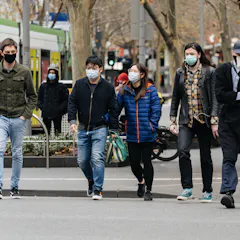
Australians report high levels of life satisfaction but there are gaps — Indigenous Australians, immigrants and the unemployed fare worse. And COVID-19 won’t have helped.

Now is the time to reflect carefully on what we ask of, and how we best support, those soldiers who serve in our name.

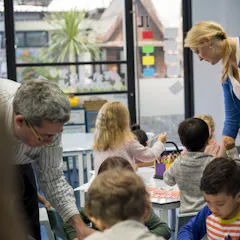
Our study of over 300 primary school students showed they preferred certain types of classroom furniture, and they clearly explained how it helped their learning experience.
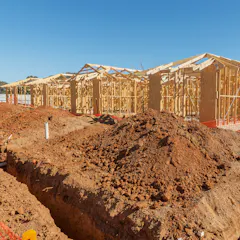
The shortfall of social housing has built up over decades. Even after the building program is complete, the gap between housing supply and the numbers on waiting lists will still be huge.

Poor mental health costs the Australian economy up to A$220 billion a year, according to the Productivity Commission. It will take more than piecemeal ‘announceables’ to fix the situation.

It’s high time the international shipping industry radically curbed its emissions. The industry must set a net-zero target and adopt a realistic plan to meet it.
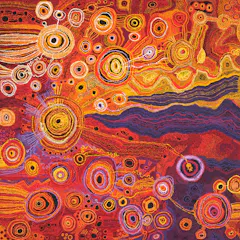
For many years, almost all the art on public display was by men. The National Gallery of Australia aims to redress that imbalance.
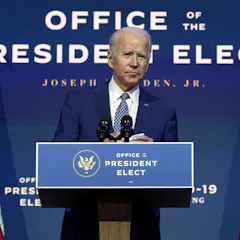
Wisconsin proved to be the ‘tipping point’ state in the US presidential election, which Joe Biden won by just 0.6% - despite being likely to win the popular vote by 4-5%.
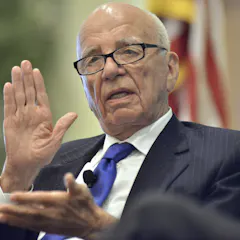
Murdoch has become very adept at changing colours to suit changing political landscapes – and the US election is yet another example of that.
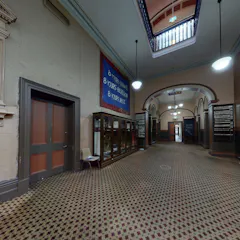
With our travel wings clipped and cities under lockdown, heritage buildings have found new ways for us to fly over rooftops and zoom in on wallpaper.

New research shows while most taxi and rideshare journeys are completed safely, there is still an unacceptable level of harassment and intimidation.
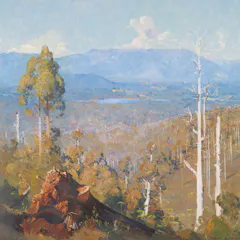
A major new exhibition presents a nuanced view of Arthur Streeton who, in his lifetime, was praised as being the artist ‘who has shown us our land as no one else has done’.

The proportion of students choosing advanced maths subjects has declined sharply in the last 20 years. Australia also has some of the highest rates of maths teachers outside their field of expertise.

Trump has increased the appeal of American conservatism, even as he has complicated its meaning. His shadow will no doubt continue to loom large over the Republican Party.
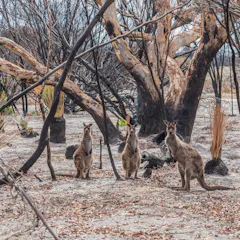
The royal commission made welcome and necessary recommendations around helping wildlife after hazards. But it’s not enough to focus only on response.

With a handful of states still to be declared, it looks likely Joe Biden will win the electoral college vote by 306 to 232, he same margin with which Donald Trump beat Hillary Clinton in 2016.

As the US president made unsubstantiated claims about the vote count, many of the major TV networks cut him off. Is this what’s best for democracy?
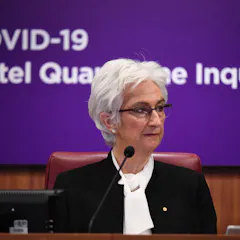
Justice Jennifer Coate’s first report into the bungled hotel quarantine in Victoria maps out how processes can be changed to make sure it never happens again.
Authors
-

Election Analyst (Psephologist) at The Conversation; and Honorary Associate, School of Mathematics and Statistics, The University of Melbourne
-
Research fellow, Faculty of Architecture, Building and Planning, The University of Melbourne
-
Guest Research Fellow, School of Computing and Information Systems, The University of Melbourne
-
Professor of Sociology of Law and Deviance, Università di Bologna; University of Essex; The University of Melbourne
-
McKenzie Research Fellow, The University of Melbourne
-
Research assistant, Movember Institute of Men's Health, The University of Melbourne
-
Professor of Education Futures, The University of Melbourne
-
Senior Research Associate, School of Agriculture, Food and Ecosystem Sciences, The University of Melbourne
-
Senior Lecturer, Centre for Advancing Journalism, The University of Melbourne
-
Research Fellow, Centre for Youth Mental Health, The University of Melbourne
-
Deputy Vice-Chancellor (Global, Culture and Engagement), The University of Melbourne
-
Emeritus professor, History, The University of Melbourne
-
Associate Professor and Head, Behavioural Neuropharmacology Laboratory, The University of Melbourne
-
Lecturer in History, The University of Melbourne
-
Associate Professor, Centre for Youth Mental Health, The University of Melbourne