

If the IOC does postpone the games, it will have to deal with consequences such as the impact on athletes, broadcasting obligations, insurance pay-outs and its brand reputation.
The University of Melbourne

The University of Melbourne is a global leader in higher education. Across our campuses we convene brilliant minds from different disciplines and sectors to come together to address important questions and tackle grand challenges. In a disrupted world, that capacity has never been more important.
Our vision is to equip our students with a distinctive, future-facing education personalised around their ambitions and needs, enriched by global perspectives and embedded in a richly collaborative research culture. As active citizens and future leaders, our students represent our greatest contribution to the world, and are at the heart of everything we do.
We serve society by engaging with our communities and ensuring education and research are inspired from the outset by need and for the benefit of society, while remaining committed to allowing academic freedom to flourish. In this, we remain true to our purpose and fulfil our mission as a public-spirited organisation, dedicated to the principles of fairness, equality and excellence in everything we do.
We strive for an environment that is inclusive and celebrates diversity.
Beyond our campuses we imagine an Australia that is ambitious, forward thinking and increasing its reputation and influence globally. We are committed to playing a part in achieving this – building on our advantageous location in one of the world’s most exciting cities and across the state of Victoria, in a region rapidly becoming a hub for innovative education, research and collaboration.
Links
Articles

It takes time for information from our eyes to reach our brains and become part of our conscious experience. So our brains use predictions to make up the delay.

Usually a major crisis benefits incumbent leaders. But that has not been the case for Donald Trump – and his chances of re-election in November now look shaky.
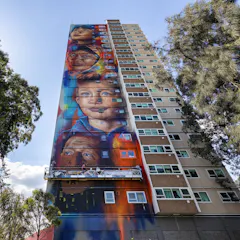
A home, a springboard, or a safety net? New research finds a surprisingly large number of Australians have lived in social housing since 2000, using it in several very different ways.

Shirin Neshat’s video installation at NGV and the recent Asia TOPA concert by Abida Parveen highlight how ancient forms can unlock ecstatic spaces for contemporary audiences.

It is the stories that are entertaining rather than informative that are most likely to add to the panic, and media outlets need to be careful about what they publish.

Both men and women are, on average, more dissatisfied with their relationship when she is the primary breadwinner.
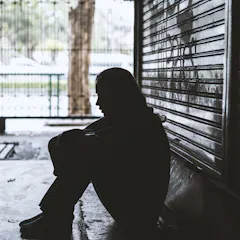
Women who are released from prison need much better, coordinated support to help their transition back into the community without exposing themselves to violence.

The Art Market 2020 report reveals the global art market was worth US$64.1 billion in 2019. But with cancelled art fairs in Hong Kong, Paris, Berlin and Dubai, what does 2020 hold for the market?
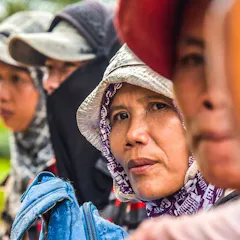
Partisipasi pekerja perempuan di Indonesia stagnan di angka 50% di tiga dekade terakhir, ini adalah sebuah misteri karena pertumbuhan ekonomi Indonesia yang signifikan dalam periode yang sama.
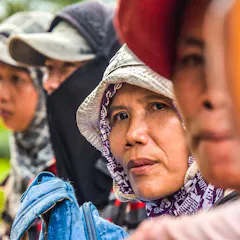
Female labour participation in Indonesia has stalled at 50% for the last three decades. This is a bit of a mystery because Indonesia’s economy has grown dramatically over the same period.
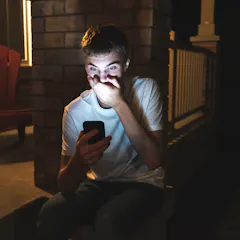
New research shows young men value respect and boundaries in sexting, though their motivations for doing so are complex.

Private schools are set to get a boost of billions under a new formula that links government funding to parents’ incomes rather than the socioeconomic profile of where they live.
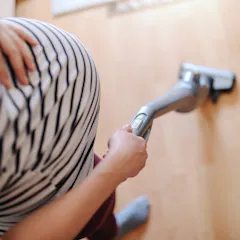
You’ve heard pregnant women talk about nesting, whether that’s painting the nursery, or cleaning the house from top to bottom before their baby arrives. But new research turns ‘nesting’ on its head.

Why toilet paper? Concerns about control and hygiene are the likely reason, according to experts
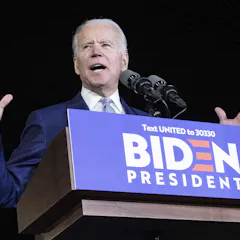
While the momentum had been with Bernie Sanders, the former vice president surged on Super Tuesday, and is favourite to win the Democratic nomination.
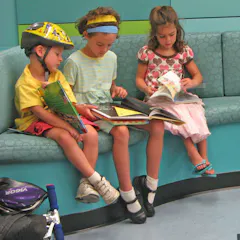
In this time of natural destruction, children’s books featuring Australian wildlife are critical to fostering environmental awareness in the next generation.

Following the Chinese swimmer’s eight-year ban, FINA must examine its governance and follow the example set by athletics and tennis to investigate and prosecute doping.
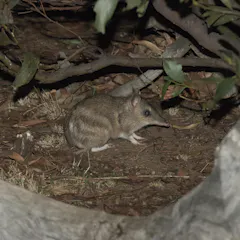
These Aussie diggers boost the health of our soils. But up until recently, we didn’t know just how much soil they can turn over (hint: it’s a lot).

There are three phases to Australia’s response plan. The ‘Initial Action’ stage, the ‘Targeted Action’ stage, and finally, the ‘Standdown’ stage. Right now, we’re in the first.
Authors
-

Election Analyst (Psephologist) at The Conversation; and Honorary Associate, School of Mathematics and Statistics, The University of Melbourne
-
Research fellow, Faculty of Architecture, Building and Planning, The University of Melbourne
-
Guest Research Fellow, School of Computing and Information Systems, The University of Melbourne
-
Professor of Sociology of Law and Deviance, Università di Bologna; University of Essex; The University of Melbourne
-
McKenzie Research Fellow, The University of Melbourne
-
Research assistant, Movember Institute of Men's Health, The University of Melbourne
-
Professor of Education Futures, The University of Melbourne
-
Senior Research Associate, School of Agriculture, Food and Ecosystem Sciences, The University of Melbourne
-
Senior Lecturer, Centre for Advancing Journalism, The University of Melbourne
-
Research Fellow, Centre for Youth Mental Health, The University of Melbourne
-
Deputy Vice-Chancellor (Global, Culture and Engagement), The University of Melbourne
-
Emeritus professor, History, The University of Melbourne
-
Associate Professor and Head, Behavioural Neuropharmacology Laboratory, The University of Melbourne
-
Lecturer in History, The University of Melbourne
-
Associate Professor, Centre for Youth Mental Health, The University of Melbourne