

Banks and other financial institutions will be left with plenty of ways to treat customers badly under new, overdue, rules.
The University of Melbourne

The University of Melbourne is a global leader in higher education. Across our campuses we convene brilliant minds from different disciplines and sectors to come together to address important questions and tackle grand challenges. In a disrupted world, that capacity has never been more important.
Our vision is to equip our students with a distinctive, future-facing education personalised around their ambitions and needs, enriched by global perspectives and embedded in a richly collaborative research culture. As active citizens and future leaders, our students represent our greatest contribution to the world, and are at the heart of everything we do.
We serve society by engaging with our communities and ensuring education and research are inspired from the outset by need and for the benefit of society, while remaining committed to allowing academic freedom to flourish. In this, we remain true to our purpose and fulfil our mission as a public-spirited organisation, dedicated to the principles of fairness, equality and excellence in everything we do.
We strive for an environment that is inclusive and celebrates diversity.
Beyond our campuses we imagine an Australia that is ambitious, forward thinking and increasing its reputation and influence globally. We are committed to playing a part in achieving this – building on our advantageous location in one of the world’s most exciting cities and across the state of Victoria, in a region rapidly becoming a hub for innovative education, research and collaboration.
Links
Articles
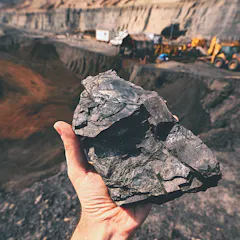
Just as thermal coal can be replaced with clean energy from renewables, we can use low-emissions steel manufacturing to phase out metallurgical coal.
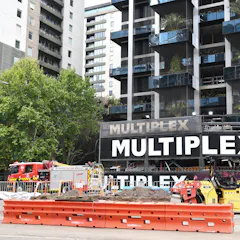
Inner Melbourne alone has lost 2,000 street trees to major developments within a decade. Losing tree cover makes it even more difficult for our cities to cope with an increasingly tough climate.

More older Australians are carrying housing debt later in life, or not owning homes at all, but lack suitable alternatives to the family home. The result is lower incomes in retirement.

Achieving justice in response to sexual violence is complex, and we should treat the Weinstein conviction with some caution.
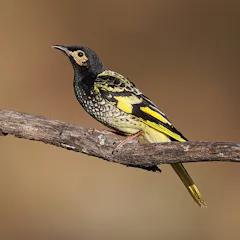
Some threatened species hit hard by the bushfires this summer have populations in and around urban areas, which are now crucial refuges. Here are some tips to help improve their odds of survival.
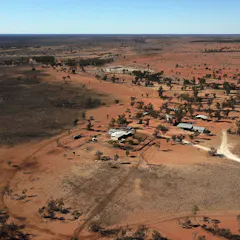
The absence of climate drivers – specifically, the Indian Ocean Dipole and La Niña – explains why Australia has gone so long without heavy rains.
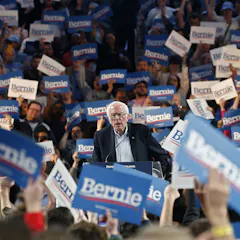
Sanders has cemented his status as front-runner for the Democratic presidential nomination ahead of Super Tuesday, even with Michael Bloomberg’s entrance to the race.

The Australian Press Council’s ruling suggests an exemption for ‘entertainment magazines’ from the standard of factual reporting. This ruling has no basis in Australian defamation law.

Programs designed to enhance legal access for people with cognitive disabilities accused of a crime are more humane and could be more cost effective than long-term detention.
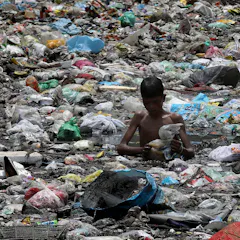
Some people might think it’s a ridiculous conversation, but for the sake of the planet we need to talk about ending capitalism.

In the blue corner is the extremely venomous Black Mamba – top snake of Africa – and in the red corner is the muscular Inland Taipan – Australia’s alpha snake.

Research suggests harsher civil or criminal penalties will not automatically lead to greater compliance by employers with workplace laws.
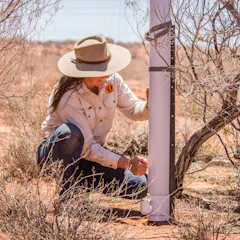
We all want to help native animals recover after bushfires, but giving a koala a drink from your water bottle can cause more harm than good. Here are some helpful things you can do.
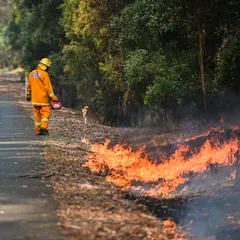
This summer’s bushfires have sparked a fiery debate about hazard-reduction burning. Scientists are still debating whether it really helps prevent bushfires – here’s why.
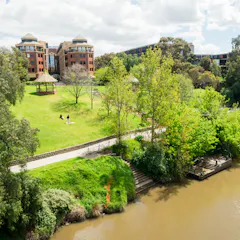
Only the inner suburbs of Melbourne and other capital cities meet the 20-minute neighbourhood test. But we could transform the other suburbs for much less than the cost of current transport projects.

In a warming world, trees can play a major role in keeping cities and your home cool. If you plan it right, they can even save you money and protect your home from bushfires.

In dismissing the case, Justice Wendy Abraham drew attention to a huge gap in the protection of journalists’ sources under ‘shield laws’, which don’t apply to most search warrants.

States across Australia are increasingly using market-led proposals to build infrastructure. The emerging problems reflect the inherent risks of projects that bypass proper public planning processes.
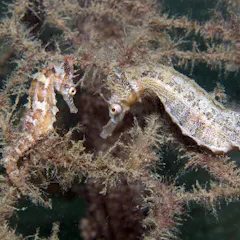
White’s seahorse in Sydney uses seahorse hotels as temporary residence while their natural habitats recover.
Authors
-

Election Analyst (Psephologist) at The Conversation; and Honorary Associate, School of Mathematics and Statistics, The University of Melbourne
-
Research fellow, Faculty of Architecture, Building and Planning, The University of Melbourne
-
Guest Research Fellow, School of Computing and Information Systems, The University of Melbourne
-
Professor of Sociology of Law and Deviance, Università di Bologna; University of Essex; The University of Melbourne
-
McKenzie Research Fellow, The University of Melbourne
-
Research assistant, Movember Institute of Men's Health, The University of Melbourne
-
Professor of Education Futures, The University of Melbourne
-
Senior Research Associate, School of Agriculture, Food and Ecosystem Sciences, The University of Melbourne
-
Senior Lecturer, Centre for Advancing Journalism, The University of Melbourne
-
Research Fellow, Centre for Youth Mental Health, The University of Melbourne
-
Deputy Vice-Chancellor (Global, Culture and Engagement), The University of Melbourne
-
Emeritus professor, History, The University of Melbourne
-
Associate Professor and Head, Behavioural Neuropharmacology Laboratory, The University of Melbourne
-
Lecturer in History, The University of Melbourne
-
Associate Professor, Centre for Youth Mental Health, The University of Melbourne