

JobKeeper is designed for people with steady jobs. The arts don’t work that way.
The University of Melbourne

The University of Melbourne is a global leader in higher education. Across our campuses we convene brilliant minds from different disciplines and sectors to come together to address important questions and tackle grand challenges. In a disrupted world, that capacity has never been more important.
Our vision is to equip our students with a distinctive, future-facing education personalised around their ambitions and needs, enriched by global perspectives and embedded in a richly collaborative research culture. As active citizens and future leaders, our students represent our greatest contribution to the world, and are at the heart of everything we do.
We serve society by engaging with our communities and ensuring education and research are inspired from the outset by need and for the benefit of society, while remaining committed to allowing academic freedom to flourish. In this, we remain true to our purpose and fulfil our mission as a public-spirited organisation, dedicated to the principles of fairness, equality and excellence in everything we do.
We strive for an environment that is inclusive and celebrates diversity.
Beyond our campuses we imagine an Australia that is ambitious, forward thinking and increasing its reputation and influence globally. We are committed to playing a part in achieving this – building on our advantageous location in one of the world’s most exciting cities and across the state of Victoria, in a region rapidly becoming a hub for innovative education, research and collaboration.
Links
Articles

The federal government keeps fighting attempts to allow people on the NDIS to access sexual supports. But what about their rights to have a rich and fulfilling life?

Four decades on, and commencing retirement, Australians who entered the labour market during the 1970s recession are less happy than those born earlier or later.
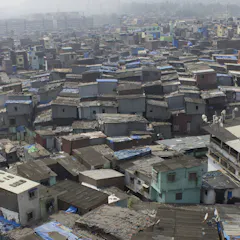
Long before the Indian government responded to the threat of COVID-19 with a lockdown, residents of Shivaji Nagar, with the support of a local NGO, were protecting and helping one another.

Poems sing to us that life really matters, now.
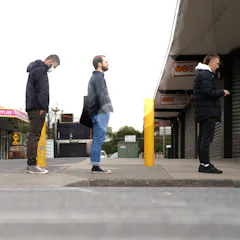
Australia’s economy has prospered due to open borders and international trade. It has much more to lose from disruptions.
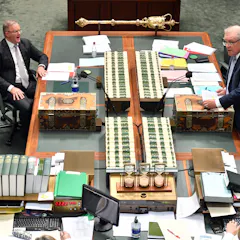
The prime minister’s approval ratings and the two-party preferred vote come closer to alignment, while Donald Trump still faces an uphill battle in November if economic doldrums continue.
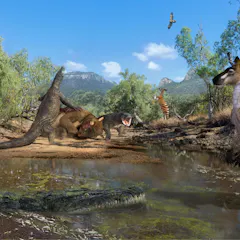
These megafauna were the largest land animals to live in Australia since the time of the dinosaurs.
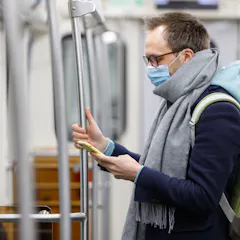
While trust in media has risen in both the US and Australia, a sharp partisan divide is apparent in Americans’ trust in media.
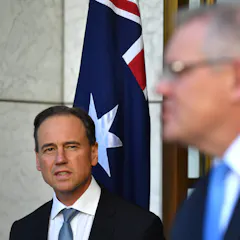
New funding aims to fend off a wave of mental ill-health in the wake of the COVID-19 pandemic. We don’t know how severe that wave will be, but we do know financial hardship is a huge risk factor.

A realistic estimate of the economic costs of a two-year lockdown amounts to $90 billion. The benefit in lives saved amounts to at $1.1 trillion.

Only 51% of survey participants said they supported linking the number of COVIDSafe app downloads with an easing of lockdown restrictions.
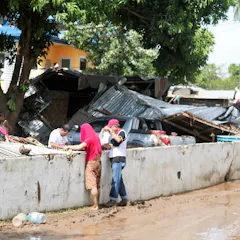
Months after Typhoon Washi tore through the Philippines in 2011, relocated residents were moving into newly built housing. They soon began modifying and extending homes that didn’t meet their needs.
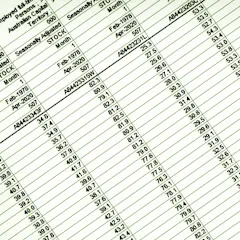
Women have suffered much more than men. Many who were employed in March have withdrawn from the labour force and so aren’t counted as unemployed.
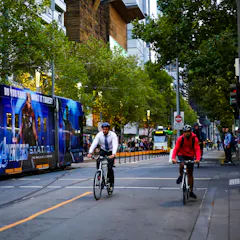
Before the pandemic, the country was making great strides towards creating more compact, sustainable and liveable cities.
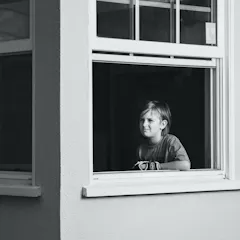
A survey conducted in early April reveals that, even in lockdown, fewer than 3% of people were feeling only negative emotions.

The best way to avoid any family tensions at home is to know how to spot them building and then try to calm things down. Here are some tips on how to do that.
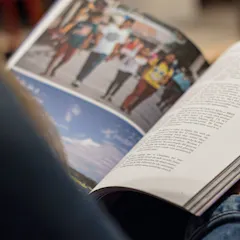
Australia’s literary journals are produced within a fragile ecosystem – becoming more vulnerable every year.
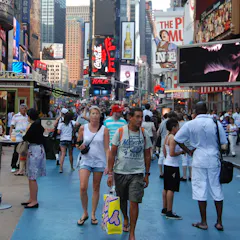
The internal density and layout of buildings are key factors in COVID-19 transmission risk. This is not an argument against high-density cities, some of which have successfully contained the virus.
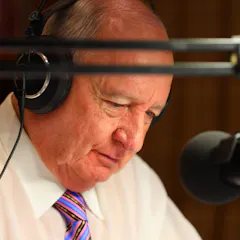
With his defence of those on “struggle street” mixed with a hectoring and bullying style, Jones exerted enormous influence on Australian public life. But utlimately, progress ran over the top.
Authors
-

Election Analyst (Psephologist) at The Conversation; and Honorary Associate, School of Mathematics and Statistics, The University of Melbourne
-
Research fellow, Faculty of Architecture, Building and Planning, The University of Melbourne
-
Guest Research Fellow, School of Computing and Information Systems, The University of Melbourne
-
Professor of Sociology of Law and Deviance, Università di Bologna; University of Essex; The University of Melbourne
-
McKenzie Research Fellow, The University of Melbourne
-
Research assistant, Movember Institute of Men's Health, The University of Melbourne
-
Professor of Education Futures, The University of Melbourne
-
Senior Research Associate, School of Agriculture, Food and Ecosystem Sciences, The University of Melbourne
-
Senior Lecturer, Centre for Advancing Journalism, The University of Melbourne
-
Research Fellow, Centre for Youth Mental Health, The University of Melbourne
-
Deputy Vice-Chancellor (Global, Culture and Engagement), The University of Melbourne
-
Emeritus professor, History, The University of Melbourne
-
Associate Professor and Head, Behavioural Neuropharmacology Laboratory, The University of Melbourne
-
Lecturer in History, The University of Melbourne
-
Associate Professor, Centre for Youth Mental Health, The University of Melbourne