

Australia’s research workforce will be severely impacted by the pandemic, with the effects likely to be felt for years, if not decades.
The University of Melbourne

The University of Melbourne is a global leader in higher education. Across our campuses we convene brilliant minds from different disciplines and sectors to come together to address important questions and tackle grand challenges. In a disrupted world, that capacity has never been more important.
Our vision is to equip our students with a distinctive, future-facing education personalised around their ambitions and needs, enriched by global perspectives and embedded in a richly collaborative research culture. As active citizens and future leaders, our students represent our greatest contribution to the world, and are at the heart of everything we do.
We serve society by engaging with our communities and ensuring education and research are inspired from the outset by need and for the benefit of society, while remaining committed to allowing academic freedom to flourish. In this, we remain true to our purpose and fulfil our mission as a public-spirited organisation, dedicated to the principles of fairness, equality and excellence in everything we do.
We strive for an environment that is inclusive and celebrates diversity.
Beyond our campuses we imagine an Australia that is ambitious, forward thinking and increasing its reputation and influence globally. We are committed to playing a part in achieving this – building on our advantageous location in one of the world’s most exciting cities and across the state of Victoria, in a region rapidly becoming a hub for innovative education, research and collaboration.
Links
Articles
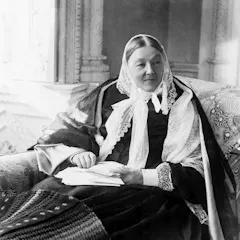
On the 200th anniversary of Florence Nightingale’s birth, we take a look at how her monumental efforts helped shape the way we model health care and disease outbreak data today.

During a tour to Australia, Little Richard feared the nuclear apocalypse and – on stage – annonced he was giving up music.
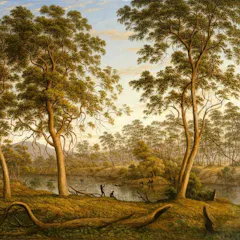
Two hundred years of forced dispossession cannot erase millennia of land ownership and connection to country.
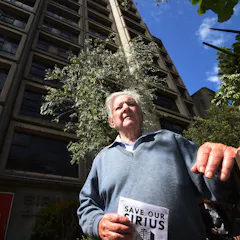
Jack Mundey fought to save Australia’s urban and environmental heritage. An architect of green bans, his lifelong efforts empowered citizens to assert their right to keep the heritage of their city.
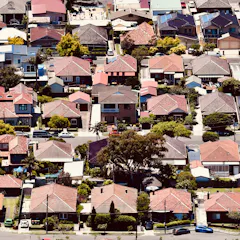
The imperative to keep a roof over our head keeps us wedded to economic growth. If we want to halt climate change, we need another way
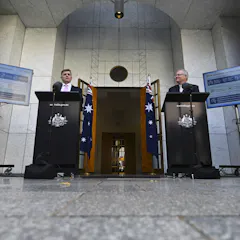
The federal government has announced a stepped approach to relaxing social distancing measures. What they haven’t said is how high they’ll allow the curve to rise.

Green drinks and meditation won’t solve the childcare crisis for women - we need free universal childcare to stay.
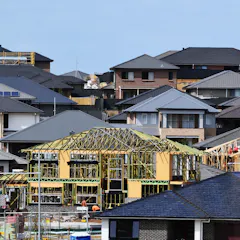
Builders compete for customers by touting the features of their homes. Some builders promote ‘six-star’ home energy ratings in ways that could mislead consumers and breach Australian Consumer Law.

Westpac and the ANZ have suspended dividends payments. The National Australia Bank has slashed them. The peculiarities of our tax system explain why retirees hate this more than they should.
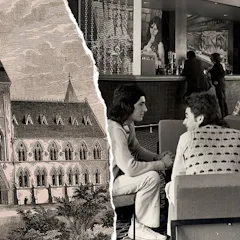
This essay explores the way the social contract between universities, society and the state has changed over the course of the 20th century. And how generations of students paid and benefited.

Physiotherapists can help patients during and after coronavirus infections.
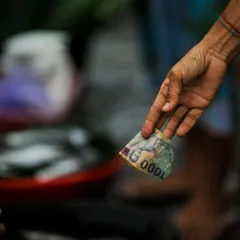
Dalam situasi darurat, waktu adalah kunci. Kegagalan memberikan penghasilan dasar bagi masyarakat dapat menyebabkan malapetaka yang lebih besar.

Temporary and tactical urbanism offers simple, low-cost solutions to make streets and other public spaces both safe and sociable during this time of physical distancing.
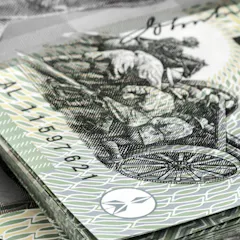
It is normally a bad idea to let super funds borrow, but these aren’t normal times. There’s a (limited) case for allowing them to borrow from the Reserve Bank.
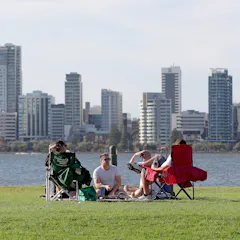
Testing and isolating cases only after they develop symptoms might not be enough to prevent further outbreaks of COVID-19. Sentinel surveillance, by testing randomly in the community, can go further.

We expect a steep rise in mental health problems as a result of the pandemic. But there are ways to flatten this curve, just as we’ve flattened the curve of infections.
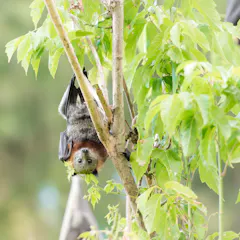
Australian bats are getting unfairly targeted. Here’s why we should be giving them a fair go instead.
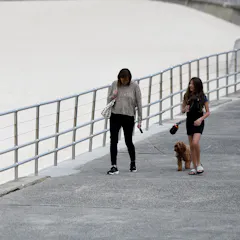
We’ve prevented many deaths, many of them at the cost of other deaths. The accounting ought to be made clear.
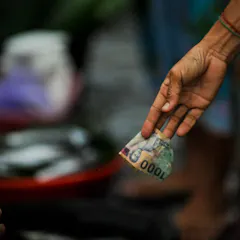
In emergencies, time is a currency. If the government fails to deliver basic income to the people, the consequences could be catastrophic.
Authors
-

Election Analyst (Psephologist) at The Conversation; and Honorary Associate, School of Mathematics and Statistics, The University of Melbourne
-
Research fellow, Faculty of Architecture, Building and Planning, The University of Melbourne
-
Guest Research Fellow, School of Computing and Information Systems, The University of Melbourne
-
Professor of Sociology of Law and Deviance, Università di Bologna; University of Essex; The University of Melbourne
-
McKenzie Research Fellow, The University of Melbourne
-
Research assistant, Movember Institute of Men's Health, The University of Melbourne
-
Professor of Education Futures, The University of Melbourne
-
Senior Research Associate, School of Agriculture, Food and Ecosystem Sciences, The University of Melbourne
-
Senior Lecturer, Centre for Advancing Journalism, The University of Melbourne
-
Research Fellow, Centre for Youth Mental Health, The University of Melbourne
-
Deputy Vice-Chancellor (Global, Culture and Engagement), The University of Melbourne
-
Emeritus professor, History, The University of Melbourne
-
Associate Professor and Head, Behavioural Neuropharmacology Laboratory, The University of Melbourne
-
Lecturer in History, The University of Melbourne
-
Associate Professor, Centre for Youth Mental Health, The University of Melbourne