

Removing enough carbon to offset emissions would require vast tracts of inhabited land.
The University of Melbourne

The University of Melbourne is a global leader in higher education. Across our campuses we convene brilliant minds from different disciplines and sectors to come together to address important questions and tackle grand challenges. In a disrupted world, that capacity has never been more important.
Our vision is to equip our students with a distinctive, future-facing education personalised around their ambitions and needs, enriched by global perspectives and embedded in a richly collaborative research culture. As active citizens and future leaders, our students represent our greatest contribution to the world, and are at the heart of everything we do.
We serve society by engaging with our communities and ensuring education and research are inspired from the outset by need and for the benefit of society, while remaining committed to allowing academic freedom to flourish. In this, we remain true to our purpose and fulfil our mission as a public-spirited organisation, dedicated to the principles of fairness, equality and excellence in everything we do.
We strive for an environment that is inclusive and celebrates diversity.
Beyond our campuses we imagine an Australia that is ambitious, forward thinking and increasing its reputation and influence globally. We are committed to playing a part in achieving this – building on our advantageous location in one of the world’s most exciting cities and across the state of Victoria, in a region rapidly becoming a hub for innovative education, research and collaboration.
Links
Articles

There is evidence more time outside can help slow the progression of shortsightedness in children, due to the role sunlight plays in eye growth.
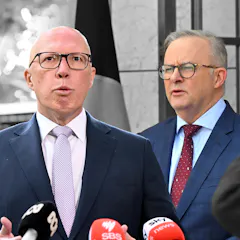
With stretched resources and insatiable demand for content, Australian media will have a difficult job covering the next federal election. But they must strive for “proactive impartiality”.
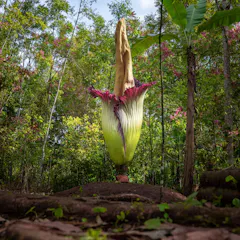
The stench of a rare corpse flower make us retch. But you’re not the target – the plant wants to lure carrion beetles and flesh flies

Many Autistic people struggle through air travel or avoid it altogether. But travellers told us small measures and supports can make a big difference.
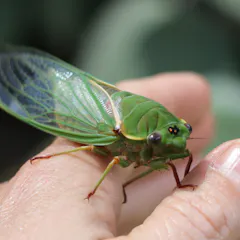
Three groups of cicadas have emerged together this year for the first time since the fall of the Roman Empire. The reason is pure mathematics.
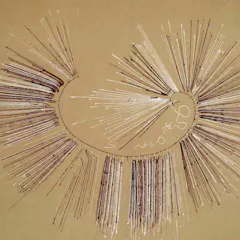
A new study reveals the most complex numeric connection ever made between two khipus. It could help lead us to even more clues about ancient Andean society.

Leon Paroissien, who died last week, was one of the great enablers of Australian art. He imagined a better future, then made it happen.

Jamie Oliver’s novel has been withdrawn due to its ‘damaging and disrespectful’ portrayal of First Nations people. Here is how non-Indigenous writers need to approach it: First Nations people first.
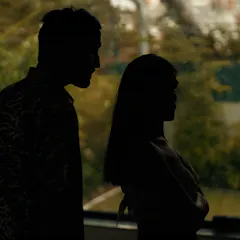
Past research has looked at the objectification of women and violence against them. Our new study makes it personal.

With a federal election due in the first half of 2025, the Coalition is gaining on Labor.
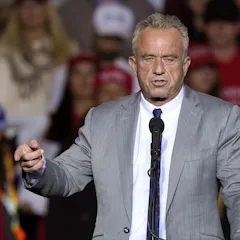
Get ready for an alarming future, where truth and science no longer matter.

Where once Democrats could rely on the votes of Hispanic Americans, Trump has swung them across to the Republicans in big numbers.
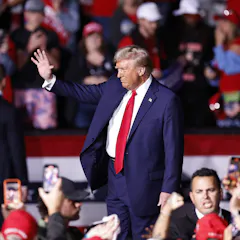
The former president is set to return to the White House with a comfortable Electoral College win.

To prepare for more intense floods supercharged by climate change, we have to build infrastructure able to tolerate new extremes

Some private health insurers are offering their members easier access to GP telehealth services, sometimes for free.
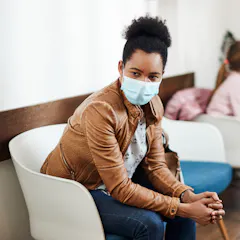
The roles of health professionals such as nurses, physiotherapists and psychologists have been frozen for decades. A new review shows how this can change.
Wiping debt will help students and graduates but the changes are not as good as they should be. Particularly if you have a HELP debt and a family to support.

As the US election comes to a head, polls still show a close race.
In a new review, we explored the impact of physical activity on type 2 diabetes among First Nations Australians. But there wasn’t much data to be found.
Authors
-

Election Analyst (Psephologist) at The Conversation; and Honorary Associate, School of Mathematics and Statistics, The University of Melbourne
-
Guest Research Fellow, School of Computing and Information Systems, The University of Melbourne
-
Professor of Sociology of Law and Deviance, Università di Bologna; University of Essex; The University of Melbourne
-
McKenzie Research Fellow, The University of Melbourne
-
PhD Candidate, Creative Writing, The University of Melbourne
-
Senior Research Associate, School of Agriculture, Food and Ecosystem Sciences, The University of Melbourne
-
Paleontologist, The University of Melbourne
-
Professor of Law (consumer protections and credit law), The University of Melbourne
-
Emeritus Professor of Creative Writing, The University of Melbourne
-
Lecturer in World Literature (including Australian literature), The University of Melbourne
-
Deputy Vice-Chancellor (Global, Culture and Engagement), The University of Melbourne
-
Professor of Psychology, The University of Melbourne
-
Emeritus professor, History, The University of Melbourne
-
Professor of Health Economics, The University of Melbourne
-
Associate Professor and Head, Behavioural Neuropharmacology Laboratory, The University of Melbourne